Yukgaejang: Spicy Korean Beef Soup and Why It's So Red
On this page
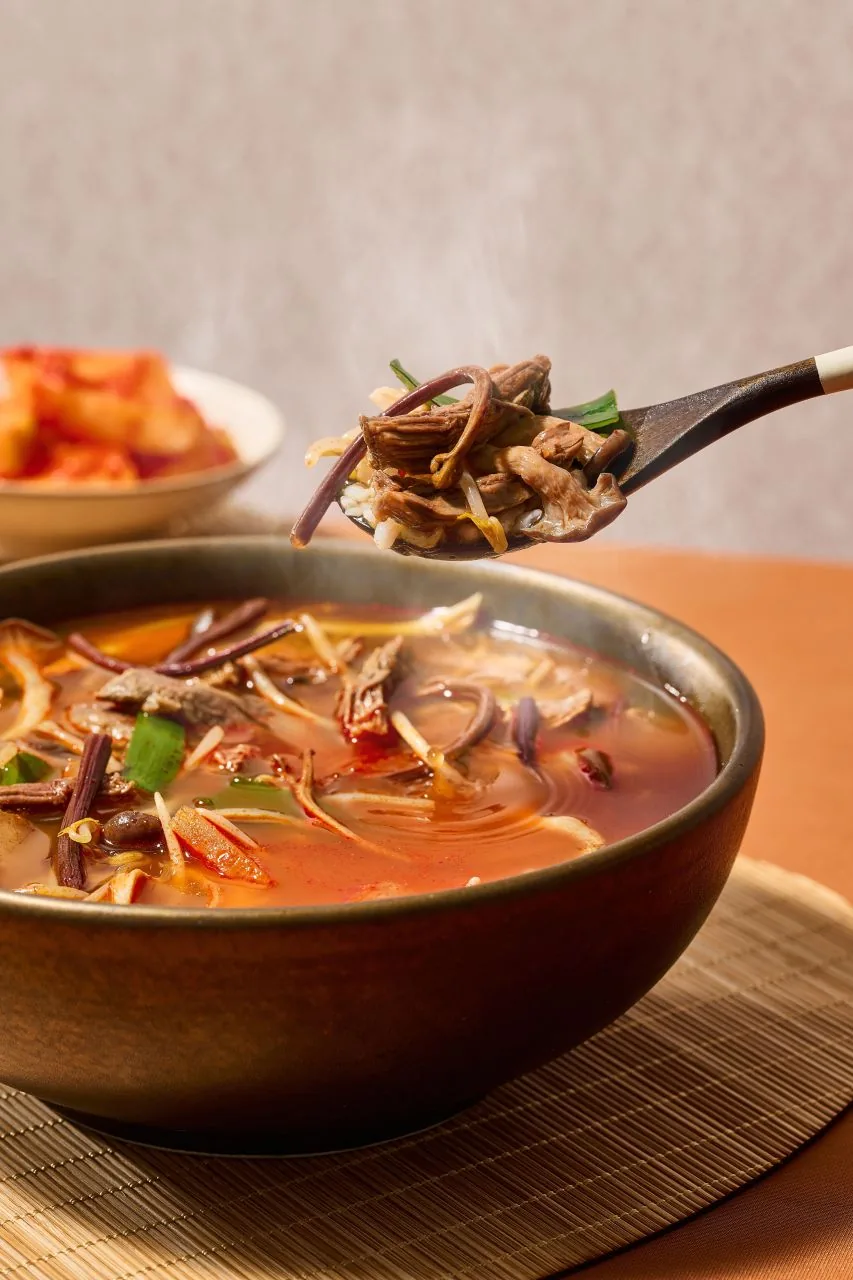
A slick of red oil sits on top, the steam hits the back of your throat before the spoon does, and underneath there are soft ribbons of shredded beef tangled with long, silky scallions. That’s yukgaejang (육개장), the spicy Korean beef soup that turns up everywhere from home kitchens to neighborhood soup restaurants. Most recipes online tell you what to throw in the pot. Fewer explain why the broth goes that deep red, and that’s the part worth understanding if you want to cook it well or just order it with confidence.
Quick answers
- Yukgaejang is a beef soup made by simmering a big piece of beef, shredding it along the grain, seasoning it with chili powder, sesame oil, garlic and soy sauce, and returning it to the broth.
- The red color and heat come from gochugaru (Korean chili flakes) carried in fat, not from gochujang paste; that chili-stained fat is what leaves a glossy red layer on the surface.
- Nongshim launched Yukgaejang Sabalmyeon in 1982, a bowl-shaped cup noodle that still carries the soup’s name and flavor.
What makes yukgaejang a spicy Korean beef soup?
It’s the beef that has been boiled, torn by hand and seasoned before it goes back into its own broth. The Encyclopedia of Korean Culture (한국민족문화대백과사전) defines yukgaejang as well-simmered beef torn into pieces, seasoned generously and boiled into a hot, spicy soup, and its method names three cuts: hongdugae-sal (eye of round), satae-sal (shank) and eopjin-sal (the belly cut).
Getting the order right matters. First, the beef simmers in one large chunk until tender. You lift it out, let the broth cool, and skim off the fat that rises. Then the lean meat gets shredded coarsely with the grain and tossed with minced garlic, chili powder, sesame oil, soy sauce and a pinch of flour before it’s boiled again in the broth.
Scallions are the other star. The encyclopedia’s method cuts them long and rinses them briefly in clean water to take the raw bite and sliminess off. Many home recipes today also add fernbrake (gosari), taro stems or bean sprouts, though the encyclopedia’s method does not list them. The soul of the dish is still beef plus scallion plus chili.
Why is yukgaejang red if there’s no gochujang?
Because the color comes from chili flakes meeting fat, and chili heat dissolves in fat far better than in water. Capsaicin, the compound that makes peppers hot, is oil-soluble. Stir gochugaru into plain broth and you get red specks floating around. Coat it in oil first and the color and heat spread through the fat, which then carries them into every spoonful.
The classic method does this quietly: the shredded beef is dressed with chili powder and sesame oil before it goes back into the pot, so the meat itself becomes the chili carrier. Some cooks take it a step further and make a quick chili oil (gochu-gireum) by warming gochugaru in neutral oil over low heat, then use that oil to sauté the beef and vegetables. Either way, the result is that glossy red layer on top.
This is also why yukgaejang tastes different from anything built on gochujang. Gochujang is a fermented paste with sweetness and body; it tends to make a broth heavier and less clear. Yukgaejang stays clean and beefy underneath the heat. If you’ve had the different styles of tteokbokki, you already know what a gochujang-heavy sauce tastes like: sticky, sweet, round. Yukgaejang is sharper and thinner, with the heat sitting at the front.
How does yukgaejang differ from maeuntang, sundubu and haejangguk?
They get lumped together in “best spicy Korean soups” lists, but each one builds its body and heat differently. Here’s how the Encyclopedia of Korean Culture describes the base of each:
| Soup | Main ingredient | Where the heat comes from | What gives it body |
|---|---|---|---|
| Yukgaejang | Shredded boiled beef, scallions | Chili powder with sesame oil on the beef | Beef broth, fat skimmed |
| Maeuntang | Fish | Chili powder and black pepper lead; gochujang is a seasoning, with the chili-to-gochujang ratio left to the cook | Fish |
| Sundubu-jjigae | Soft unpressed tofu | None in the base definition, which seasons it with soy sauce and salt or salted shrimp | Silky tofu |
| Haejangguk (Seoul style) | Ox-bone broth, blood cake, sprouts | Not a chili soup at its core | Doenjang (soybean paste) dissolved into bone broth |
Two surprises there. The bubbling red sundubu you’ll find in restaurants is a spicy style of a dish that, by the encyclopedia’s own definition, doesn’t need chili at all. And Seoul-style haejangguk, the hangover soup, is at heart a doenjang soup. Haejangguk’s ancestor is the seongjutang (“sobering soup”) that appears in the Nogeoldae, a Chinese conversation textbook from the late Goryeo period.
Maeuntang is the closest relative in spirit, since its heat is also led by chili powder rather than paste. The difference is the protein: fish and a freestyle chili-to-gochujang ratio versus beef and a method the encyclopedia spells out step by step.
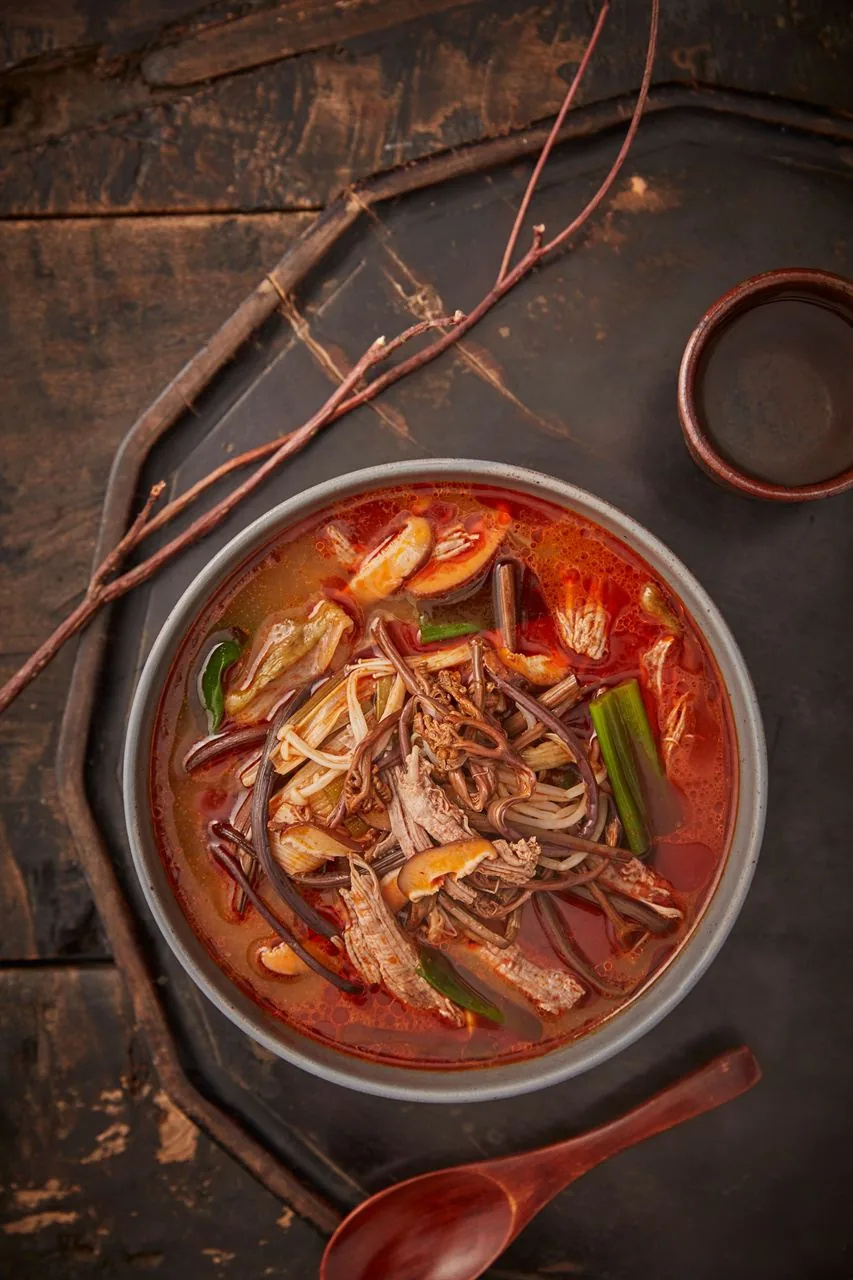 Photo © Korea Tourism Organization
Where does the name yukgaejang come from?
The name reads as yuk (肉, meat) plus gaejang, and both the National Institute of Korean Language’s dictionary and the encyclopedia write it 肉개醬. Gaejang is another name for gaejangguk, a dog-meat soup the encyclopedia lists as a seasonal food for boknal, the hottest days of summer, recorded in old seasonal almanacs such as the Dongguk Sesigi. You’ll often read that yukgaejang is simply the beef version of gaejang, but neither reference states that lineage outright, so treat it as a plausible story rather than a documented one.
What is documented is the summer connection. The encyclopedia calls yukgaejang a seasonal dish for boknal that people also eat year-round. The logic is iyeol-chiyeol, “fight heat with heat”: eating something scalding in hot, humid weather makes you sweat, which was believed to stir up the body’s metabolism. A good bowl, it notes, is spicy yet refreshing, free of any gamey smell, and rich in protein.
You’ll also see yukgaejang as the standard bowl in many funeral-hall dining rooms. Online you’ll find tidy explanations for that, such as red warding off spirits. When the Korean news explainer Chwijae Daehaengso Waeng (취재대행소 왱) looked into it, an official at the Korea Funeral Culture & Policy Institute (한국장례문화진흥원) said the meaning of the red color was an interpretation added later. The official explained that dedicated funeral halls took hold from the early 1990s, and serving the soup became the custom with the dining rooms that came with them.
How do you make yukgaejang at home?
Start the day before if you can, because the beef and broth are the whole dish and they need time. Simmer a chunk of beef (shank or brisket is easiest to find outside Korea) until it pulls apart, then chill the broth so the fat sets on top and lifts off in one piece.
Next, shred the beef with your fingers along the grain. Toss it with gochugaru, sesame oil, minced garlic, soy sauce and a little flour, the same seasoning the encyclopedia’s method uses. Blanch or rinse long lengths of scallion, add whatever greens you like, then bring everything back to a boil in the skimmed broth and let it go until the vegetables are soft and the oil has turned red on the surface.
Season with soy sauce or salt at the end, and serve with rice on the side. It’s the same low-effort, big-reward energy as an easy kimchi fried rice: not fussy, just patient.
Frequently Asked Questions
Q: Is the Nongshim Yukgaejang cup noodle the same thing as real yukgaejang?
It’s a flavor, not the soup. Nongshim launched it in 1982 in a shape modeled on a traditional Korean soup bowl (sabal) instead of the Japanese cup format, and it’s a spicy beef-flavored ramyeon, not shredded beef and scallions.
Q: Can I make yukgaejang less spicy without it tasting flat?
Cut the gochugaru but keep the sesame oil and garlic on the beef, since fat and aromatics carry much of the flavor. If you swap in a different chili powder, start with a small amount, since heat levels vary a lot between types.
Q: Is yukgaejang gluten-free?
Usually not. The traditional seasoning includes soy sauce and a little flour, so check both, or use tamari made without wheat and skip the flour if you’re cooking for someone who avoids gluten.
Q: Why do the scallions in yukgaejang get rinsed first?
Rinsing long-cut scallions in clean water takes off the raw, grassy bite and some of their slippery coating, so they don’t turn slimy in the broth.
A good yukgaejang tastes like patience with a kick, so give the beef its time and let the chili oil do the rest.