Does Store-Bought Kimchi Have Probiotics? How to Tell
On this page
- Does Store Bought Kimchi Have Probiotics? It Comes Down to Pasteurization
- Refrigerated vs. Shelf-Stable: Where the Jar Sits Says a Lot
- Reading the Label: How to Spot Pasteurized Kimchi
- The Fridge-Aisle Self-Check: Fizz, Bubbles, and Pressure
- Which Kimchi Brands Have Live Cultures, and Which to Buy for Your Goal
- Frequently Asked Questions
That jar of kimchi you grabbed off a room-temperature grocery shelf? There’s a good chance the probiotics you came for are already dead. Whether store-bought kimchi delivers live cultures comes down to one thing: whether the jar was pasteurized. Refrigerated, unpasteurized kimchi, the kind fizzing quietly in the cold case, keeps its lactic-acid bacteria (mostly Lactobacillus and Leuconostoc) alive and working. A shelf-stable jar that sat warm on a dry-goods aisle was almost certainly heat-treated to survive there, and that heat kills the very microbes you wanted. So the honest answer is: sometimes yes, often no, and the label tells you which.
Quick answers
- Refrigerated, unpasteurized kimchi carries live probiotics; shelf-stable jars from a warm aisle usually don’t.
- If the label reads “pasteurized” or “heat-treated,” the live cultures are gone. The flavor stays, the bacteria don’t.
- Raw kimchi is fermented down to a pH of 4.6 or lower, then held cold for at least 2 weeks before it ships.
- A jar that hisses, fizzes, or bubbles when you open it is a strong sign the culture is still active.
Does Store Bought Kimchi Have Probiotics? It Comes Down to Pasteurization
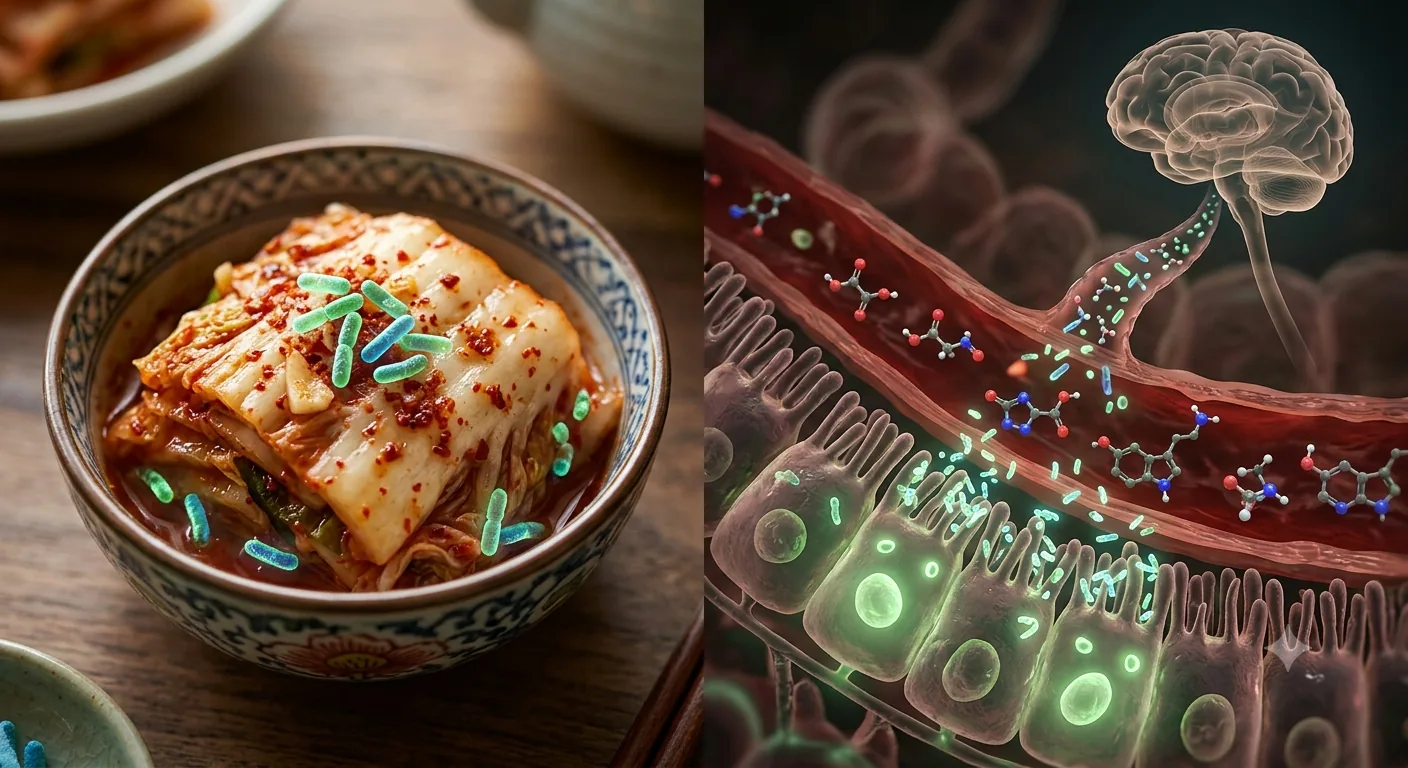
Yes, but only if the jar was never pasteurized. Kimchi becomes probiotic through fermentation: over days in the cold, wild lactic-acid bacteria eat the sugars in the cabbage and radish, souring the batch and multiplying into the billions. Those living bacteria are the “probiotics.” Pasteurization, which means heating a sealed jar so it can sit on a shelf, stops all of that by killing the bacteria outright. You still get the tang, the crunch, and much of the nutrition, but a pasteurized jar is fermented food without the live culture.
The definition is not a marketing nicety. The international Codex standard for kimchi (CXS 223-2001) requires that the product be fermented “to ensure the proper ripening and preservation of the product by lactic acid production at low temperatures,” and caps total acidity as lactic acid at 1.0%. Low temperature and living bacteria are baked into what kimchi is. Unpasteurized kimchi kept cold stays alive, and its bacteria count actually climbs for a week or two after production before slowly tapering off.
Refrigerated vs. Shelf-Stable: Where the Jar Sits Says a Lot
The fastest tell is simply where the store keeps it. Live kimchi has to stay cold, so it lives in the refrigerated section beside the tofu and banchan. Kimchi engineered to sit on a warm, dry shelf has to be stabilized, usually by pasteurization, or it would keep fermenting, build up gas, and eventually pop its lid. As of 2026, most mass-market jars sold unrefrigerated in Western supermarkets are pasteurized for exactly that shelf-life reason, while the raw, culture-rich stuff is almost always tucked in the cold case.
Cold is the working condition, not a courtesy. Canadian public-health guidance on the safety of fermented foods describes modern kimchi as fermented under refrigeration, for example at 10°C and lower, and notes that producers selling it raw, without heat treatment or pasteurization, are advised to hold the product refrigerated for a minimum of two weeks after the pH drops. That same guidance observes that kimchi is typically served raw, without heat treatment, and is marketed as containing living probiotic microorganisms. A jar built for a warm shelf has left that world entirely.
| Refrigerated, unpasteurized | Shelf-stable, pasteurized | |
|---|---|---|
| Live probiotics | Yes, active cultures | No, killed by heat |
| Where it’s sold | Cold case / fridge aisle | Dry ambient shelf |
| Label clues | ”raw,” “naturally fermented,” “live cultures" | "pasteurized,” “heat-treated” |
| Behavior in the jar | Fizzes, builds pressure, keeps souring | Stable, quiet, no gas |
| Taste over time | Grows more sour week by week | Stays roughly the same |
Reading the Label: How to Spot Pasteurized Kimchi
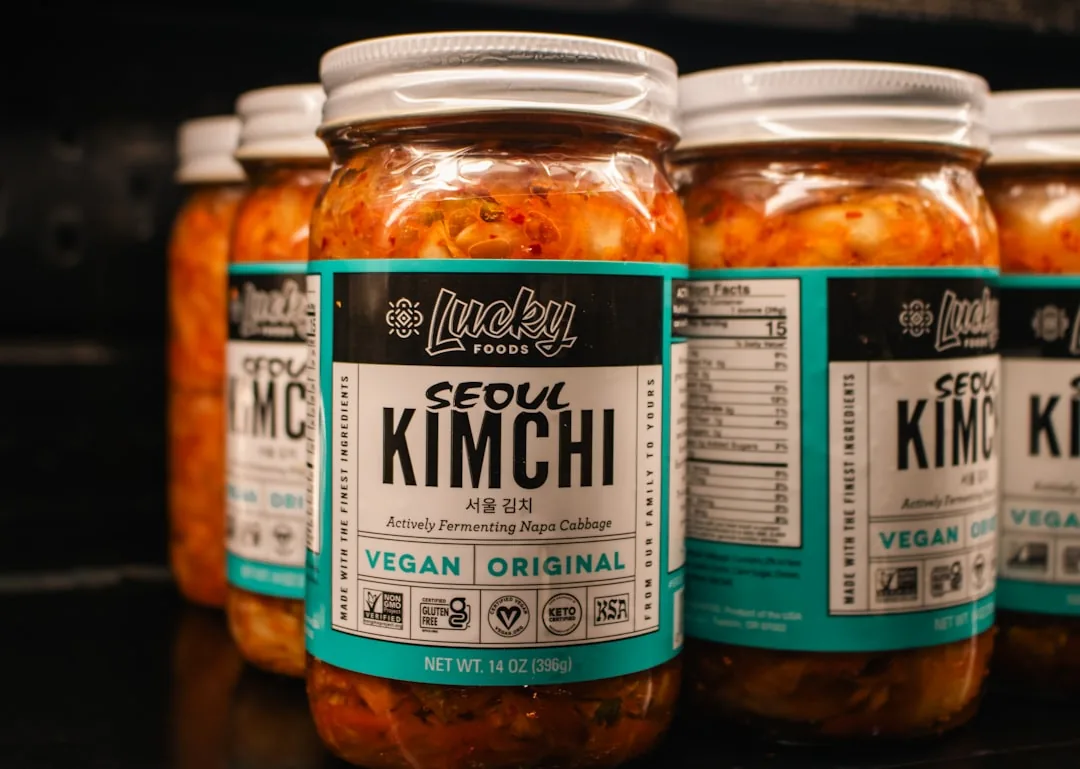
Flip the jar over and scan the fine print before you commit. Brands that keep their cultures alive tend to say so proudly, so look for “unpasteurized,” “raw,” “naturally fermented,” “contains live and active cultures,” or a firm instruction to keep it refrigerated. Brands that pasteurize rarely advertise the fact, so the words “pasteurized” or “heat-treated” tucked into the process line are your giveaway. Here’s one more clue: if the only storage promise is a long ambient shelf life measured in months at room temperature, assume it was heat-treated, because raw kimchi simply cannot do that safely. For reference, the same Canadian guidance notes that commercial producers generally put best-before dates of roughly two months on refrigerated kimchi, so a jar promising a year on a dry shelf is telling on itself.
The Fridge-Aisle Self-Check: Fizz, Bubbles, and Pressure
Live kimchi behaves like something that is, well, alive, and you can feel it. Press gently on the lid of a refrigerated jar; a slight dome or a firm push-back means the bacteria are still pumping out carbon dioxide in there. Open one and you’ll often hear a soft hiss or watch tiny bubbles crawl up the brine, and regulars will tell you that fizz is the culture breathing, not spoilage. What surprises most first-timers is that this liveliness is exactly the thing you want. A jar that stays dead silent, perfectly still, and unchanged in flavor no matter how long it sits is almost certainly pasteurized.
Which Kimchi Brands Have Live Cultures, and Which to Buy for Your Goal
Choose based on why you’re eating it, not just on price. If you want the gut benefits, buy refrigerated kimchi that explicitly claims live or active cultures on the label; a growing number of small-batch and Korean-market brands, as of 2026, state this outright. Those are also the jars worth reaching for if you are chasing the wider claims made for fermented food, from digestion to the rest and recovery angle we looked at separately. If you’re cooking it into fried rice, jjigae, or a pot of ramen, pasteurized shelf-stable kimchi is perfectly fine and usually cheaper, because the heat of the pan would destroy the probiotics anyway. A cheap pasteurized jar is exactly what an easy kimchi fried rice wants. And if you simply love the taste, either one works, since the flavor gap is tiny next to the live-versus-dead difference. When in doubt, the refrigerated jar with a “keep cold” instruction is your safest bet for actual probiotics.
Frequently Asked Questions
Q: Is pasteurized kimchi still fermented?
Yes. It was fully fermented before it was heated, so it keeps the sour taste, the softened texture, and many of its nutrients. Pasteurization only kills the living bacteria. It does not “un-ferment” the food. You get fermented flavor without the live probiotic culture.
Q: Is store-bought kimchi pasteurized by default?
No, it depends entirely on how the brand sells it. Kimchi sold from the refrigerated case is usually raw and unpasteurized, because cold storage is what keeps it stable. Kimchi sold from a warm, dry shelf is usually pasteurized, because heat is what lets it survive there. Neither is a rule of law, which is why the label and the storage instruction matter more than the brand name.
Q: How can I tell if store-bought kimchi has live cultures?
Check three things: where it was sold (cold case usually means live), the label (“unpasteurized,” “raw,” or “live cultures” is good; “pasteurized” is not), and the jar’s behavior (fizz, bubbles, or a domed lid signal active fermentation). A warm-shelf jar that is silent and never changes flavor is almost certainly pasteurized.
Q: Does kimchi lose its probiotics when you cook it?
Yes. The lactic-acid bacteria in kimchi start dying off well below boiling, so stir-frying or simmering it into a stew wipes out most of the live culture. That’s fine for flavor, since cooked kimchi is delicious, but if probiotics are the goal, eat it cold and raw straight from the fridge.
Q: How long do the probiotics in refrigerated kimchi last?
In an unpasteurized jar kept cold, the bacteria count typically peaks within the first two to three weeks after production, then slowly declines over the following months as the kimchi keeps souring. It stays probiotic for a long time in the fridge, just gradually less potent, and a lot more sour.
Bottom line: reach past the warm shelf, grab the cold jar that says “unpasteurized,” and let the fizz tell you it’s alive.
Part of Kimchi & Fermented Foods