South Korean Age Hierarchy: Why Koreans Ask Your Age First

On this page
- Why Do Koreans Ask Your Age So Soon?
- What Will They Call You Once They Know?
- When Does Someone Offer to Drop Formal Speech?
- Did the 2023 Law Change South Korean Culture’s Age Hierarchy?
- Why Do Birth Years Count More Than Birthdays?
- Does Age Always Outrank a Job Title?
- How Should a Visitor Answer the Age Question?
- Frequently Asked Questions
Picture two strangers at a team dinner in Seoul. Business cards cross the table, the first glasses get poured, and before the side dishes are finished one of them asks 몇 년생이세요? (“what year were you born?”). To a visitor it can sound oddly personal. In South Korean culture, though, age hierarchy is built into the grammar, so the question is closer to asking which language to speak. The answer decides how every later sentence ends, what each person calls the other, and who gets to suggest relaxing the rules. The usual explanation stops at two words, honorifics and Confucianism. What happens after you answer is the part worth knowing.
Quick answers
- Koreans ask your age because relative age decides their speech level, the title they use for you, and whether either of you can ever switch to casual 반말 (banmal).
- Give your birth year rather than a number: Korea made international age the official default on 28 June 2023, but school entry, conscription and the alcohol age still count by birth year, so in 2026 anyone born in 2007 or earlier can buy a drink.
- Keep polite speech until someone offers 말 놓을까요? (“shall we talk casually?”), and remember that at work a job title outranks age.
Why Do Koreans Ask Your Age So Soon?
Because a Korean speaker can’t settle on how to talk to you until they know which of you is older. Every sentence carries a speech level, and the everyday split runs between 존댓말 (jondaenmal), polite speech that ends in 요 or 니다, and 반말 (banmal), the casual register. Urimalsam, the National Institute of Korean Language’s open dictionary, gives 반말 two meanings that pull in opposite directions. One is speech that neither raises nor lowers the listener, used when a relationship is unclear or very close. The other is speech that talks down, as if to a junior. Relative age goes a long way toward deciding which of the two a casual sentence will sound like.
Respect reaches inside the sentence as well. When the subject is an elder, the verb takes the honorific -시- (오세요 instead of 와요), and some nouns swap outright: 나이, the plain word for age, becomes 연세 when the age belongs to someone older. A name doesn’t settle any of this. Urimalsam’s entry for 씨, the polite tag that follows a name, notes that it is hard to use toward a superior outside official or written settings, which is why a polite-looking “Kim-ssi” can still land badly. Your name tells a new acquaintance what to write down; your birth year tells them how to speak.
The ranking itself is old. The Encyclopedia of Korean Culture traces it to the five relationships set out in the Mencius, among them 장유유서 (jangyu yuseo), the rule that elder and younger keep their order. Its entry on alcohol quotes the saying 찬물에도 위아래가 있다 (“even cold water has an up and a down”) to explain why drinking always followed that order. Bowing grew from the same root, and how deep a bow goes, and to whom, still tracks the ladder.
What Will They Call You Once They Know?
That depends on who turns out older and on the speaker’s gender, not yours. Once two people are on friendly terms, the younger one tends to trade the older one’s name-plus-씨 for a kinship title borrowed from the family:
| The younger speaker is… | Older man | Older woman |
|---|---|---|
| a man | 형 (hyung) | 누나 (noona) |
| a woman | 오빠 (oppa) | 언니 (unnie) |
All four began as words for siblings, and Urimalsam lists a second sense for each: what a younger person calls an older, unrelated friend, with affection. That second sense is the one you’ll meet in cafés and group chats. An older friend can simply use the younger one’s name, often with the casual call ending 아 or 야 (지영아, 민수야), and Urimalsam also lists 동생 (dongsaeng), the word for a younger sibling, as an affectionate way for an older person to call or refer to a younger, unrelated one. The rules on who may say which of the four words, and how soon, trip up more learners than the vocabulary does.
Born in the same year? Then you are 동갑 (dong-gap). The Standard Korean Language Dictionary explains the word as sharing the same year of the sixty-year cycle, a reminder that the comparison runs on years, not exact ages. Two 동갑 friends call each other by name and, once they’re close, speak 반말 as equals, which is the first sense of the word in action.
School and work add one more title. 선배 (sunbae) is someone ahead of you in the same field or the same school, and with 님 attached (선배님) it works as a form of address on its own, which matters later, when age and seniority collide.
When Does Someone Offer to Drop Formal Speech?
When the relationship feels settled, and almost always out loud. The idiom is 말을 놓다, literally “to put speech down,” and Urimalsam’s entry for 놓다 defines that use as speaking without honorifics, either as equals or downward. You’ll hear it as a question, 말 놓을까요? (“shall we talk casually?”), or as permission from the older side, 말 편하게 하세요 (“speak comfortably with me”). Between 동갑 acquaintances either person can raise it. With an age gap, it is safest to let the older person raise it, because Urimalsam’s second sense of 반말 is speech that talks down, as if to a junior.
That asymmetry is the trap for visitors. If you are the older one, the younger person may keep speaking politely to you even after you’ve switched to 반말 with them, and that is normal rather than cold. If you are the younger one, keep your 요 endings until you are invited to drop them, even when the other person has already gone casual. Sliding into 반말 uninvited is the “talking down” sense of the word, and it lands exactly that way.
Did the 2023 Law Change South Korean Culture’s Age Hierarchy?
No. It changed the number on paperwork, and the ranking was never built on that number. Under the traditional count, 세는 나이 (se-neun nai), a baby was one at birth and gained a year every 1 January. On 28 June 2023, amendments to Korea’s basic administrative law (행정기본법) and its Civil Act (민법) took effect, making international age, 만 나이 (man nai), the default for legal and administrative purposes unless another law says otherwise. The government’s announcement cited a wage-peak dispute over whether “56” meant international 55 or 56, a fight that ran until March 2022.
Several systems were deliberately left counting by calendar year, among them elementary school entry, military service, eligibility for civil-service exams, and the Youth Protection Act’s limits on alcohol and tobacco. The Ministry of Government Legislation’s reasoning was practical. School grades and conscription are managed in one-year blocks, and an age limit that split same-year friends by their birthdays would only make daily life awkward. In 2026 that means anyone born in 2007 or earlier can buy alcohol, and the Military Manpower Administration’s conscription exams, running from 15 January to 23 December 2026, are aimed at men born in 2007, whom its January press release introduced as the “golden pig” class.
Why Do Birth Years Count More Than Birthdays?
Because Koreans grow up sorted into classes by birth year, and those classmates become the yardstick for everyone else. By default a child starts elementary school on 1 March of the year after turning six, so a first-grade class is, in practice, one birth year. That year becomes a peer group for life, which is why the question can arrive as 몇 년생이세요? rather than as a request for a number.
Adults who started school before 2009, now in their mid-twenties or older, carry one wrinkle. Until the rule changed for children entering school in March 2009, a class took everyone born from 1 March through the end of the following February, as a 2008 government notice on the switch spelled out, so January and February babies started school with children born the year before. Some of them still count those classmates as peers and call themselves 빠른 년생 (ppareun nyeonsaeng, roughly “early birth year”; Urimalsam gives the standard spelling as 빠른 연생). Seat one at a table with people from both neighbouring years and the ladder wobbles: a classmate to the older group, a birth-year twin to the younger one. Children who started school after the change don’t have the problem at all, so the wrinkle is slowly aging out.
Does Age Always Outrank a Job Title?
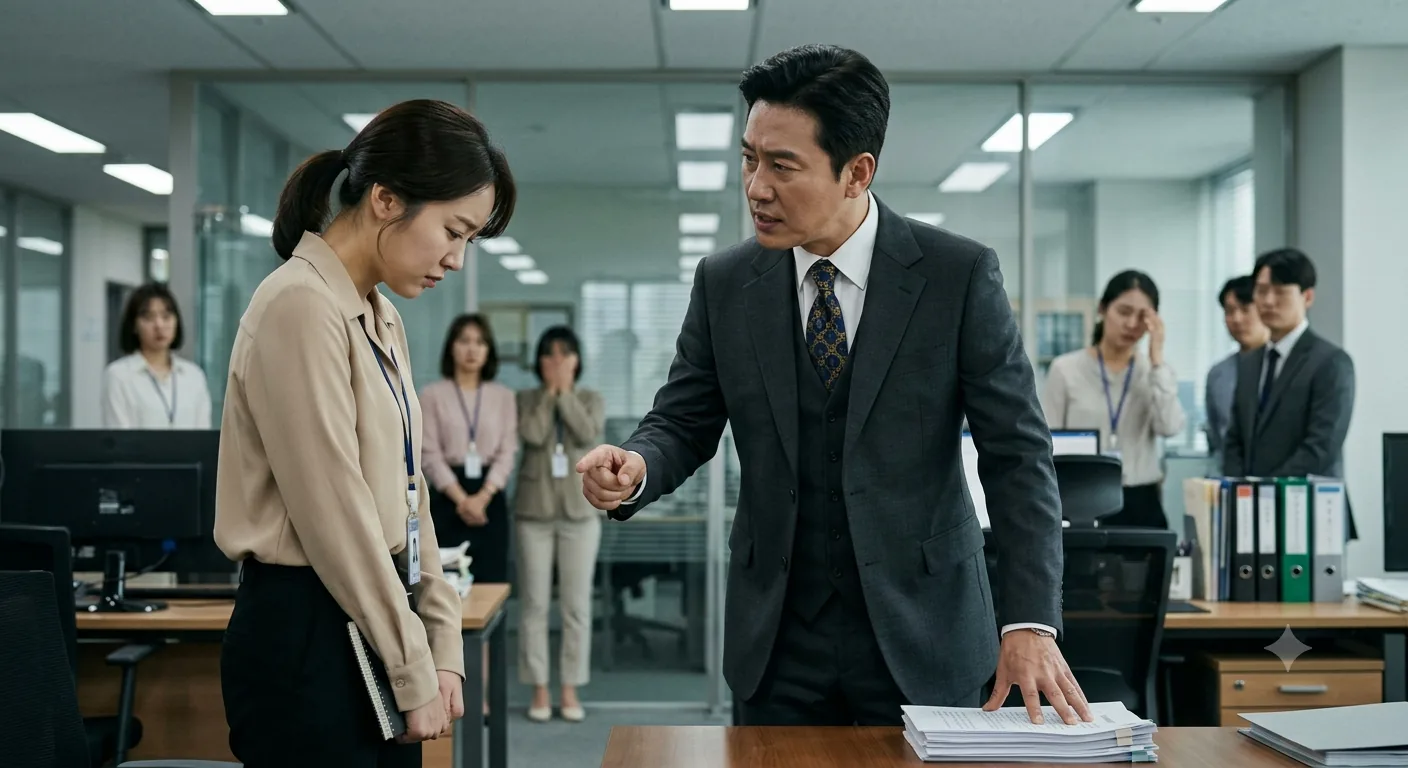
No. At work, rank decides the title and age mostly decides the tone. A new hire addresses a younger team leader as 팀장님 (team leader plus the honorific 님) and stays in polite speech. The National Institute of Korean Language’s Standard Language Etiquette guide goes further, telling everyone at work to add the honorific -시- when speaking to colleagues of any rank, not only to superiors. Workplace address runs on job titles, so treat kinship titles like 형 or 누나 as something two colleagues agree on rather than a default.
School runs its own ladder, and it counts entry year rather than birth year. Urimalsam defines 선배 as someone who entered your school before you, so a student who started university after a gap year can be the 후배 (hubae, junior) of students younger than they are. On campus the shorthand for that ladder is 학번 (hakbeon), the student number the dictionary describes as assigned by entry year and department. Neither ladder licenses rudeness, and Korean has a pointed word for superiors who forget that: gapjil.
How Should a Visitor Answer the Age Question?
Give your birth year in polite speech, and let the other person set the pace. A short 저는 1995년생이에요 (“I was born in 1995”) answers what the asker actually wants, and stating the year sidesteps any confusion between the old count and the new one. If the question comes as 몇 살이에요? (“how old are you?”), give your international age and add the year after it.
Then watch for three things. As the older one, you may become 형, 오빠, 누나 or 언니 once you’re on friendly terms, or stay as your name plus 씨. Share a birth year and an offer to drop formal speech may follow, and accepting it is a compliment rather than a demotion. If you are younger, keep the 요 on your sentences and wait for the offer. On a short trip, polite speech with staff and strangers is a safe choice whatever anyone’s age, so the ladder only starts to matter once a friendship does.
Frequently Asked Questions
Q: Is it rude to ask a Korean person their age?
Not while two people are getting acquainted, since the answer tells both of you how to speak. Use the polite form 나이가 어떻게 되세요?, and with someone clearly older swap in the honorific noun: 연세가 어떻게 되세요?
Q: How do I convert my old Korean age to my real age?
Take the traditional age and subtract one if your birthday has already passed this year, or two if it hasn’t. That rule of thumb comes from the Ministry of Government Legislation’s 2023 briefing on the switch.
Q: Can an 18-year-old buy alcohol in Korea in 2026?
Yes, if they were born in 2007. The Youth Protection Act looks only at birth year, so everyone born in 2007 has been able to buy alcohol and cigarettes since 1 January 2026, including people who stay 18 in international age until their birthday. Carry a passport for ID checks.
Q: Do I have to call an older Korean friend oppa or unnie?
No. The titles signal closeness rather than obligation, and a name plus 씨 is a polite fallback, though Urimalsam notes that 씨 is hard to use toward a superior outside official or written settings. If you’d like to switch, ask first: 오빠라고 불러도 돼요? (“can I call you oppa?”).
The question that sounded nosy at that first dinner is really a courtesy: once the birth years are on the table, everyone knows how to speak, and the conversation can finally relax.
Part of Korean Etiquette & Manners