Why Is Korea Still Technically at War? Armistice Explained
On this page
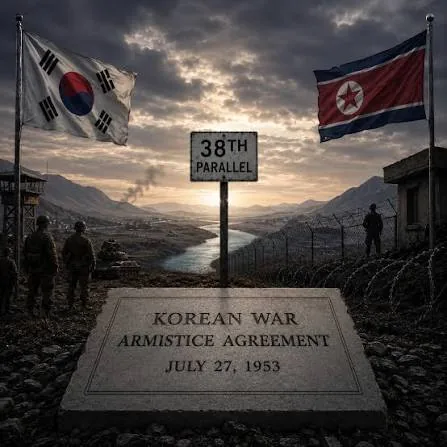
No, the Korean War has not officially ended. At 10 a.m. on July 27, 1953, two generals signed the Korean Armistice Agreement at Panmunjom, and the ceasefire took effect twelve hours later. That is why Korea is still technically at war: an armistice stops the shooting, but it takes a peace settlement to end a war, and in the 73 years since, nobody has signed one. The same missing document explains why the DMZ dividing the peninsula is still an active military boundary rather than a former battlefield.
Quick answers
- The Korean War never formally ended because the July 27, 1953 agreement was an armistice, a military ceasefire, not a peace treaty.
- Paragraph 62 of the armistice keeps it in force until a political-level peace settlement supersedes it, and none has ever been signed.
- North Korea’s army, China’s volunteers and the U.S.-led United Nations Command signed it; South Korea’s government refused.
”The 1953 Armistice Ended the Korean War”
It ended the shooting, not the war. An armistice is a military order to stop combat while the political conflict stays legally open, and the text of the 1953 agreement says so itself: its terms are “purely military in character,” meant to hold “until a final peaceful settlement is achieved.” The Korean Armistice Agreement suspended fighting along a Military Demarcation Line without resolving who actually won or settling the peninsula’s status. Paragraph 62 then keeps every article in force until it is superseded by “an appropriate agreement for a peaceful settlement at a political level between both sides.” That agreement was never signed by anyone. Seven decades on, the gap is still open, which is the single fact most DMZ trivia gets wrong.
”North and South Korea Are the Two Sides of the Deal”
Look at the signature page and South Korea isn’t on it. At Panmunjom, North Korean general Nam Il and U.S. Army Lieutenant General William K. Harrison Jr. signed as the two senior delegates. The three commanders then signed at their own rear headquarters: Kim Il Sung for the Korean People’s Army, Peng Dehuai for the Chinese People’s Volunteers, and U.S. General Mark W. Clark for the United Nations Command. The Encyclopedia of Korean Culture records that South Korea’s representative refused to sign to the very end, as a protest against the truce itself; President Syngman Rhee’s government opposed any ceasefire that left the peninsula divided. To this day South Korea has never been a signatory to the armistice it lives inside, and any future peace deal would need to work around that gap, not just paper over it.
”A Peace Treaty Was Basically Guaranteed to Follow”
The armistice itself expected one; it just never showed up. Article IV, paragraph 60, recommended that the governments concerned hold “a political conference of a higher level of both sides” within three months to settle the withdrawal of foreign forces and “the peaceful settlement of the Korean question.” That conference met in Geneva from April 26 to June 15, 1954, and the U.S. State Department’s documentary history of the Geneva Conference sums up the result: it “terminated with no agreement save the obvious one of continuing to disagree.” The closest the two Koreas have come since was the 2018 Panmunjom Declaration, in which Moon Jae-in and Kim Jong Un agreed to declare the end of the war that year and to promote three- or four-party talks “with a view to replacing the Armistice Agreement with a peace agreement” (full text, South Korean foreign ministry). No declaration was made that year, and no peace agreement followed.
”The DMZ Is Basically a Nature Reserve Now”
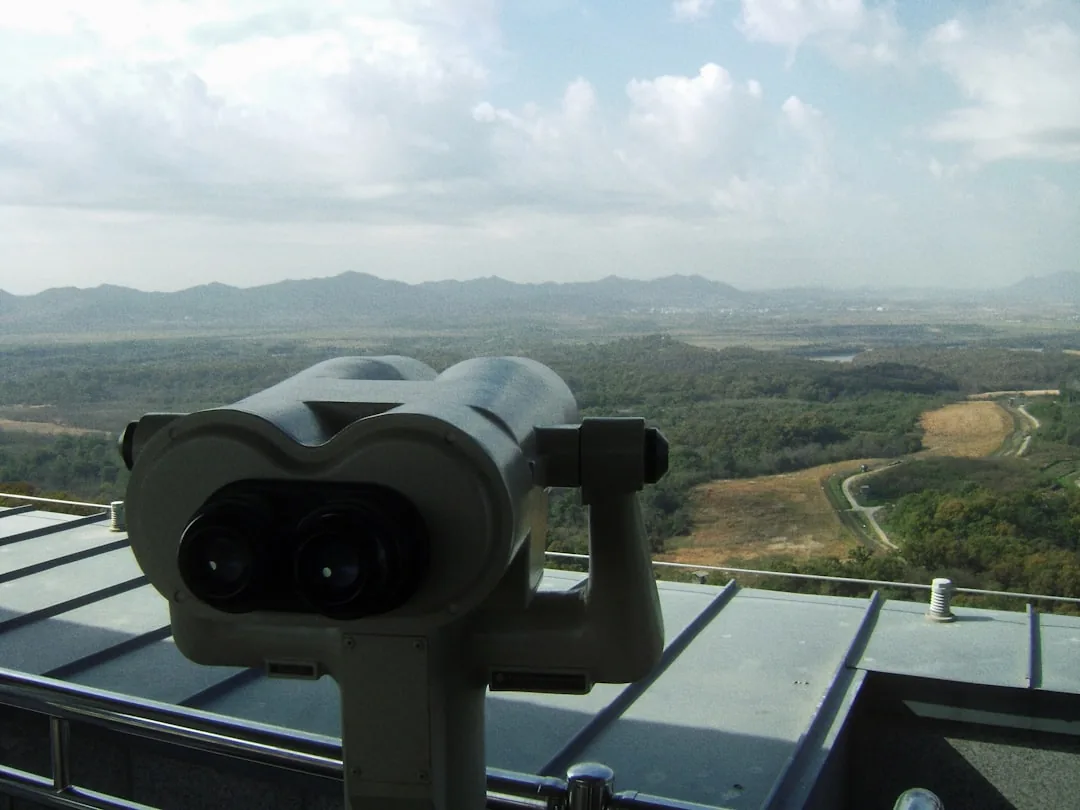
It’s a nickname that undersells the danger. The zone exists because paragraph 1 of the armistice ordered both sides to “withdraw two (2) kilometers” from the demarcation line, leaving a buffer about 4 km wide, and paragraph 7 still bars any person, “military or civilian,” from crossing that line without the Military Armistice Commission’s authorization. Ironically, the Demilitarized Zone is one of the most heavily fortified borders on Earth, lined with landmines and guard posts; even Paju City’s official tourist route warns that everything off its designated roads is unverified minefield. The armistice has held for over 70 years, but not without lethal breaks: North Korea shelled South Korea’s Yeonpyeong Island in 2010, killing four people, a reminder that a ceasefire line is not the same thing as peace.
So Why Is Korea Still Technically at War?
Because ending it on paper takes a political agreement the parties still can’t reach. Paragraph 62 means a quiet border is not enough: only a settlement “at a political level between both sides” can retire the armistice. North Korea has moved further away, not closer. Since Kim Jong Un’s 2023 turn to a “hostile two-state” line, Pyongyang treats the South as a separate enemy state, and a constitutional revision reported in May 2026 dropped its references to reunification. At a party congress in February 2026, Kim said he was open to talks with the United States only if Washington accepts North Korea’s nuclear status (AEI’s August 2026 update). Seoul keeps trying anyway: in March 2026 the unification ministry said it would seek a multilateral “peace declaration” with the armistice’s signatory countries, the United States, North Korea and China (The Korea Times). China’s seat at that table is not a courtesy, since the commander of its volunteers signed the 1953 agreement. Layer on South Korea’s own outsider status in the original deal, and you get a diplomatic tangle that has outlasted more than a dozen presidents in both Seoul and Washington since 1953, not because nobody has tried, but because every real attempt runs into the same unresolved questions.
What’s left over from that unfinished business is still visible. The blue conference buildings still straddle the line at Panmunjom, though under the UN Command’s redesigned tour, visitors now view them from the roof of Freedom House instead of stepping inside (NK News, December 2025). And the South built its entire modern economy under a ceasefire, going from an aid-dependent economy in the 1950s to a high-income country by the World Bank’s yardstick without the war ever formally ending.
Frequently Asked Questions
Q: Has the Korean War officially ended?
No. The armistice only suspended the fighting, and its paragraph 62 keeps it in force until a political-level peace settlement replaces it. No such settlement has been signed, so in 2026 the war remains legally unfinished, 73 years after the ceasefire took effect.
Q: Is the U.S. still technically at war with North Korea?
In the same legal sense, yes. U.S. General Mark W. Clark signed the armistice as commander-in-chief of the United Nations Command, and no peace treaty between Washington and Pyongyang has ever followed, so American forces in Korea still operate under a ceasefire rather than a peace.
Q: What would it take to officially end the Korean War?
A political agreement that supersedes the armistice, which paragraph 62 describes as a peaceful settlement “at a political level between both sides.” Seoul’s current plan starts with a four-party “peace declaration,” a statement of political will rather than a treaty, and it would still need North Korea’s agreement.
Q: Can foreigners still tour the JSA at Panmunjom?
Not reliably. Civilian JSA tours were suspended after the July 2023 crossing, and in May 2025 the Ministry of Unification restarted only small special tours for invited groups, without a date for general tours. Its public tour application page accepts South Korean citizens aged 8 and over, and states that foreigners cannot apply.
Q: Is it safe to visit the DMZ if the war never technically ended?
Yes, on an authorized tour that sticks to its rules. The ceasefire has held since 1953, and official tours such as Paju City’s run on fixed routes with ID checks; the real danger is off the road, where the tour itself warns of unverified minefields.
Nothing about the peninsula’s front page was settled in 1953. The fighting paused, and the paperwork that was supposed to finish the job never arrived.