Korean Independence Flag at the Waldorf Astoria: A History
On this page
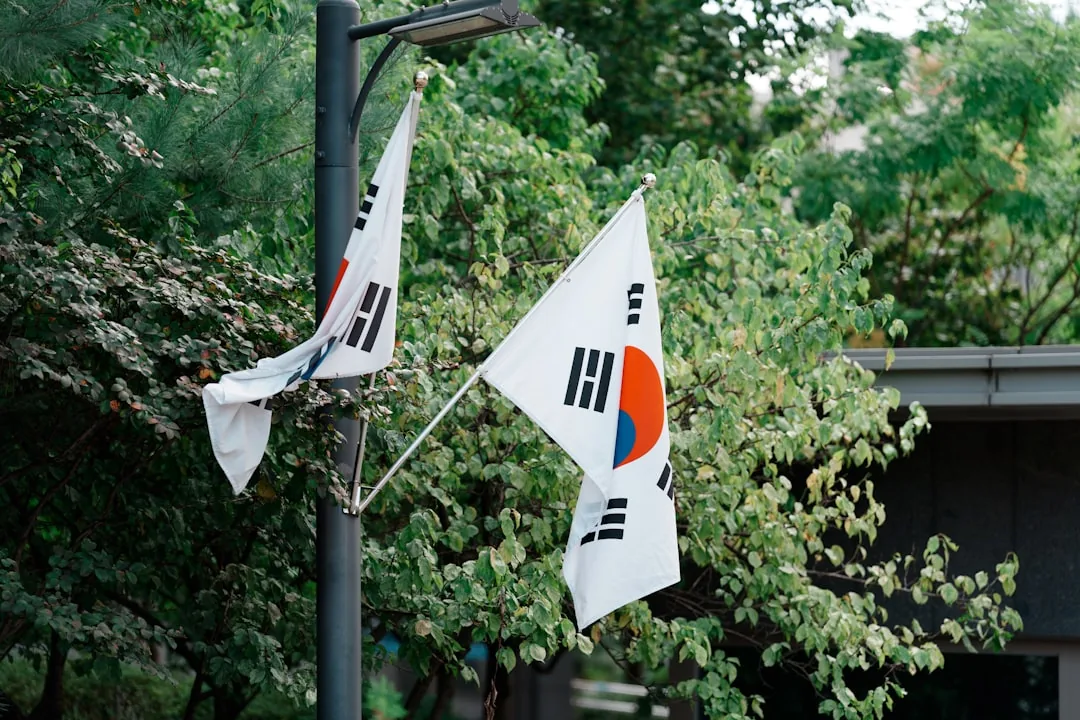
The Korean independence flag from the Waldorf Astoria is a Taegukgi that was used at the New York hotel in 1942, when Syngman Rhee, later South Korea’s first president, hosted a Korean independence dinner there for American politicians, journalists and religious leaders. Korea was still a Japanese colony. Nearly four decades later, in September 1981, a Korean American named Kim Dong-jun found the flag at the same hotel, kept it, and eventually donated it to South Korea’s National Assembly. Conservators in Korea finished stabilizing it in 2026, eighty-four years after that dinner. This is the life of that one object: who made it, how it crossed the Pacific, and what the restoration changed.
Quick answers
- The flag was made in the 1930s by The Copeland Company, an American flag maker, and was used at Syngman Rhee’s 1942 Korean independence dinner at the Waldorf Astoria in New York.
- Kim Dong-jun, a Korean American, found it at the hotel in September 1981 and later donated it to the National Assembly, and Korea registered it as cultural heritage on August 12, 2008.
- Conservators finished treating the yellowed, water-stained flag in July 2026, and it goes back to its owner, the National Assembly Archives.
1942: The Korean Independence Dinner at the Waldorf Astoria and Its Flag
Rhee’s dinner was staged for an American audience, and the guest list shows it: American politicians, journalists and religious leaders, invited to one of Manhattan’s best-known hotels to hear the case for Korean independence. Korea had been under Japanese rule since 1910, the end of a long slide that included the 1895 assassination of Empress Myeongseong inside Gyeongbokgung Palace. Its provisional government had operated in exile since 1919, and the United States had not recognized it. A formal dinner in New York put the independence case in front of people who could repeat it in print, in politics and from the pulpit. Nor was the flag in the room a homemade banner. It was manufactured in the 1930s by The Copeland Company, an American flag maker, so an American manufacturer was making the Korean national flag years before Korea was free to fly it at home.
1981–2008: Found at the Hotel, Registered as Heritage
The flag resurfaced in September 1981, when Kim Dong-jun, a Korean American, visited the Waldorf Astoria and found and acquired it there. The 2008 notice does not say where it spent the 39 years in between. Kim kept the flag for a time and then donated it to South Korea’s National Assembly. On August 12, 2008, the Cultural Heritage Administration registered it as cultural heritage together with 14 other old Taegukgi, a batch of 15 flags chosen for their historical value. That notice is careful with its wording, describing a flag known to have been used at Rhee’s dinner, so that is how this article describes it too. Since then the agency has been renamed the Korea Heritage Service, and the category is now called registered national heritage.
2026: How the 1942 Taegukgi Was Restored
On July 9, 2026, the Korea Heritage Service announced that the Cultural Heritage Conservation Science Center, part of its national heritage research institute, had finished conserving the flag. Long storage fixed inside a frame had yellowed the whole white field and left heavy moisture stains, and the fabric of the central taeguk and the four trigrams had folded and wrinkled until some of the stitching split. Conservators took the flag out of its frame and removed the adhesive left on its back. They humidified the distorted areas with a fine mist and flattened them under pressure, lifted surface dirt with a soft brush and a vacuum aspirator, and carried out partial wet cleaning with agarose gel, which keeps moisture confined to the patch being treated. Splits and tears were reinforced along the original seam lines, which keeps the repairs as unobtrusive as possible. What surprises most people is that a conserved wartime textile isn’t meant to look new. It should still look eighty-four years old, just no longer getting worse.
What Remains of the Flag Today
The July 2026 announcement sends the flag back to its owner, the National Assembly Archives, to be stored and used there. Registered national heritage is the category Korea uses for modern objects, separate from the designated tiers of Treasure and National Treasure that cover far older things such as the Tripitaka Koreana woodblocks. That modest label undersells this one. A flag made by an American company, raised in an American hotel for American guests, is physical evidence that the case for Korean independence was argued in the United States as well as in exile offices in China. Liberation in 1945 did not settle that story either, because division followed, and that unfinished business still explains why Korea is technically still at war.
Frequently Asked Questions
Q: Who owns the Korean independence flag from the Waldorf Astoria today?
South Korea’s National Assembly Archives. Kim Dong-jun donated the flag to the National Assembly after finding it at the hotel in 1981, and the 2026 conservation announcement names the Archives as the place it returns to.
Q: Why was a Korean independence event held at a hotel in New York in 1942?
Korea was a Japanese colony and its provisional government lacked recognition from the United States, so a dinner at a prominent Manhattan hotel put the independence case in front of American politicians, journalists and religious leaders during World War II.
Q: Is the Waldorf Astoria flag a National Treasure?
No. It has been registered national heritage since 2008, a category for modern objects that sits apart from the designated Treasure and National Treasure tiers.
Q: Can I see the restored flag in person?
The July 2026 announcement named no exhibition date. It said only that the National Assembly Archives would store and use the flag, so check that institution’s notices before planning a visit.
Eighty-four years after Rhee’s dinner, the flag is stable again. That quiet fact, more than any plaque, is what keeps this piece of Korean independence history legible.