Gyeongbokgung vs Changdeokgung: Which Palace to Visit
On this page
- Gyeongbokgung vs Changdeokgung Which to Visit First?
- What’s the Actual Difference Between Gyeongbokgung and Changdeokgung?
- Which Palace Wins If You Only Have Half a Day in Seoul?
- Is Changdeokgung’s Secret Garden Worth the Extra Ticket and Reservation?
- Which One Has Better Photos and Fewer Crowds, Gyeongbokgung or Changdeokgung?
- Frequently Asked Questions
Gyeongbokgung is the palace to visit if you only have time for one: it has the grander formal halls and the Gwanghwamun changing-of-the-guard ceremony. Changdeokgung is the pick if you would rather trade crowds for the UNESCO-listed Secret Garden and the palace Joseon kings actually chose to live in. First-time visitors assume the two are interchangeable because they stand about fifteen minutes apart on foot in central Seoul, but they are built on opposite ideas. Gyeongbokgung runs in straight, symmetrical lines behind Gwanghwamun, while Changdeokgung curves around ponds and hillsides because it was laid out to follow the terrain rather than bend it to a plan. General admission to either is 3,000 KRW in 2026, so seeing both in one day is realistic, but if you have to rank them, Gyeongbokgung is the first-timer’s palace and Changdeokgung is the one to save for a quieter return trip.
Quick answers
- If you only have time for one palace, pick Gyeongbokgung for its formal halls, the guard ceremony at Gwanghwamun (10:00 and 14:00) and the two national museums on its grounds.
- Pick Changdeokgung for a calmer visit (2.2 million visitors in 2025 against Gyeongbokgung’s 6.9 million), the UNESCO-listed Secret Garden, and the palace that served as the kings’ working seat for about 270 years.
- Adult admission is 3,000 KRW at each palace as of 2026; the Secret Garden is a separate 5,000 KRW timed ticket, and the 6,000 KRW Integrated Ticket of Palaces covers four palaces plus Jongmyo for six months but not the garden.
Gyeongbokgung vs Changdeokgung Which to Visit First?
Gyeongbokgung goes first if you’re only in Seoul for a day or two. It was founded in 1395 as the Joseon dynasty’s principal palace, and it delivers the most recognizable postcard image for the least walking: Gwanghwamun gate, the Geunjeongjeon throne hall and Gyeonghoeru pavilion floating over its pond all sit on one straightforward loop. Changdeokgung rewards visitors who already have a Seoul palace under their belt and want something quieter and less staged. Check the day of the week before you choose, because the palace visiting rules close Gyeongbokgung every Tuesday and Changdeokgung every Monday. Arrive on a Monday and the decision is made for you.
What’s the Actual Difference Between Gyeongbokgung and Changdeokgung?
The core difference is symmetry versus terrain. Gyeongbokgung follows the rigid north-south axis typical of East Asian royal architecture, with halls stacked in a straight formal line behind Gwanghwamun. Changdeokgung, built a decade later in 1405 as a secondary palace, was laid out around the natural hills and streams of the site instead of leveling them, which the Korea Heritage Service’s history of the palace calls the most Korean of palace designs; UNESCO added it to the World Heritage list in 1997. Both palaces burned during the 1592 Japanese invasion, but Changdeokgung was the first to be rebuilt, in 1610, and it served as the working main palace for about 270 years until Gyeongbokgung was reconstructed in 1867. That makes Changdeokgung the more genuinely lived-in of the two. Gyeongbokgung’s later story is harsher: Empress Myeongseong was assassinated in 1895 in its rear Geoncheonggung compound, most of its halls were cleared in 1915 for a colonial exhibition (the fate of its crown prince’s quarter is traced in the real history behind The East Palace), and serious restoration only began in the 1990s.
| Gyeongbokgung | Changdeokgung | |
|---|---|---|
| Built | 1395 | 1405 |
| Layout | Formal, symmetrical | Terrain-following, informal |
| Signature feature | Gwanghwamun guard ceremony | Huwon Secret Garden |
| Adult ticket | 3,000 KRW | 3,000 KRW, plus 5,000 KRW for the Secret Garden |
| Closed | Tuesdays | Mondays |
| Visitors in 2025 | 6.9 million | 2.2 million |
| Protected site area | 432,703 ㎡ | 556,062 ㎡ |
| UNESCO status | No | Yes (1997) |
| Best for | First-timers, photos, ceremony | Repeat visitors, quiet, gardens |

Which Palace Wins If You Only Have Half a Day in Seoul?
Gyeongbokgung wins on a tight schedule because everything worth seeing sits along one walkable route. You can catch the Royal Guard Changing Ceremony at Gwanghwamun (10:00 and 14:00, about 20 minutes each), tour the main halls, and still have time to duck into the National Palace Museum or the National Folk Museum on the same grounds. Changdeokgung takes longer to do properly, mainly because the Secret Garden runs on fixed entry times and the official tour schedule puts its route at about 70 minutes, on top of roughly 50 minutes for the main palace halls.
Is Changdeokgung’s Secret Garden Worth the Extra Ticket and Reservation?
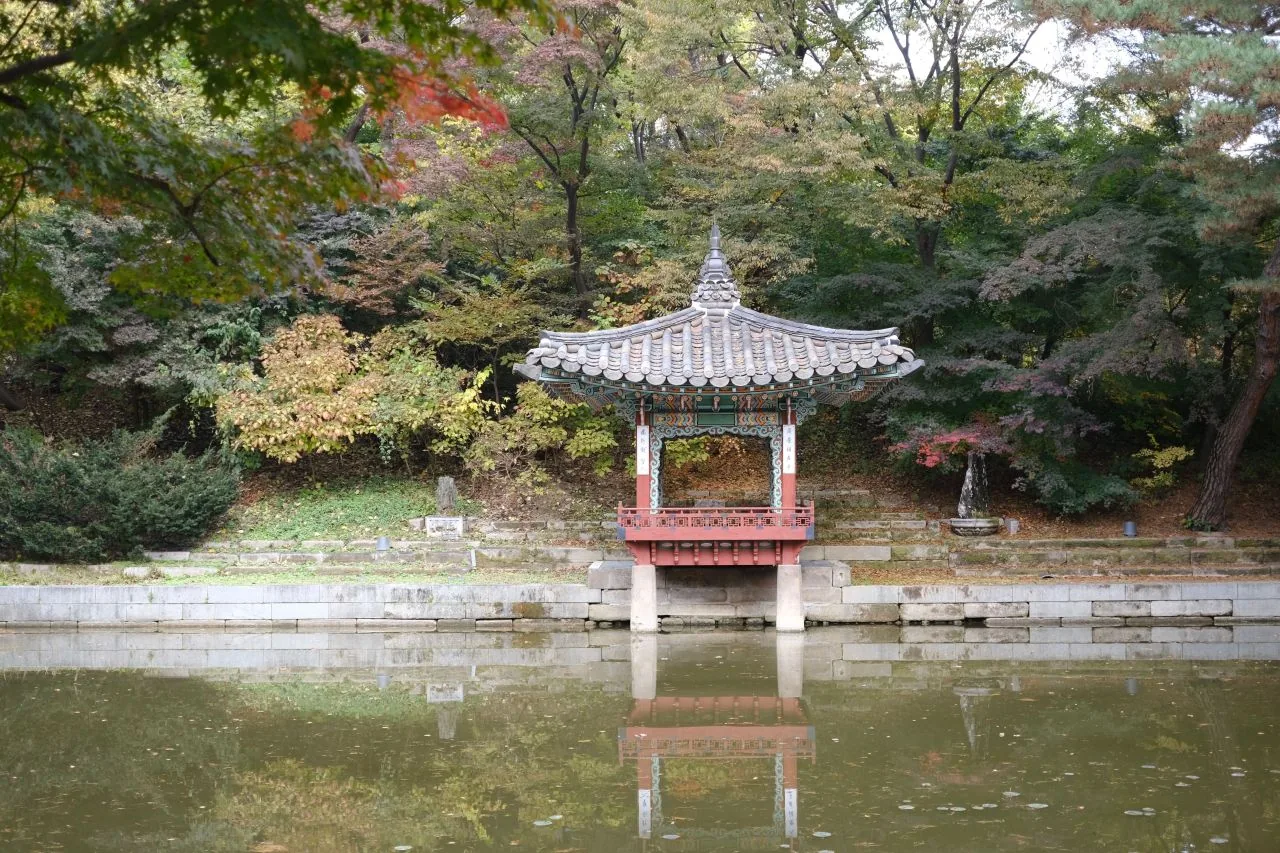
Yes, if gardens and quiet interest you more than architecture. The Secret Garden, also called Huwon or Biwon, is restricted viewing: you enter only at a set session time, each session is capped at 100 people to protect the garden, and the ticket costs 5,000 KRW for an adult in 2026 on top of the 3,000 KRW palace ticket, which you have to buy as well. English-language sessions start at 10:30, 11:30, 14:30 and 15:30, Tuesday to Sunday, from March to November. Regulars who’ve done both palaces will tell you the Secret Garden is the closest thing in Seoul to walking into a Joseon-era painting, with pavilions perched over lotus ponds and no straight lines in sight. One current caveat: the Ongnyucheon stream area at the garden’s far end is closed for conservation work. The garden is also the one ticket the 6,000 KRW Integrated Ticket of Palaces never covers, and our breakdown of that pass shows it only starts saving money from a third palace.
Which One Has Better Photos and Fewer Crowds, Gyeongbokgung or Changdeokgung?
Gyeongbokgung has the better postcard shot but the worse crowd situation. It drew 6.9 million visitors in 2025 against Changdeokgung’s 2.2 million, according to Korea Heritage Service figures reported by Herald Business, and the squeeze is worst around the guard ceremony and in cherry blossom season. Changdeokgung’s asymmetrical layout also spreads visitors out along winding paths instead of funneling them into one courtyard, so even a moderately busy day there feels calmer than an average afternoon at Gyeongbokgung. Size has nothing to do with it: Gyeongbokgung is often called the biggest palace, yet on the national heritage register Changdeokgung’s protected site is the larger one, a figure that takes in the wooded hills of the Secret Garden. If your goal is a photo without twenty strangers in the frame, aim for Changdeokgung’s inner garden areas rather than the front gate of either palace.

Frequently Asked Questions
Q: Can I visit both Gyeongbokgung and Changdeokgung in one day?
Yes. Anguk Station on subway Line 3 sits between them, and the palaces’ official directions put Changdeokgung 5 minutes from exit 3 and Gyeongbokgung 6 minutes from exit 1, so start at Gyeongbokgung in the morning and book an afternoon Secret Garden session. Skip Mondays and Tuesdays, when one of the two is shut.
Q: Do I need to book Changdeokgung’s Secret Garden in advance?
Booking is safer but not the only way in. Half of each 100-person session is sold online in advance and the other half at the ticket office from 9 a.m. on the day, first come, first served, so turning up when the office opens is the fallback if the online places are gone.
Q: Which palace is closer to Bukchon Hanok Village?
Neither has a real edge, because Bukchon Hanok Village sits on the hillside between the two palaces and borders both. The practical move is to start at Gyeongbokgung and walk east through Bukchon’s lanes to Changdeokgung, which turns the gap between them into part of the sightseeing.
Q: Is Gyeongbokgung or Changdeokgung better for hanbok rental photos?
Gyeongbokgung, mainly because its wide open courtyards and the Gwanghwamun gate give hanbok photos more dramatic open space than Changdeokgung’s narrower garden paths.
Q: Do children and seniors get in free at Gyeongbokgung and Changdeokgung?
Foreign visitors aged 18 and under or 65 and over enter both palaces free, but the Secret Garden still charges: 5,000 KRW from age 19, seniors included, and 2,500 KRW for ages 7 to 18. The last Wednesday of each month is also free palace entry for everyone, with the garden again excluded.
Pick Gyeongbokgung for the palace everyone pictures when they think of Seoul, and save Changdeokgung for the trip back when you want to see the one the kings actually chose to live in.