Is The East Palace Based on a True Story? The Real Donggung
On this page
Beside Geoncheonggung, near the quiet north end of Gyeongbokgung, lies a set of grey foundation stones blackened by fire. They once carried Jaseondang, the residence hall of Joseon’s East Palace, the walled quarter where the crown prince lived, and they are scorched because the building above them was sold off, shipped to Tokyo and burned after an earthquake. Netflix borrowed that palace’s name for a ghost story. The show itself is not a true story: The East Palace is an original screenplay, its king is never given a historical name, and Netflix’s own announcement sells it as “a period drama laced with supernatural mystery.” The compound, the tutors, even a curse aimed at a crown prince inside its walls: those were real, and the surviving record is stranger than the fiction built on top of it.
Quick answers
- No, The East Palace is not based on a true story: it is an original eight-episode script by Kwon So-ra and Seo Jae-won, released on Netflix on July 17, 2026, and no documented case sits behind its dead crown prince or its pond spirit.
- The closest real event is the 1527 “burnt rat” curse, when a mutilated, scorched rat hung on a ginkgo tree in the East Palace’s north courtyard was read as black magic against the crown prince, and a royal consort and her son lost their titles over it.
- Donggung (동궁), literally “east palace,” was a real quarter for the heir, and its residence hall at Gyeongbokgung, Jaseondang, was sold to a Japanese businessman in 1915, burned in Tokyo in 1923 and rebuilt on its original site in 1999.
Is The East Palace Based on a True Story?
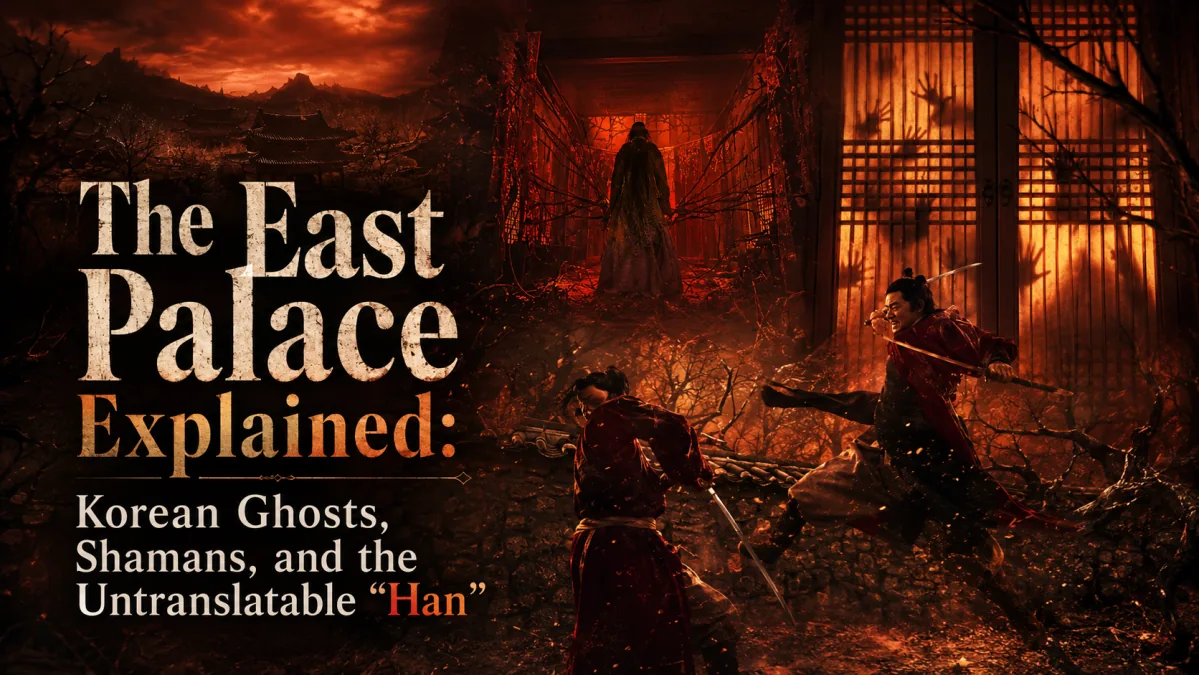
No. The series that premiered on Netflix on July 17, 2026 is an original work by screenwriters Kwon So-ra and Seo Jae-won, not an adaptation of a webtoon, a novel or a court case, and Hankook Ilbo’s launch coverage describes the writers drawing on Korean legends and folk tales. Netflix’s announcement credits the pair with “rich, original worlds,” and its trailer release sums up the premise: a curse that has haunted the palace for 30 years returns, the royal heirs start dying, and the King calls in a spirit slayer. Nothing in that setup has a documented counterpart.
The tell is the king. Cho Seung-woo’s character is credited simply as the King, with no reign name and no era. Joseon monarchs are among the most exhaustively documented rulers anywhere; the Annals of the Joseon Dynasty record them reign by reign, day by day, which is precisely why a production that wanted historical grounding would name one. Leaving him anonymous signals that the show is playing in a period-shaped sandbox. The same writing team made The Guest and Bulgasal: Immortal Souls, and their habit is to build invented plots out of genuine Korean folk belief, so the gwi (귀) that Gu-cheon hunts draw on a real vocabulary of spirits even though his story does not. Korean dramas do sometimes dramatise real lives, and when they do the distortions are worth arguing with, as the screen versions of Empress Myeongseong show. This is not one of those cases.
The one real thread the premise does touch is a curse aimed at the heir. In the spring of 1527, during King Jungjong’s reign, a rat with its legs and tail cut off and its mouth, ears and eyes burned was found hanging from a ginkgo tree in the north courtyard of the East Palace. The crown prince, the future King Injong, had been born in a year of the pig, the rat turned up the day after his birthday, and the court read it as a pig’s likeness and a piece of black magic against him. The Encyclopedia of Korean Culture’s entry on the “burnt rat” incident records that Royal Consort Gyeongbin Park and her son, Prince Bokseong, were stripped of rank over it and later forced to take poison after a second curse object, a mock figure of the crown prince, appeared, and that a memorial in 1532 named a different culprit altogether: Kim Hui, son of the minister Kim An-ro. No ghost, no pond and no dead prince, just a court that believed in curses enough to kill over one.
What Was the Real Donggung, the East Palace of Joseon?
Donggung was the crown prince’s own quarter inside the royal palace, and its name is a piece of court symbolism rather than a compass direction chosen at random. A Korea Heritage Service curator’s guide to the crown prince’s spaces puts the logic plainly: just as a new sun rises in the east, the heir’s quarters sat on the palace’s eastern side. “Donggung” also became a way of referring to the prince himself, the way “the Crown” stands in for a monarch in English, and the quarter had a second name, Chungung, the “spring palace.”
It was not there from the start. When Gyeongbokgung was founded, the heir lived outside the palace, and it was only in 1427, the ninth year of King Sejong’s reign, that Jaseondang, a residence for the crown prince and his consort, and a working hall called Seunghwadang were finished on the palace’s east side near Geonchunmun gate. They were built for the future King Munjong, who spent most of his years as heir there. What surprises most people is how much machinery came with the title. The quarter had a formal hall for ceremonies, a study for lectures and a private residence, plus two dedicated offices: the Seja Sigangwon, which ran the prince’s education, and the Seja Igwisa, which guarded him. The schedule was punishing. According to the National Institute of Korean History, the default was three lectures a day, at dawn, around noon and around 2 p.m., on the Four Books, the Three Classics and Chinese and Korean history, taught by a staff of some 20 tutors, with a review session on the first and fifteenth of every month where he had to show what he had retained.
Who Actually Lived in the East Palace?
Joseon’s heirs, one after another, with their consorts and households, and the list of what happened to them reads bleak enough without any help from screenwriters. Munjong served his long apprenticeship in Jaseondang. Changdeokgung got its own East Palace centre when King Jeongjo raised Junghuidang in 1782, the year his consort Uibin Seong bore him a son. The boy was invested as crown prince in 1784 and died of measles in 1786, aged five by Korean reckoning, according to the Korea Heritage Service’s record of his tomb; he is remembered as Crown Prince Munhyo.
The most notorious heir of the tradition is Crown Prince Sado, killed in 1762 when his father, King Yeongjo, had him sealed inside a wooden rice chest; the full story of Sado’s death is uglier and more political than any curse plot. A generation later the mood lifted briefly. Crown Prince Hyomyeong held his entrance ceremony at Changdeokgung’s Seongjeonggak in 1817 and began governing as regent in 1827, using the old Junghuidang as his main hall, as the Annals dictionary’s entry on Donggung notes. He died in 1830 without ever taking the throne.
Which Parts of the Drama Are Documented, and Which Are Invented?
The setting is researched; the plot is not. Sorting the two apart is the fastest way to enjoy the show without absorbing bad history:
| In the show | In the record |
|---|---|
| A crown prince found dead in the palace pond | No Joseon crown prince is recorded as dying in a palace pond |
| An unnamed king who hires a ghost-slayer | Every Joseon king is named and dated in the Annals; this one matches none of them |
| The East Palace as a single cursed building | Donggung was a whole quarter: residence, study, formal hall, tutors’ office, guards’ office |
| A pond spirit whose curse returns after 30 years | Invented for the series; the nearest real case is the 1527 burnt-rat curse on the crown prince, and gwi belief itself is genuine Korean folk tradition |
| Court ranks, robes, palace layout | Broadly period-accurate set dressing |
What Is Left of the East Palace Today?
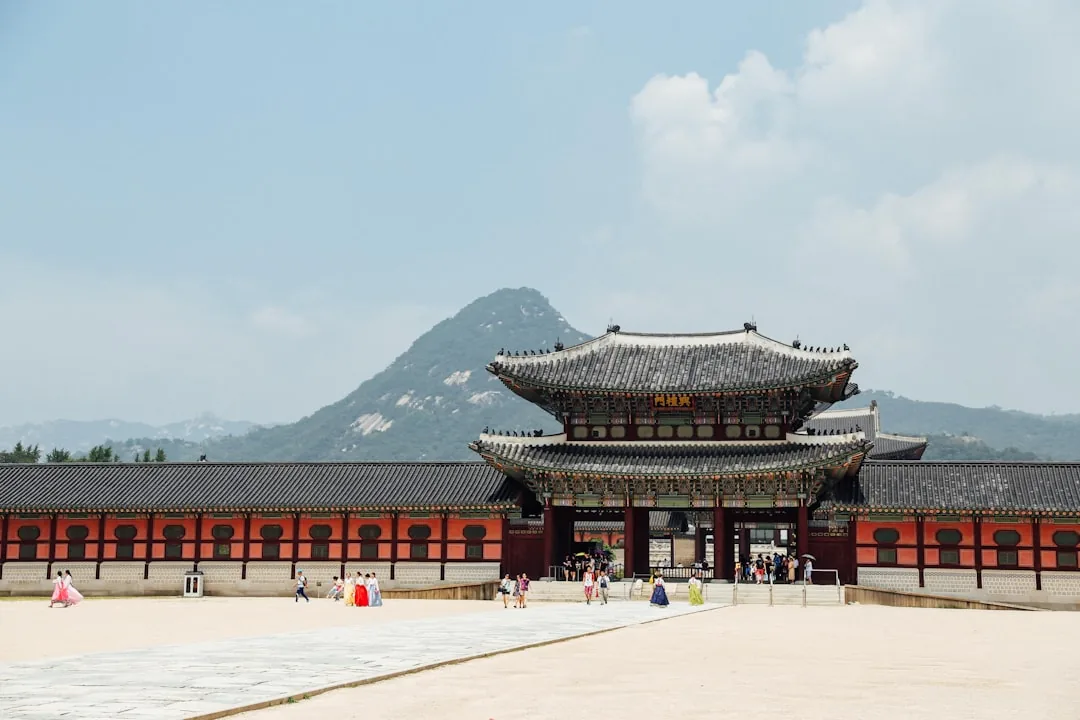
More than you would guess, and almost all of it rebuilt. Most of Gyeongbokgung’s halls were torn down in 1915 for the colonial government’s industrial exhibition, and Jaseondang went a stage further: it was sold to the Japanese businessman Okura Kihachiro, dismantled and re-erected in Tokyo in the grounds of his private museum. The fires after the Great Kanto earthquake of 1923 destroyed it, leaving only stone. The charred foundation blocks were traced by the architecture professor Kim Jeong-dong and returned in 1995, and they now rest between Geoncheonggung and the wooded Noksan hill, too damaged to be built back into the reconstruction. Jaseondang and Bihyeongak were rebuilt on their original site in 1999. Gyejodang, the crown prince’s formal hall, raised in 1443 when Sejong had Munjong govern in his place, was demolished around 1910 and reopened to visitors on September 20, 2023 after a five-year restoration, as the Korea Heritage Service announced.
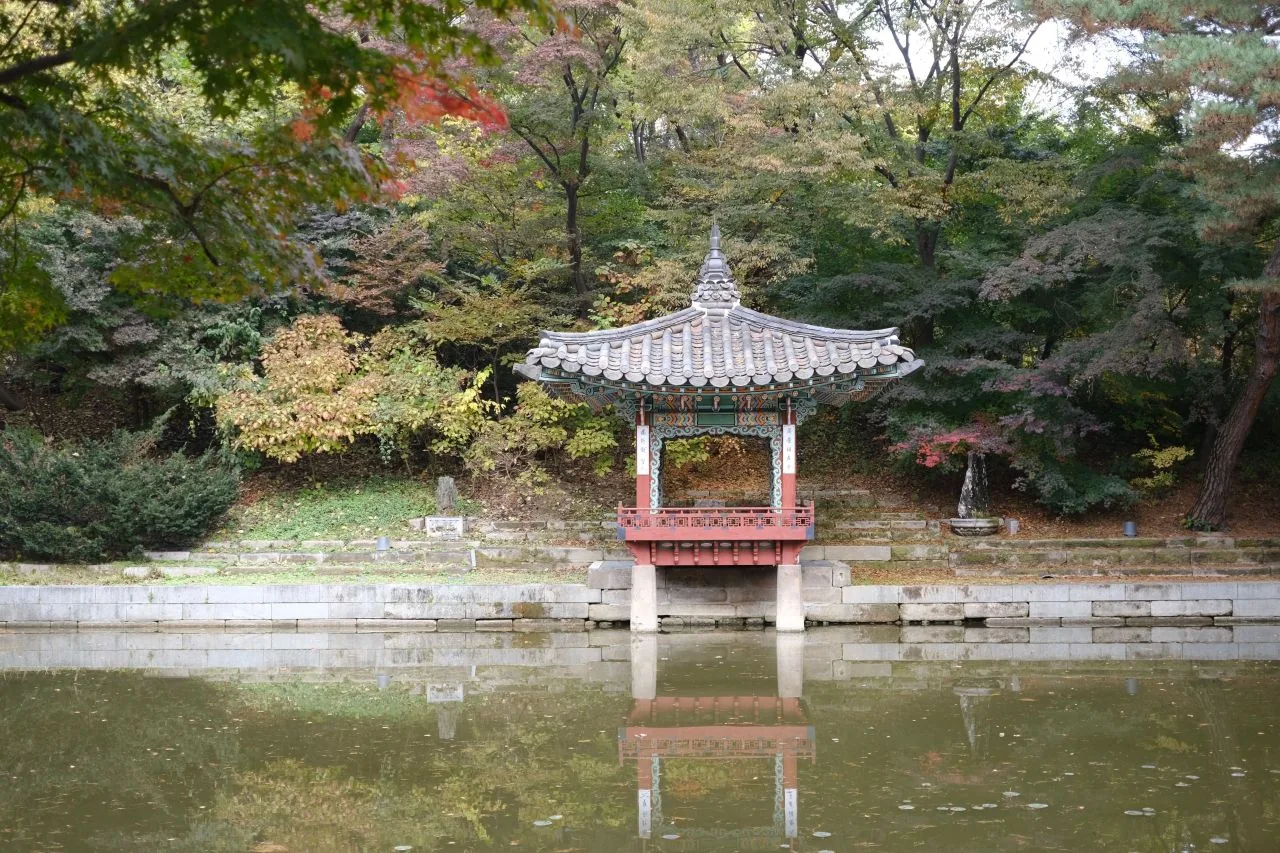
Changdeokgung kept more of its original fabric, and Seongjeonggak, the crown prince’s study, still stands on the palace’s eastern side near the path up to the Secret Garden; if you are deciding which of the two palaces to spend your day on, the East Palace quarter is a genuine point of difference between them. As of 2026, the Donggung you can walk through at Gyeongbokgung is a careful reconstruction rather than an original, which is itself the point of the burnt stones left lying a few hundred metres away.
Frequently Asked Questions
Q: Is The East Palace on Netflix a real historical drama?
It is a fantasy wearing historical clothes. The court ranks, robes and palace architecture are period-accurate set dressing, but the deaths, the curse, the pond spirit and the king himself are invented.
Q: What does “Donggung” mean in Korean?
동궁 (Donggung) literally means “east palace.” It named the crown prince’s quarter and, over time, the crown prince himself. The Korea Heritage Service explains the placement by likening the heir to the sun rising in the east, and the same quarter was also called Chungung (춘궁), the “spring palace.”
Q: Was a Joseon crown prince really found dead in a palace pond?
No such case is recorded. The real deaths tied to the East Palace were quieter and worse: Crown Prince Munhyo died of measles in 1786, four years after Junghuidang was built for him, and Crown Prince Sado died in a sealed rice chest in 1762 on his own father’s order.
Q: Can you visit the real East Palace in Seoul?
Yes. Gyeongbokgung’s Donggung quarter (Jaseondang, Bihyeongak and, since 2023, Gyejodang) is covered by the ordinary ₩3,000 adult palace ticket, and foreign visitors aged 18 and under or 65 and over get in free. Changdeokgung’s Seongjeonggak still stands where it always did.
Q: Is The East Palace connected to Crown Prince Sado’s story?
Only by setting. Sado died in 1762 in a rice chest at Changgyeonggung after a real political and family collapse, and the drama borrows the institution he belonged to rather than his case.
Watch the series for its ghosts, then go and stand beside the burnt stones, because the East Palace’s documented history never needed any.
Part of Historic Figures & UNESCO Heritage