Ancient Korean Armor Found in Japan: The Baekje Link
On this page
The ancient Korean armor found in Japan is a single suit of iron lamellar armor, small iron plates laced together with cord, that was laid at the base of the central pillar of Asuka-dera’s pagoda in 593 and dug up in 1957. Asuka-dera, in the village of Asuka south of Nara, was Japan’s first full-scale Buddhist temple, and craftsmen from Baekje, one of Korea’s Three Kingdoms, helped build it. For decades after the excavation, the only close parallels anyone could name for the armor lay in Goguryeo, Korea’s northern kingdom. X-ray imaging, 3D measurement and a trip to a Baekje fortress changed that, and the result reached readers worldwide in April 2026: the suit’s construction follows Baekje armor.
Quick answers
- The ancient Korean armor found in Japan is one suit of iron lamellar armor that was buried beneath the pagoda of Asuka-dera, near Nara, in 593 and excavated in 1957.
- X-ray and 3D study begun in 2015 showed its torso, shoulder and upper-arm guards laced into one system, the same build as Baekje armor from Gongsanseong fortress in Gongju, Korea.
- The match points to Baekje craftsmanship without proving the suit was forged in Korea, which fits the Nihon Shoki’s record that Baekje sent temple builders and Buddha relics to Asuka in 588.
What the Armor Is: One Iron Lamellar Suit, Buried in 593
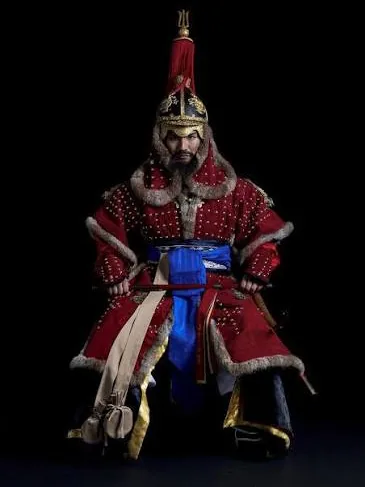
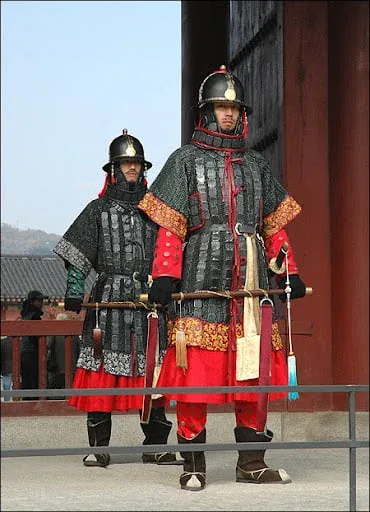
The armor is one complete suit of iron lamellar, entered as a single set in the inventory of the pagoda deposit. Lamellar means small iron plates, each punched with holes and laced to its neighbors, so the shell moves with the body. The technique was not new to Japan in the late sixth century; specialists in late Kofun-period armor even treat this suit as a reference type, the “Asuka-dera type.” What made it a puzzle was its particular build. As archaeologist Naoto Isahaya’s 2025 review of the deposit notes, armor of this kind had long been matched outside Japan only in Goguryeo.
How It Got There: Baekje’s Builders at Asuka-dera, 588 to 596 CE
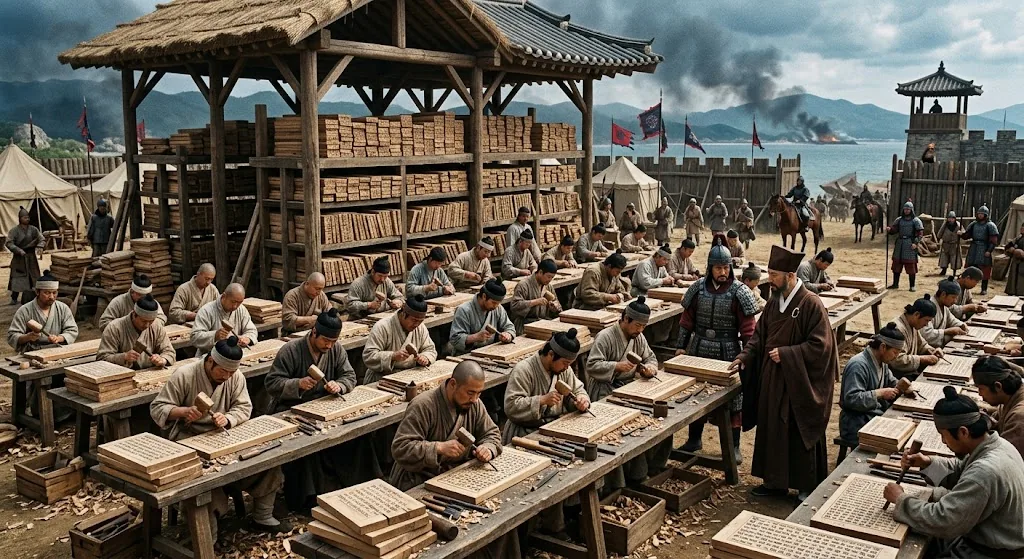
The armor ended up under a pagoda because Buddhism arrived in Japan by way of Baekje, and Baekje supplied the people who knew how to house it. King Seong of Baekje sent a Buddha image and sutras to the Yamato court in 538 CE; the Nihon Shoki dates the gift to 552, but historians generally favor 538. In 588, Baekje went further. According to the Nihon Shoki, it sent Buddha relics, monks, two temple carpenters, a master of the pagoda’s metal spire, four roof-tile makers and a painter, and the chronicle records each craftsman by name, as the Asuka village cultural-properties bulletin sets out. Work on the golden hall began in 592. In the first month of 593 the relics went into the pagoda’s heart-stone, and the central pillar was raised the next day; a much later chronicle, the Fusō Ryakki, claims that Soga no Umako and more than a hundred attendees wore Baekje dress for the ceremony. The temple was declared finished in 596. Korea’s Buddhist craft traditions long outlived Baekje, which fell in 660: centuries later, Goryeo would carve the Tripitaka Koreana woodblocks for reasons that had as much to do with war as with prayer.
The Ancient Korean Armor Found in Japan Surfaces in 1957
The ancient Korean armor found in Japan came to light in 1957, in the third season of excavation that the Nara National Research Institute for Cultural Properties ran at the temple site. Digging inside the pagoda platform, the team reached the heart-stone 2.7 meters down, a slab about 2.4 to 2.6 meters on a side. Its central relic hole was empty except for a lamp dish. Lightning had burned the pagoda in 1196, and in 1197 diggers recovered the relics from beneath the pillar and reburied part of them in a new container. Their pit, however, never reached the stone’s eastern corner. That is where the armor lay, still in its 593 position, while a horse bell, a whetstone and an S-shaped iron saddle fitting sat untouched at the southwest corner. Across the whole deposit, excavators counted more than 2,300 beads, 29 earrings and at least 11 knives. The suit came out in unusually good condition, which created its own difficulty: its laced plates could not be recorded by ordinary hand measurement, so for more than half a century its full structure went undocumented.
2015 to 2026: X-Rays Move the Link From Goguryeo to Baekje
Starting in 2015, researchers including Shigeto Ishibashi of the Nara institute’s Asuka Historical Museum and archaeologist Takehiro Hatsumura used X-ray imaging and 3D measurement to read the suit without taking it apart. The images showed torso protection, shoulder guards and upper-arm guards joined into a single laced system. In 2024 Hatsumura examined armor from Gongsanseong, the fortress of Baekje’s old capital at Gongju, and found the same arrangement. That comparison material is well documented: in 2011 Korea’s Cultural Heritage Administration announced that Kongju National University Museum had recovered a lacquered leather lamellar suit from a reservoir inside Gongsanseong, inscribed with a date equal to 645 CE, along with iron lamellar plates. The findings reached international readers in April 2026, when Arkeonews and Popular Science carried the Asahi Shimbun’s report.
Two cautions keep the story honest. The Gongsanseong armor is about half a century younger than the Asuka-dera suit, so the match shows a shared design tradition rather than a model and its copy. And construction alone does not reveal where a suit was forged: Isahaya found that most of the deposit’s earrings and knives were probably made in Japan, and that clearly Baekje-made objects were still scarce, apart from gold and silver sheets likely sent with the relics. What shifted in 2026 is the direction of the arrow. An armor type once paired only with Goguryeo now points, structurally, to Baekje, the kingdom the Nihon Shoki had always credited with sending the temple’s builders.
What You Can See at Asuka-dera Today
What surprises most first-time visitors is how small Japan’s first great temple looks now. The pagoda is gone, and today’s modest Asuka-dera hall stands on the site of the old Central Golden Hall, still sheltering the Asuka Daibutsu, a bronze Buddha installed in 609 CE (the Nihon Shoki says 606) and badly damaged in the same 1196 fire that destroyed the pagoda. In 2026 the ground around it gained new standing: on July 26, the World Heritage Committee, meeting for its 48th session in Busan, Korea, inscribed the Ancient Capitals of Asuka and Fujiwara on the World Heritage List, and the Asuka-dera Temple Site is one of the property’s 19 component parts. The armor’s own story continues at the Nara institute’s Asuka Historical Museum, where curators have been documenting the deposit piece by piece since 2014; the museum’s autumn special exhibition on the new World Heritage site runs from October 9 to December 13, 2026 (¥350 for adults) and promises excavated finds without naming individual pieces. To follow Korean craftsmanship forward in time, the royal palaces of Joseon-era Seoul are the obvious next stop.
Frequently Asked Questions
Q: Is the ancient Korean armor found in Japan older than the Baekje armor it matches?
Yes, by about half a century. The Asuka-dera suit went into the pagoda foundation in 593, while the lacquered armor from Gongsanseong carries an inscription equal to 645 CE. The comparison rests on shared construction, not on one piece serving as the model for the other.
Q: Was the armor made in Baekje or in Japan?
That is still open. The X-ray work shows its structure follows Baekje armor, which points to Baekje craftsmen or their methods, but structure cannot show where the iron was worked. Most other items in the same deposit, including the earrings and knives, were probably made in Japan.
Q: Why would anyone bury armor under a Buddhist pagoda?
No text gives the reason. The armor went in during the first month of 593, when the relics were placed in the heart-stone and the central pillar was raised, together with a horse bell, a whetstone, earrings and more than 2,300 beads. Those are the same kinds of goods found in elite tombs of the period, so some archaeologists read the group as an offering to protect the ground under the new building rather than as decoration for the relics.
Q: Did Goguryeo play a part at Asuka-dera too?
Yes. The Nara institute traces the temple’s roof-tile patterns, its layout of one pagoda flanked by three golden halls and its double-tiered platforms to Baekje and Goguryeo together. When the temple was finished in 596, a Goguryeo monk, Eji, and a Baekje monk, Esō, took up residence there, and in 605 Goguryeo sent 300 ryō of gold toward the temple’s great Buddha.
Q: What was the Baekje kingdom?
Baekje was one of Korea’s Three Kingdoms, ruling the southwest of the peninsula from 18 BCE until it fell to an allied Silla and Tang army in 660. It was one of the main channels through which Buddhism, writing and craft skills passed from the Asian mainland to early Japan.
Laid down in 593, missed by the relic diggers of 1197 and lifted out in 1957, the suit has finally been read plate by plate, and its construction points back across the strait to Baekje.