Does Kimchi Help You Sleep? What the Science Says
On this page
In March 2026, a Yahoo Health roundup ran the headline “Eat kimchi, sleep 11 minutes longer,” and it reads like one tidy promise: kimchi can help you sleep. It isn’t one promise. The headline stacked two unrelated tips from a weekly list, and neither of them said kimchi does anything for your sleep. That’s worth untangling, because the funky, tangy crunch you love next to your bibimbap may still have a modest link to better rest, just not the one the headline implied.
Quick answers
- No study has shown that kimchi helps you sleep; the viral 2026 “11 minutes” came from a UK heart study of more than 53,000 adults that wasn’t about kimchi at all.
- The closest real evidence is a 2025 study of 280 medical students, where moderate fermented-food eaters (mostly yogurt, kefir and cheese) slept better under exam stress than both the lightest and the heaviest eaters.
- If you want to try it, one small side-dish portion (roughly 50 to 100 g) with dinner makes more sense than a big bowl at bedtime, because kimchi’s salt can work against you.
So, Does Kimchi Help You Sleep?
The honest answer is “maybe, a little, and indirectly.” As of 2026, no published clinical trial has shown that kimchi itself improves sleep, so nobody can promise it will put you under faster than a glass of water would. The closest research looks at fermented food in general. A 2025 prospective study of 280 Polish medical students measured fermented-food intake with four-day food records and tracked sleep quality through exam stress. Students in the middle third, eating roughly 64 to 151 g of fermented food a day, slept best (a sleep-quality score of 5.13, where lower is better), ahead of both the lightest eaters (5.73) and the heaviest (6.17). Two caveats keep that in proportion: their fermented food was mostly cheese, yogurt and kefir, with no kimchi on the list, and the authors say the design can’t show cause and effect. So if you were hoping kimchi is a natural sleeping pill, temper that. What you can say is that the gut-sleep connection is real and actively studied, which makes kimchi a sensible, low-risk addition to dinner rather than a miracle fix.
What the Viral “11 Minutes” Claim Actually Found
It found nothing about kimchi. The 11 minutes comes from a study published on March 24, 2026 in the European Journal of Preventive Cardiology, which followed more than 53,000 UK Biobank adults for eight years and measured their sleep with wearable devices. According to the European Society of Cardiology’s release, sleeping 11 minutes more, adding 4.5 minutes of moderate-to-vigorous activity and eating an extra quarter cup of vegetables a day were together associated with a 10% lower risk of major cardiovascular events. That’s a heart finding about sleeping longer, not about falling asleep faster, and kimchi doesn’t appear anywhere in the release. The kimchi tip in the same roundup was a separate lab result about bacteria from kimchi binding to nanoplastics. Stack the two in one headline and they read like cause and effect. They aren’t.
Why Fermented Food Might Help You Sleep
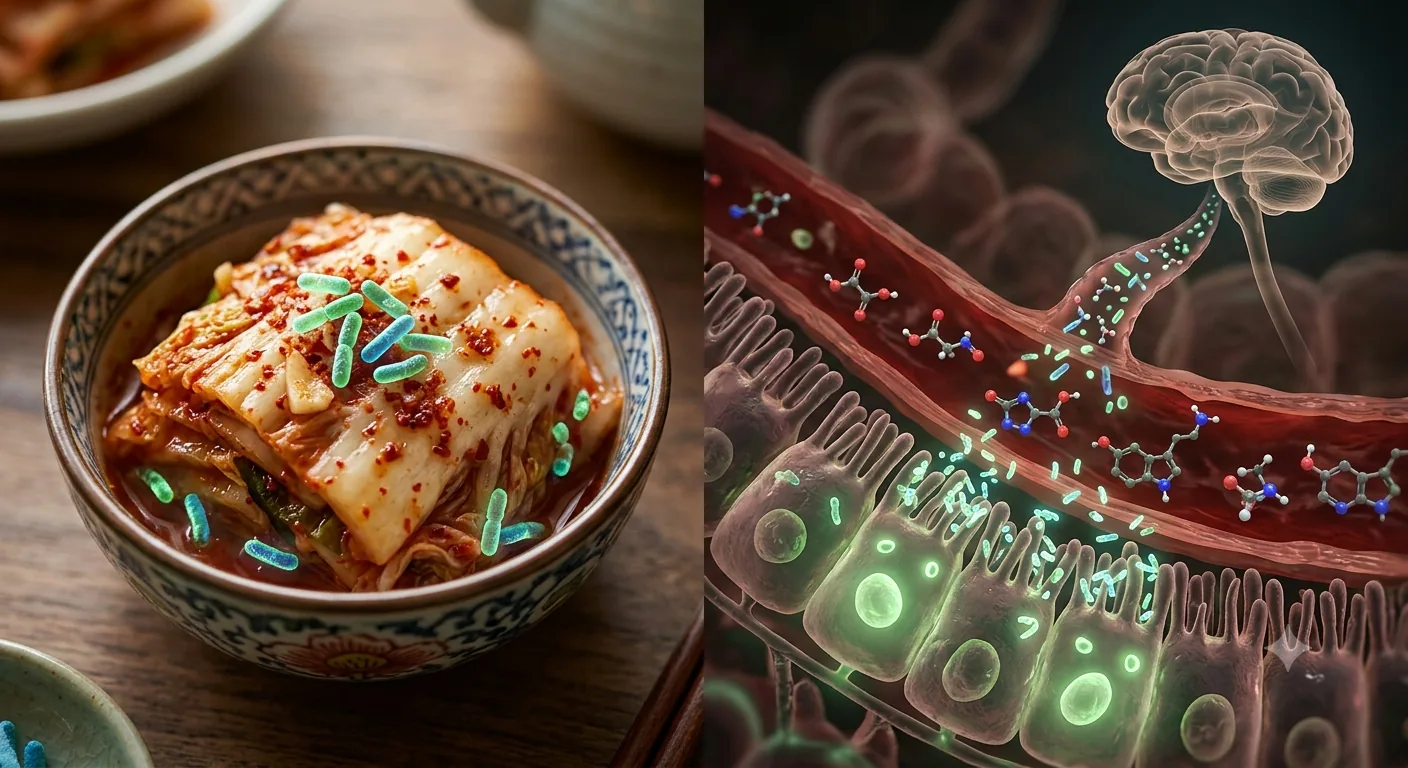
Start with the explanation that doesn’t hold up. The “kimchi tryptophan sleep” idea borrows the turkey-makes-you-drowsy story, but napa cabbage isn’t a meaningful tryptophan source, so there’s not much there. The stronger case for fermented foods runs through your gut. Unpasteurized kimchi is teeming with live lactic-acid bacteria (here’s how to tell whether a store-bought jar still has them), and your gut is where most of your serotonin is made. Caltech researchers estimate that about 90 percent of the body’s serotonin comes from the digestive tract, and their 2015 study in mice showed that gut bacteria help drive that production. Your body also builds melatonin, the sleep hormone, out of serotonin, which is why the gut keeps turning up in sleep research. Here’s the catch: nobody has shown that a daily side of kimchi shifts any of this enough to change your night. That’s the real thread behind every “probiotics and sleep quality” headline. You’re not eating a sedative, you’re feeding a system that may, over time, help you rest.
How Much Kimchi Should You Actually Eat?
Think small and steady, not one heroic bowl. A single banchan-sized serving, roughly 50 to 100 grams, eaten most days fits that pattern better than a rare pig-out, and the best sleepers in the 2025 student study were moderate eaters, not the biggest ones. Any benefit would come from consistently feeding your gut bacteria, which is a marathon, not a sprint. Have it with dinner rather than right as your head hits the pillow. Ripeness matters too, and it surprises most people: brand-new, crisp kimchi hasn’t built up its bacteria yet, and the live count peaks once a batch turns tangy and lightly fizzy, then slowly thins out as it grows very sour. That extra-sour jar at the back of the fridge is better cooked into stew or easy kimchi fried rice, where the heat would kill the cultures anyway.
Frequently Asked Questions
Q: Does eating kimchi right before bed help you sleep?
Probably not more than eating it earlier, and a large, salty portion late at night can actually disrupt sleep by making you thirsty. If you’re after the possible gut benefit, have a normal side-dish amount with dinner and let your digestion do the slow work overnight.
Q: Is kimchi better for sleep than other fermented foods?
Not specifically. The proposed benefit comes from live probiotics and the gut-brain axis, which you’d also get from yogurt, kefir, sauerkraut or other fermented vegetables. The one fermented-food sleep study above was built mostly on dairy, not kimchi. Kimchi just happens to be a tasty, vegetable-heavy way to get there, so pick whatever you’ll eat regularly.
Q: Can too much kimchi hurt my sleep?
Yes, indirectly. Kimchi is high in sodium, and a very large portion, especially late, can leave you thirsty and restless. It’s also worth knowing that the heaviest fermented-food eaters in the 2025 student study reported the worst sleep of the three groups. Stick to roughly one small serving a day and you sidestep the problem.
Q: Do probiotic pills work the same way as kimchi?
They target the same gut-microbiome idea, but they’re not identical. Whole fermented food like kimchi also brings fiber and plant compounds that supplements skip, and the research on “probiotics and sleep quality” is still early either way. Food first is the safer bet.
If better sleep turns out to be a side effect of eating more kimchi, take the win. Just keep your expectations, and your portions, right-sized.
Part of Kimchi & Fermented Foods