BTS V Chamisul Soju Ambassador? What the JINRO Deal Means
On this page
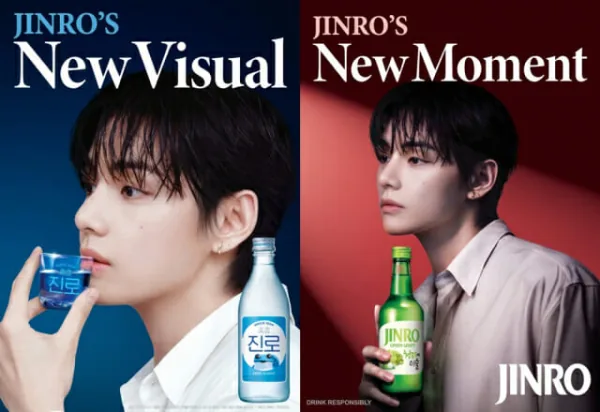
BTS V is the global ambassador of JINRO, the single brand HiteJinro uses for the soju it sells outside Korea, and that umbrella is how the green Chamisul bottle travels: abroad it goes out as JINRO Chamisul Fresh and JINRO Chamisul Original. So calling him the BTS V Chamisul soju ambassador is half right. HiteJinro named V on July 3, 2026, and its English-language announcement lists exactly what the deal covers: those two Chamisuls, JINRO Is Back, and six fruit flavors running from green grape to lemon. Inside Korea, the Chamisul posters taped to restaurant walls are a separate deal, one that IU first signed in 2014. That split is the real story. The drink Koreans pour every night is now riding on one of the most recognizable faces on the planet to sell everywhere else.
Quick answers
- V was named global ambassador of JINRO on July 3, 2026, and JINRO is the banner HiteJinro uses abroad, where Chamisul is sold as JINRO Chamisul Fresh and JINRO Chamisul Original.
- His first campaign, “My Favorite JINRO,” launched on July 23, 2026 and passed 500 million views across JINRO’s global social channels within two months.
- Chamisul’s domestic poster model is a different contract: IU first signed in 2014, and HiteJinro renewed her in 2024 as the longest-serving model in Korea’s drinks industry.
What Does the BTS V Chamisul Soju Ambassador Deal Actually Mean?
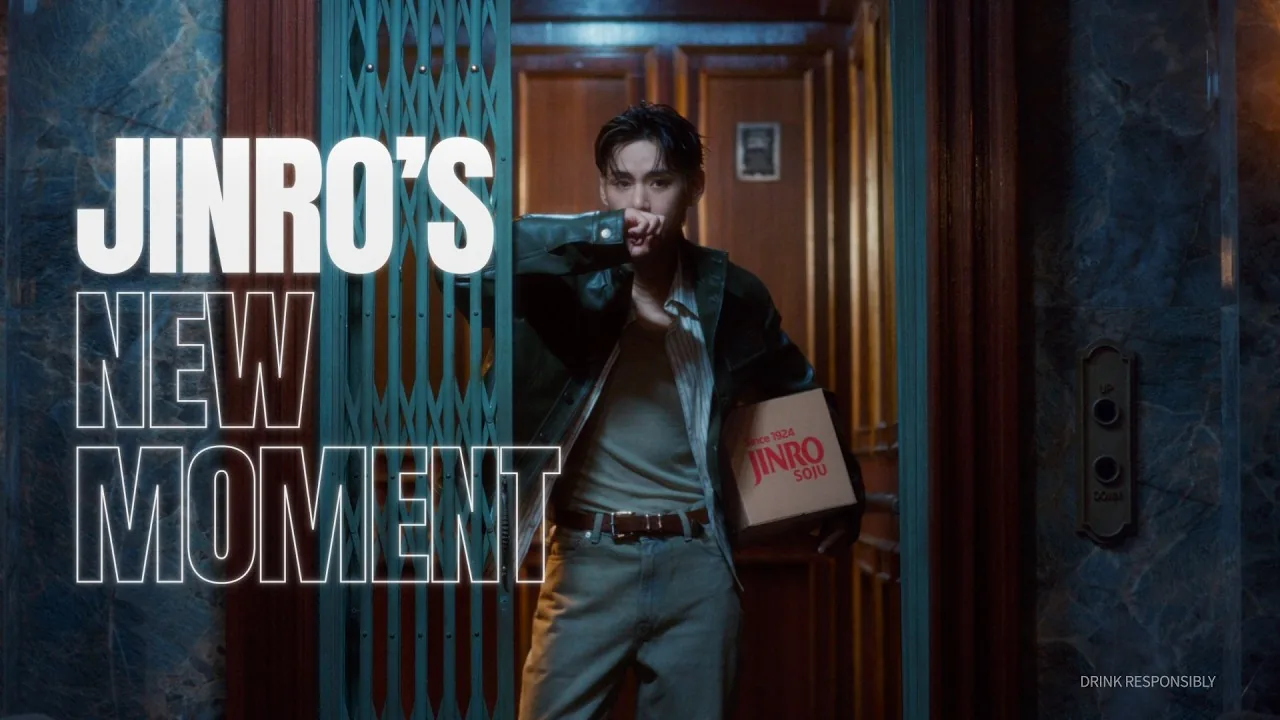
It means V sells Chamisul outside Korea under the JINRO name, rather than taking over the model slot on Korean restaurant posters. HiteJinro exports its soju under one brand, JINRO, to about 91 countries (per its June 2026 release), and the global range is short enough to list: three regular soju (JINRO Chamisul Fresh, JINRO Chamisul Original, JINRO Is Back) and six flavors. The company even hid that count in the first commercial. V turns up at the wrong party, and the room number on the door, 306, stands for those three regular and six flavored bottles, while room 307 hints at a seventh flavor on the way. The campaign debuted on July 23, 2026 alongside a new global tagline, “Fill The Moment.” So fans who read the news as “V is the new Chamisul guy” weren’t wrong. They were just looking at it from outside Korea.
What Is Chamisul, and Why Does the Green Bottle Matter?
Chamisul (참이슬, roughly “real dew”) is HiteJinro’s flagship soju, launched in 1998, and it’s the green bottle you’ll find on tables from Seoul to Busan. HiteJinro counts about 41.3 billion 360 ml bottles sold through May 2026, which works out to roughly 47 bottles every second since launch. Soju is a clear, clean-tasting spirit, and it’s lighter than it sounds: Chamisul Fresh dropped from 16% to 15.7% ABV in a renewal that reached stores from mid-June 2026, while Chamisul Original stays at a punchier 20.1%. That softness is exactly why a bottle disappears so fast over a long dinner, and why locals keep up a half-joking argument over whether the crisper Fresh or the rounder Original is the real thing. The brand family carries real weight too. Jinro sold 94.5 million 9-litre cases in 2025, its 25th straight year at the top of Drinks International’s list of the world’s best-selling spirits, so this isn’t a niche label borrowing cool from a K-pop star.
Why Is Being the Soju Model Such a Coveted Job in Korea?
Because the soju model’s face ends up wherever alcohol is poured, which turns the endorser into someone millions of people eat dinner next to every week. Campaign posters go up on restaurant walls and fridge doors, so the ad works whether or not anyone is paying attention. For Chamisul, the defining face of that slot is IU: she first signed in 2014, and when HiteJinro renewed her contract in 2024 it called her the longest-serving model in Korea’s drinks industry. Landing a soju deal doubles as public proof that you’ve reached the top tier of recognizability, which is why it gets talked about as a bigger status marker than a flashier luxury campaign. V’s deal adds a twist. Instead of the domestic poster slot, he got the international version, as the face of what HiteJinro calls JINRO’s first global campaign.
How Does Soju Fit Into Korean Social Life?
Soju is less a drink you order for yourself and more the social glue of a Korean dinner: cheap, shared, and wrapped in its own quiet etiquette. You never pour your own glass. Someone else fills it, ideally with two hands, and juniors turn slightly away from elders when they sip, the same rank logic behind why Koreans bow to elders. A bottle is cheap, too: around ₩2,000 at a convenience store and usually ₩5,000 or more at a restaurant, depending on the neighborhood, with no tip expected on top. It pairs so naturally with grilled pork that no Korean BBQ table feels complete without a few green bottles, especially next to a sizzling tray of samgyeopsal, and mixing it with beer into somaek is practically a national reflex.
Why Are Fans Making Such a Big Deal of It?
Fans read the deal as a symbolic crossover: one of the most famous boy bands on the planet meeting Korea’s most everyday, unpretentious drink. Part of the excitement is contrast. Soju is the opposite of a luxury flex, so seeing V represent it feels grounded, almost affectionate toward ordinary Korean life. The campaign numbers show it landed: by HiteJinro’s own count, the main commercial topped 300 million views and JINRO’s global social channels passed 500 million within two months, with billboards in Times Square, Toronto, Beijing, Shanghai, Tokyo, Ho Chi Minh City, Manila and Sydney. There’s a practical angle as well, since a face like V’s is a shortcut onto shelves and bar menus far outside Korea. For plenty of international fans, this is simply the nudge that turns “I’ve heard of soju” into “I want to try the one V drinks.”
Frequently Asked Questions
Q: Is BTS V the new Chamisul model in Korea, replacing IU?
Not exactly. V’s contract is with JINRO, the banner HiteJinro uses for its soju abroad, and that lineup includes JINRO Chamisul Fresh and Original, so he does sell Chamisul, just under the JINRO name. The domestic Chamisul poster deal is a separate one that went to IU in 2014 and was renewed in 2024.
Q: Can you buy the soju V advertises outside Korea?
Yes. HiteJinro exports soju under the JINRO name to about 91 countries, and the global range covers JINRO Chamisul Fresh, JINRO Chamisul Original, JINRO Is Back and six flavors: green grape, peach, strawberry, grapefruit, plum and lemon.
Q: How strong is Chamisul compared with whisky or vodka?
Chamisul Fresh is 15.7% ABV after its June 2026 renewal and Chamisul Original is 20.1%, so even the stronger one is about half the strength of a typical 40% whisky or vodka, though well above beer or wine. That mildness is why a table can work through several bottles over one long dinner.
Q: Where can you watch V’s JINRO commercial?
On JINRO’s global official YouTube channel, plus its Instagram and Facebook accounts, where the “My Favorite JINRO” main ad went up on July 23, 2026. HiteJinro’s count had that video past 300 million views by late August.
Next time you spot that green bottle, whether it’s on a table in Seoul or a bar shelf abroad, you’ll know it’s carrying a lot more than 360 milliliters of soju.
Part of Korean Drinking Culture