Best Meat to Eat at Korean BBQ: What to Order First
On this page
Order samgyeopsal first. That one decision settles most of a Korean BBQ menu, because the second choice (which beef to add) only makes sense once pork belly is already spitting fat onto the grill. Menus at a Seoul 고깃집 (gogitjip, grill house) run long, and what surprises most first-timers is how little extra meat changes the meal while the bill keeps climbing. Three cuts feed four people. Eight cuts feed nobody twice.
Quick answers
- Samgyeopsal (thick, unmarinated pork belly) is the cut to start with, and Seoul restaurants averaged ₩21,321 per 200 g for it in June 2026.
- Add exactly one beef cut second: chadolbaegi if you want speed and volume, galbi if the table wants a splurge.
- Grill unmarinated cuts before marinated ones, because galbi’s sugary soy marinade chars the plate and everything cooked afterwards picks up that burnt edge.
The Best Meat to Eat at Korean BBQ, in Order
The best meat for Korean BBQ is samgyeopsal, followed by one beef cut: chadolbaegi for volume or galbi for a splurge, and you can stop there. The sequence has nothing to do with ranking flavour and everything to do with how three cuts behave on one shared grill, and what each does to the final number on the receipt.
| Samgyeopsal (pork belly) | Chadolbaegi (beef brisket) | Galbi (short rib) | |
|---|---|---|---|
| Marinated? | No; salt, sesame oil and ssamjang | No, and it doesn’t need it | Usually yes (yangnyeom galbi); saeng galbi is the plain version |
| Fat | Thick alternating bands that render slowly | Paper-thin, and the fat is the flavour | Marbled, but leaner than belly |
| Grill time | 8–10 minutes, flipped once or twice | 15–30 seconds a slice | 5–7 minutes, watching the sugar |
| Seoul retail price per 100 g, August 2026 | ₩3,041 (pork) | ₩4,632 if imported, ₩12,750 if domestic | Same beef split; the origin board says which |
| Order it | First, always | Second, for volume | Second, for a splurge |
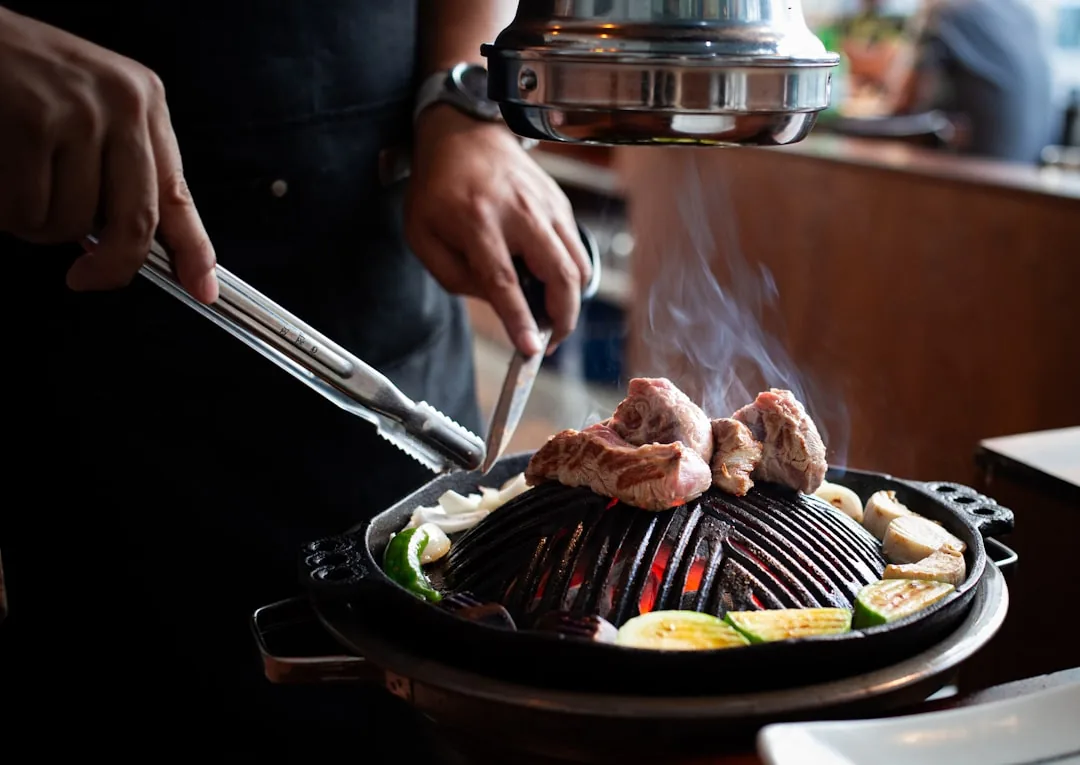
Pork belly earns the opening slot because it renders its own cooking fat. Slap it on a dry plate and within a minute the whole surface is greased, which is exactly what the next cut needs. Start with marinated beef instead and the sugar hits a dry plate and sticks before anything else has had a chance to cook.
Price: Why Korean Beef Costs Four Times the Pork
Seoul’s municipal price tracker put domestic beef at ₩12,750 per 100 g in August 2026, against ₩3,041 for pork, so Korean beef starts at about four times the raw cost of the same weight of pork (Seoul price information, item-by-item table). Imported beef sat at ₩4,632, roughly one and a half times pork and about a third of the domestic price. Those are the city’s generic beef and pork averages rather than cut-by-cut prices, but the origin gap is the number to watch whenever a beef order looks expensive.
Restaurant prices climbed again in 2026: the Korea Consumer Agency’s June figure for samgyeopsal in Seoul was ₩21,321, up 4.3% on a year earlier (Segye Ilbo’s report on the agency’s June data). That figure is converted to a standard 200 g, because a 1-inbun (one serving) has no fixed weight; portions vary from roughly 100 g to 250 g between restaurants. So compare the price per 100 g, which Korean rules have required grill houses to print for any meat you cook at the table since 2013 (Seoul’s restaurant price-display guide; the health ministry’s 2012 notice).
Chadolbaegi is where that origin gap works for you. At mid-range grill houses the brisket is often imported, and you don’t have to guess: Korea’s origin-labelling law makes restaurants post where their beef and pork come from on the menu or a wall board, with domestic beef named by type, as in 쇠고기(국내산 한우) (Easy Law’s origin-labelling rules for restaurants). 미국산 means US beef and 호주산 means Australian. An imported plate of chadolbaegi gets the table its beef round for far less than Korean beef would cost, and that’s the whole appeal, not a compromise.
Fat, Marinade, and Time on the Grill
Marinade is the axis that actually dictates order, not price. Sweet soy marinade caramelises fast, then burns and welds itself to the plate, so a table that opens with galbi is cooking everything else on a blackened surface. Plain cuts go first and marinated cuts go last.
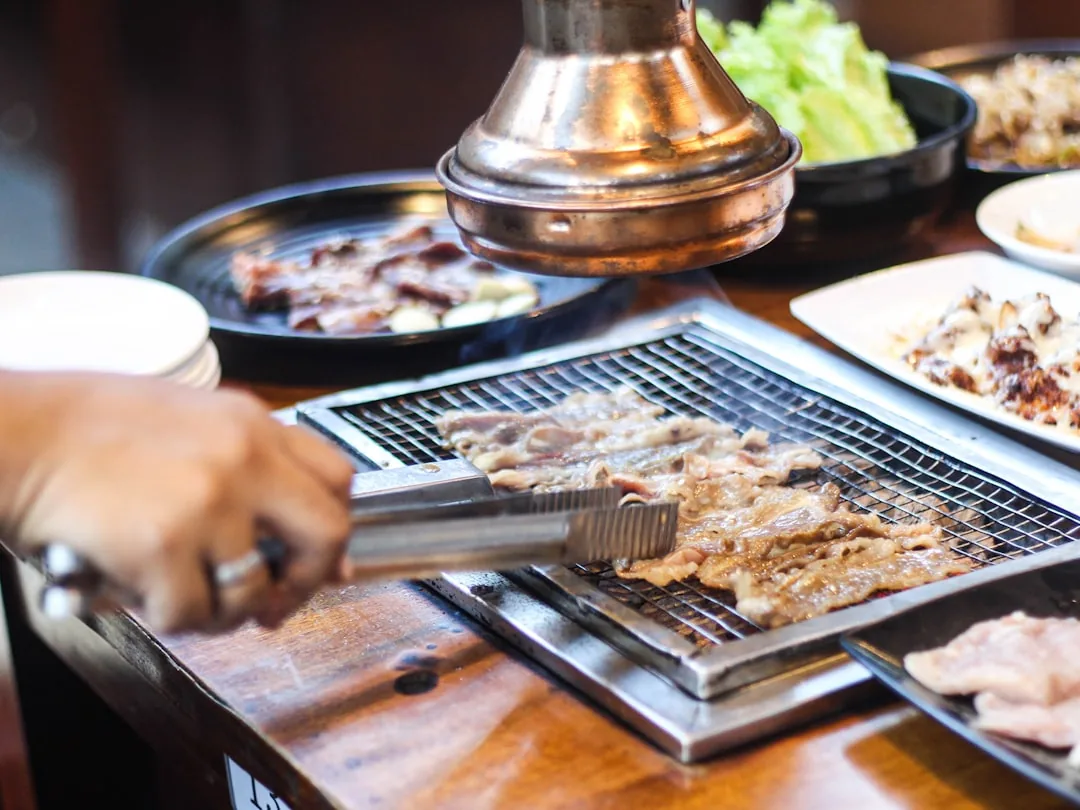
Thickness decides the rest. Thick-cut samgyeopsal wants patience: leave it alone until the edges curl and go glassy, flip once, and snip it with the scissors only after it has coloured. Chadolbaegi is the opposite discipline entirely. The slices are shaved so thin they grey the instant they touch metal, and anything past half a minute turns to jerky. Galbi sits in the middle at five to seven minutes, though the marinade browns long before the meat is done, which fools a lot of tables into pulling it early.
What a Table of Two to Four Should Order
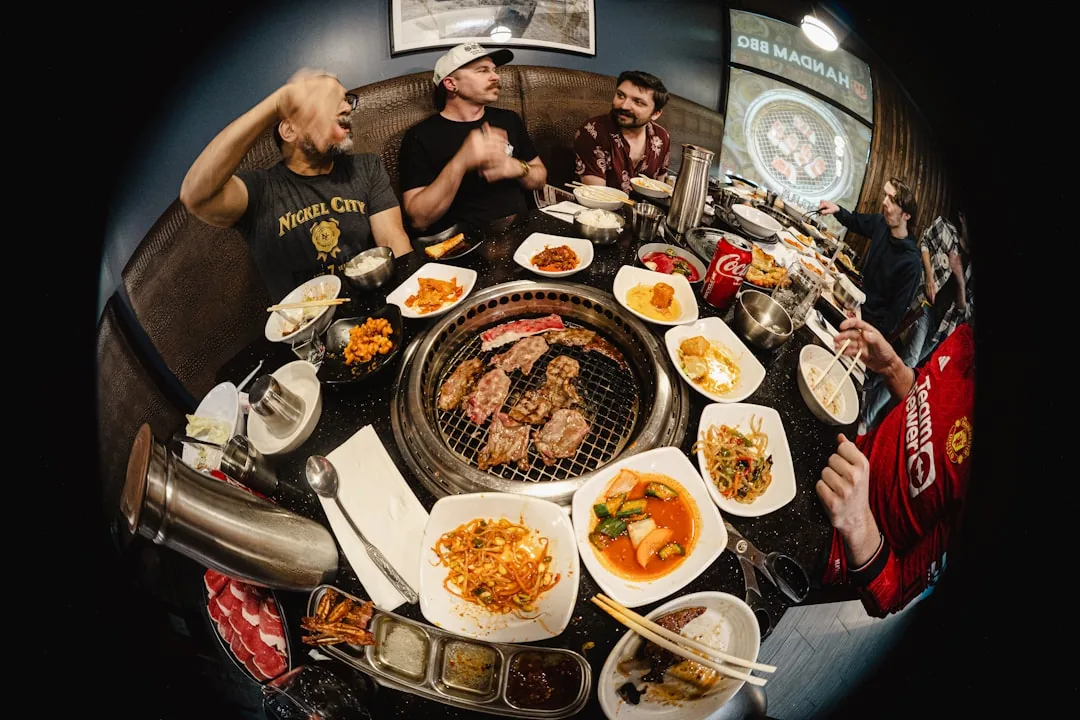
Two people: two servings of samgyeopsal and one chadolbaegi. At Seoul’s June 2026 average of ₩21,321 per 200 g, the pork alone comes to about ₩42,600, so check the chadolbaegi line per 100 g before you add it.
Four people: three or four servings of samgyeopsal, one chadolbaegi, and one galbi if somebody is celebrating. Anyone who dislikes heavy fat should steer the table toward moksal (pork collar) instead of a fourth belly serving, since it’s leaner, far less greasy, and forgives overcooking. Vegetarians are genuinely stuck at a grill house, so pick a different restaurant rather than hoping for a menu miracle.
Then finish the way Koreans do: order bokkeumbap, fried rice pressed flat into the meat drippings left on the plate, which is the restaurant cousin of kimchi fried rice. Newer chains have moved ordering onto a tablet or a self-order kiosk, so the pointing-and-hoping phase is mostly over. Whatever you order, the printed price is the entire bill, because menu prices must already include tax and service, and nobody tips at Korean BBQ, including when a server grills and scissors the meat for you.
Frequently Asked Questions
Q: What is the most popular meat at Korean BBQ?
Samgyeopsal. It’s the one grill dish among the eight everyday restaurant meals the Korea Consumer Agency prices in Seoul, alongside staples like naengmyeon, bibimbap and samgyetang. If a table orders only one thing, this is it.
Q: Is galbi or samgyeopsal better for a first visit?
Samgyeopsal. Yangnyeom galbi arrives pre-marinated, so the kitchen has already made the flavour decisions for you, while pork belly lets you taste what the grill, the salt, and the ssamjang are doing. Try galbi on the second visit.
Q: How much meat should I order per person at Korean BBQ?
Think in grams rather than servings. A 1-inbun can be anywhere from about 100 g to 250 g depending on the restaurant, which is why the menu has to show the price per 100 g. The split above works out to roughly one and a half servings per person, and some grill houses set a two-serving minimum per table, so a solo diner may be asked to order two.
Q: Is chadolbaegi Korean beef or imported?
It can be either, and the restaurant has to tell you. The origin board will say 미국산 (US), 호주산 (Australian) or 국내산 한우 (Korean hanwoo). Imported beef averaged ₩4,632 per 100 g at Seoul retail in August 2026 against ₩12,750 for domestic, so the label explains the price gap.
Q: What’s the best Korean BBQ meat to buy for grilling at home?
Pork belly, cut thick. It renders its own fat, so it forgives a home pan or tabletop grill, and it’s the cheap cut to practise on (pork averaged ₩3,041 per 100 g at Seoul retail in August 2026). Buy chadolbaegi already shaved from a Korean butcher or grocery, because it is sliced paper-thin on a machine, and save galbi’s marinade for a second attempt.
Order samgyeopsal, add chadolbaegi, and leave galbi for the night someone else is paying. That’s the whole decision.
Part of Korean BBQ & Meat Dishes