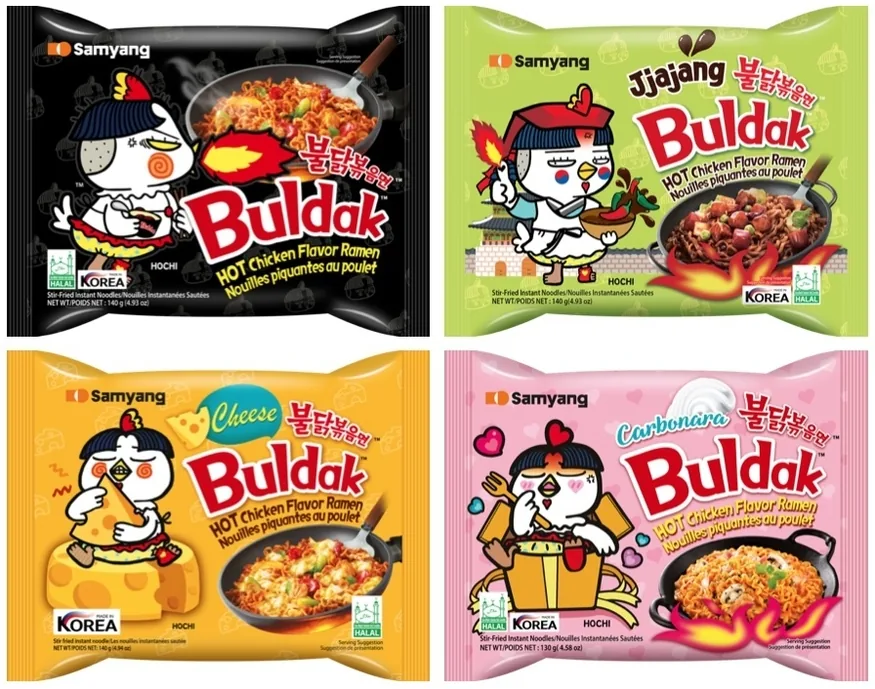
Buldak Carbonara vs Original Spicy: Which to Try First
On this page
Samyang’s own published figure for the original Buldak sauce is 4,404 Scoville heat units, closer to a jalapeño than a habanero and nowhere near what the challenge videos imply. The company measures its hotter packs against that same yardstick, listing the double-strength Nuclear Buldak at 8,706 SHU. For a first purchase, though, the Scoville table is the wrong tool. Carbonara is the better opening move for almost every beginner, and it wins on texture rather than on raw heat. The cream-and-cheese seasoning coats each strand, so the burn builds slower and fades faster. Buy the original instead when you already know you like Korean chili heat and want the spicy flavor the whole brand was built on.
Quick answers
- Carbonara is the safer first buy: it uses the same Buldak sauce, cut with a cream-and-cheese base that Samyang itself ranks below the original on the brand’s chili-pepper scale.
- Samyang publishes 4,404 SHU for the original Buldak sauce but no Scoville figure at all for Carbonara, so any exact number you see quoted for the pink pack is unofficial.
- Neither pack is mild. The whole line starts spicy by design, and the real way down is using half the sauce packet, not switching flavors.
Buldak Carbonara vs Original Spicy: The Side-by-Side
Both packs begin from the identical chili-chicken Buldak sauce; Carbonara layers a cream-and-cheese seasoning on top of it, which is why it reads milder without actually being a milder sauce. That distinction matters more than it sounds. Dairy fat carries capsaicin away from the tongue, so the same heat lands diffused instead of sharp — the burn is spread across a thicker, sweeter base rather than removed from it.
| Original Buldak | Carbonara Buldak | |
|---|---|---|
| Sauce | Dry chili-chicken sauce, no dairy | Same sauce plus cream-and-cheese seasoning |
| Samyang’s own heat figure | 4,404 SHU | Not published; ranked below Original on the brand’s pepper scale |
| First sold | Korea, April 2012 | Korea, March 2017, as a limited edition marking the first billion packs |
| Mouthfeel | Clean, dry, fast burn | Thick, coating, slower burn |
| Best for | People who already like Korean chili heat | First-timers and anyone who likes cream pasta |
What surprises most first-timers is that Carbonara still bites. Italian carbonara sauce contains no chili at all, being built from egg, hard cheese and cured pork; the Buldak version borrows the name and the creaminess while leaving the chili underneath untouched. It is a gentler entry, not a safe one, and the aftertaste sits in the throat for a good minute either way.
What the Heat Numbers Actually Say
Samyang publishes Scoville figures for part of the lineup and stays quiet about the rest. As of 2026, the brand’s own listings put the original sauce at 4,404 SHU, the double-strength Nuclear version at 8,706 SHU, and the 3X export pack at 13,000 SHU. Carbonara has no such number anywhere on Samyang’s product or press pages. The company’s own Carbonara listing describes the flavor in adjectives alone, grading it on a chili-pepper scale where it sits a clear step below the original.
So the tidy “2,600 SHU” figure that circulates in English roundups and shopping listicles is folklore with a decimal point. Nobody at Samyang appears to have said it. Treat any side-by-side chart built on that number as a guess dressed up as a spec.
Where the Carbonara Version Came From
Carbonara arrived in March 2017 as a limited edition marking the brand’s first billion packs sold, and then simply never left. Korean eaters had been blunting Buldak at home with a slice of processed cheese or a splash of milk long before a cream version existed; Buldak’s own recipe pages still list milk, soy milk, or a slice of cheese as stand-ins for cream. The company productized a habit its customers had already invented.
That decision reads clearly in the sales curve. Samyang says the Buldak line passed 10 billion cumulative packs at the end of May 2026, worth roughly 7 trillion won, after taking five years to reach its first billion and barely a year to add the tenth. The export mix leans heavily on the flavors that welcome people in rather than dare them, the same instinct that pushed Korean beauty brands onto TikTok. Heat sells a video; creaminess sells a repeat purchase.
Which One Should You Buy First?
Pick by your own tolerance, not by the challenge you saw online.
- Never eaten Korean instant noodles: Carbonara, half the sauce packet, with a fried egg on top.
- Comfortable with Thai curry or Sichuan food: go straight to the original — Carbonara will taste underpowered.
- Buying for a group with mixed tolerance: Carbonara, every time. It is the one pack that nobody at the table pushes away.
- Chasing the actual challenge: neither. The 2X and 3X packs exist for that, and they are a different experience, not a stronger one.
Regulars will tell you the original tastes more like the dish it is named after: buldak, fire chicken, a Korean pub staple built on chili and soy rather than cream. If the burn turns out to be your entry point into Korean spice, tteokbokki is the usual next step, where the same chili-and-sugar balance shows up in a chewier form.
Frequently Asked Questions
Q: Is Buldak carbonara really spicy, or just creamy?
Really spicy, though noticeably less so than the original. It carries the same Buldak sauce with a cream-and-cheese seasoning layered over it, and Samyang ranks it below the original pack on the brand’s own pepper scale. People who cook with chili regularly tend to find it mild; people who do not usually reach for milk halfway through.
Q: Is carbonara sauce spicy, or only the Buldak version?
Only the Buldak version. Traditional Italian carbonara is egg, hard cheese, cured pork and black pepper, with no chili in it, so a jar of carbonara sauce off a supermarket shelf is not spicy at all. Samyang’s pack keeps its full chili-chicken sauce and simply adds a cream-and-cheese powder on top, which is why the two share a name and almost nothing else.
Q: How much SHU is Buldak carbonara?
Samyang has not published a figure. The numbers the company does publish cover the original sauce at 4,404 SHU, the Nuclear version at 8,706 SHU, and the 3X pack at 13,000 SHU. Carbonara is rated only by pepper icons, so any precise Scoville number you find quoted for it is unsourced.
Q: Which Buldak flavor should a beginner buy?
Carbonara, using about half the sauce sachet on the first try. Add the rest once you have tasted it, since you can always make a bowl hotter but never colder.
Q: How much hotter is 2X Buldak than the original?
Roughly double, by Samyang’s own measurement: the Nuclear Buldak sauce is listed at 8,706 SHU against the original’s 4,404 SHU. The 3X export pack goes further still at 13,000 SHU.
Start with the pink pack, keep milk within reach, and treat the Scoville numbers as trivia rather than a warning label.
Part of Global K-Brands & Soft Power