LFP Battery vs NMC: Why Korean Makers Came Late to LFP
On this page
Lithium iron phosphate packs averaged $81/kWh in 2025 while nickel manganese cobalt packs averaged $128/kWh, according to BloombergNEF’s December 2025 price survey. That gap is the whole argument. Stated plainly, the answer to LFP battery vs NMC is that iron phosphate wins on price and cycle life, nickel wins on energy density and cold-weather range, and buyers have already voted: the IEA counts LFP at over 55% of EV batteries deployed globally in 2025. What almost no explainer covers is the manufacturing side of that vote. Korea’s three cell makers built their lines around nickel, and their combined share of global EV battery use slipped to 15.4% in 2025.
Quick answers
- Cost decides most of it: LFP packs averaged $81/kWh in 2025 against $128/kWh for NMC, with the all-chemistry global average at a record-low $108/kWh.
- Energy is the trade-off: the best LFP cells reach up to 205 Wh/kg where NMC reaches 265 Wh/kg, so an LFP car carries a bigger, heavier pack for the same range.
- Korean makers spell the cathode NCM and arrived late. LG Energy Solution signed its first large-scale LFP EV supply deal on 2 July 2024, and Samsung SDI’s first LFP-powered product launched in September 2025.
NMC or NCM? One Cathode, Two Spellings
NMC and NCM name the same cathode, listing the same three metals in a different order: nickel, manganese and cobalt one way, nickel, cobalt and manganese the other. Global institutions write NMC — the IEA and BloombergNEF both do. Korean industry does not. LG Energy Solution’s own materials pages put NCM and LFP side by side, and SK On’s InterBattery 2025 announcement describes its mid-nickel cells as using “NCM cathode material” with a nickel content of 50 to 70 percent. Samsung SDI adds a third label, NCA, for the nickel-cobalt-aluminium chemistry running in its prismatic cells in Indiana. A reader who arrives from an NMC query and then opens a Korean source will meet all three acronyms for one basic idea: a nickel-rich cathode that buys energy density with expensive metal.
LFP Battery vs NMC: The Numbers That Decide It
Three measurable things separate them, and only one of the three favours nickel.
| Measure | LFP | NMC (NCM in Korea) |
|---|---|---|
| Average pack price, 2025 | $81/kWh | $128/kWh |
| Best cell energy density | up to 205 Wh/kg | up to 265 Wh/kg |
| Cathode materials | lithium iron phosphate | nickel, cobalt and manganese |
BloombergNEF published that survey on 9 December 2025 and put the global average pack price at $108/kWh, 8% below 2024 and a record low. Geography moves the number as much as chemistry does. Packs averaged $84/kWh in China, while North America ran 44% higher and Europe 56% higher, which is a useful thing to remember whenever a single “battery cost” figure gets quoted at you. Stationary storage fell hardest of all, to $70/kWh, 45% below the 2024 level and the cheapest segment for the first time. LG Energy Solution’s product page credits LFP with 3,000 to 5,000 charge cycles and names the reason for the price gap without any hedging: iron and phosphorus cost less than nickel and cobalt.
What Is the Downside of an LFP Battery?
Energy density first, cold second, residual value third. At up to 205 Wh/kg against 265 Wh/kg, an LFP pack matching a nickel pack’s range has to be physically larger and heavier, and that mass propagates into the brakes, the suspension and the floor plan. Cold is the sharper complaint. SK On’s own March 2024 release states that a LFP battery “suffers 50-70 percent drop in driving range” at -20°C, and the company built a product specifically to blunt it: the Winter Pro LFP battery, announced on 4 March 2024, claims 16 percent more charging capacity, 10 percent more discharging capacity and 19 percent higher energy density than conventional LFP. Then there is the end of the pack’s life. A cathode built from iron and phosphate contains none of the nickel or cobalt that gives a spent NMC pack its scrap value, so the recycling arithmetic looks nothing like it does on the nickel side.
Why Korean Makers Bet on Nickel, and When They Blinked
They were selling to carmakers who wanted range, and nickel was how range was delivered. The bet held while Western EV demand grew and stopped holding once price became the buying criterion. SNE Research, which counts battery use monthly, names the mechanism directly: cost competitiveness, LFP product responsiveness and regional production hubs are what move share now. Its full-year 2025 tally put global EV battery use at 1,187GWh, up 31.7%, with CATL at 464.7 GWh and BYD at 194.8 GWh against LG Energy Solution’s 108.8 GWh. The three Korean makers together held 15.4%, down 3.3 percentage points in one year. Outside China, the market where they had been comfortable, their combined share for January to July 2026 was 27.2%, down 10.4 points year on year. Numbers like that feed the wider argument about whether Korea’s economy is actually failing, even though battery share and GDP are separate cases.
The response arrived in a sequence you can date. SK On announced its cold-weather Winter Pro LFP cell on 4 March 2024 and put a long-life LFP battery on its roadmap board at InterBattery in February 2025. LG Energy Solution signed its own first large-scale LFP EV supply deal on 2 July 2024: roughly 39GWh to Renault’s Ampere, built in Poland, enough for around 590,000 electric cars, running from late 2025 through 2030. In January 2026 the company told investors it would begin mass production of LFP and high-voltage mid-nickel batteries in the first quarter. Samsung SDI moved last. Its SBB 2.0 storage cabinet, announced on 9 September 2025, was the first Samsung SDI product powered by LFP cells at all.
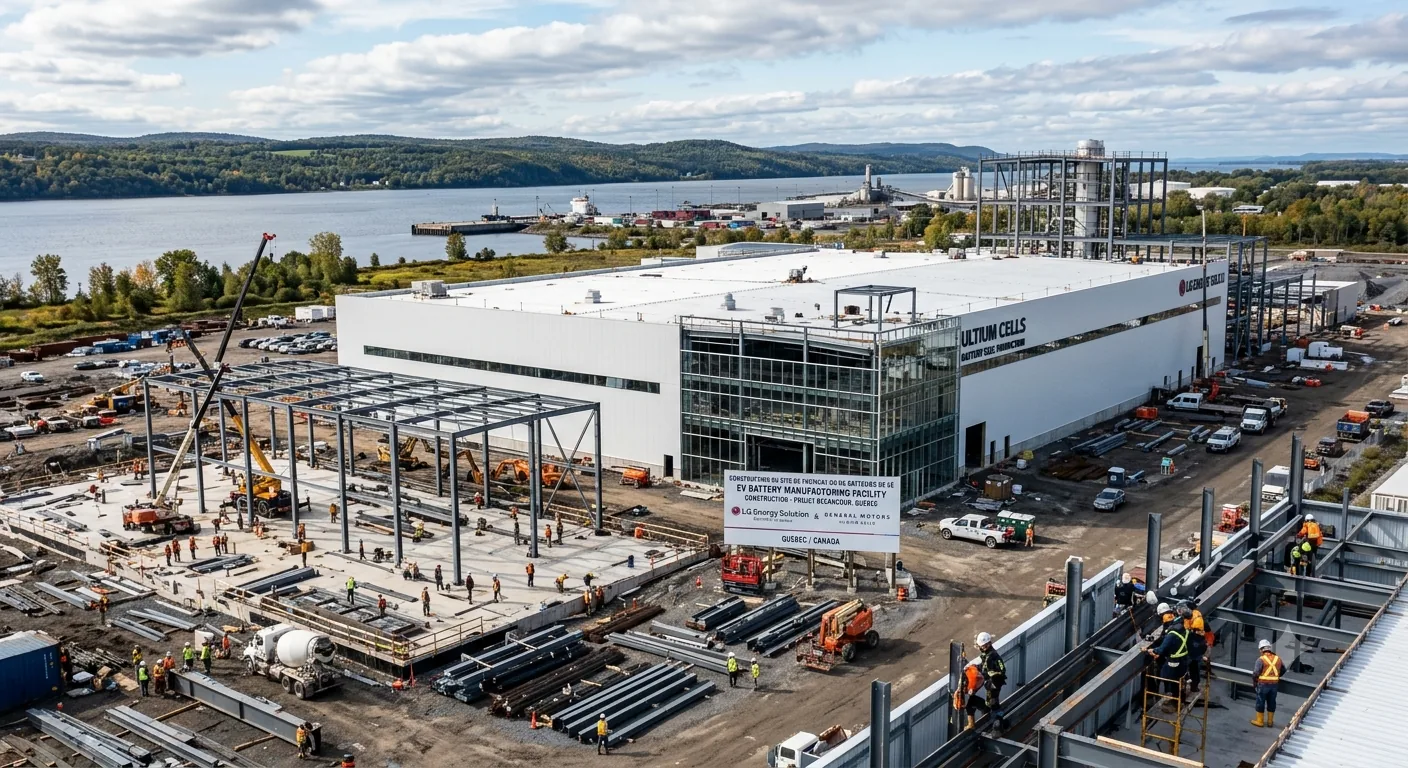
The bill came due over the same stretch. Samsung SDI closed 2025 with revenue of KRW 13.27 trillion and an operating loss of KRW 1.72 trillion. LG Energy Solution held up better at KRW 23.7 trillion in revenue, down 7.6%, and KRW 1.3 trillion in operating profit on a 5.7% margin the company says includes the North American production incentive. Both are now building the chemistry they skipped. LG Energy Solution’s Lansing plant, which started production on 18 August 2026, builds LFP cells for storage alongside NMC cells for electric vehicles and aims for more than 35GWh of total annual battery capacity, part of more than 50 GWh of North American LFP cell capacity planned by the end of 2026; by the first quarter of 2026 the ESS business already represented a mid-20 percent share of company revenue. Samsung SDI has contracted roughly KRW 1.6 trillion of LFP cathode material from L&F for three years from 2027, and will run LFP lines next to high-nickel NCA at its Indiana joint venture with Stellantis from the fourth quarter of 2026. The cathode half of that North American map is a separate story, traced through the Korean cathode plants in Bécancour, Quebec.
Which Chemistry Wins for Whom
For grid storage, LFP has already won, and the price table shows why: stationary packs at $70/kWh in 2025 were the cheapest segment on the market. That is where LG Energy Solution and Samsung SDI are pointing their new LFP capacity, because storage buyers weigh cost and cycle life and genuinely do not care what a container weighs.
For a car, the honest split is climate and distance. A commuter vehicle in a temperate city, charged at home, is the textbook LFP case, and you’ll find it in entry trims and in the Ampere models fed by Poland-built cells. Something that has to deliver rated range at -20°C, tow a trailer or minimise mass is still a nickel vehicle, and that is the segment the Korean three are defending rather than conceding.
For the makers, there is no single answer any more, and that is the real change. LG Energy Solution now runs LFP, high-voltage mid-nickel and high-nickel NCM in parallel. Samsung SDI is converting electric-vehicle lines to storage and adding LFP beside high-nickel NCA in the same building. Neither has abandoned nickel; both have stopped treating it as the whole market. Korea’s other flagship export sector, semiconductors, spent the same years learning a similar lesson about concentrating on one product tier.
Frequently Asked Questions
Q: Is an LFP battery safer than NMC?
Both are lithium-ion and both can fail. The makers’ own marketing puts iron phosphate ahead on thermal stability: Samsung SDI’s September 2025 announcement describes SBB 2.0 as overcoming LFP’s low energy density to “maximize advantages such as safety and low price”. Cathode chemistry is only part of the picture, though, since pack design, cooling and the battery management system shape real-world behaviour just as much.
Q: How much does an LFP battery cost per kWh?
$81/kWh at pack level in 2025 on BloombergNEF’s global average, against $128/kWh for NMC. Bare cells cost less than finished packs, and the figure swings with geography: $84/kWh in China, 44% higher in North America. That December 2025 survey is the most recent full-year benchmark available.
Q: Which battery maker is winning as LFP takes over?
CATL and BYD, by volume. SNE Research counted 464.7 GWh of EV battery use for CATL in 2025 and 194.8 GWh for BYD, against 108.8 GWh for LG Energy Solution, 44.5 GWh for SK On and 28.9 GWh for Samsung SDI. CATL is not LFP-only: its Qilin battery pages quote ternary-system figures alongside LFP. BYD’s Blade pack is lithium iron phosphate, and SNE ties the non-China shift to LFP-based price competitiveness together with broad product portfolios and local production strategies.
Q: Do Korean makers sell LFP cells for cars, or only for grid storage?
Both, with the volume in storage. LG Energy Solution’s LFP EV cells go to Renault’s Ampere from its Poland plant under the July 2024 agreement, and the company guided to first-quarter 2026 mass production of LFP for electric vehicles. Samsung SDI’s LFP is storage-only so far, and the LFP lines LG Energy Solution is filling in Michigan make cells for energy storage systems rather than cars.
The chemistry question was settled by a spreadsheet rather than a laboratory, and Korea’s battery industry is still repricing itself around the answer.
Part of Batteries & Green Energy