Which Korean Battery Companies Have Factories in Quebec?
On this page
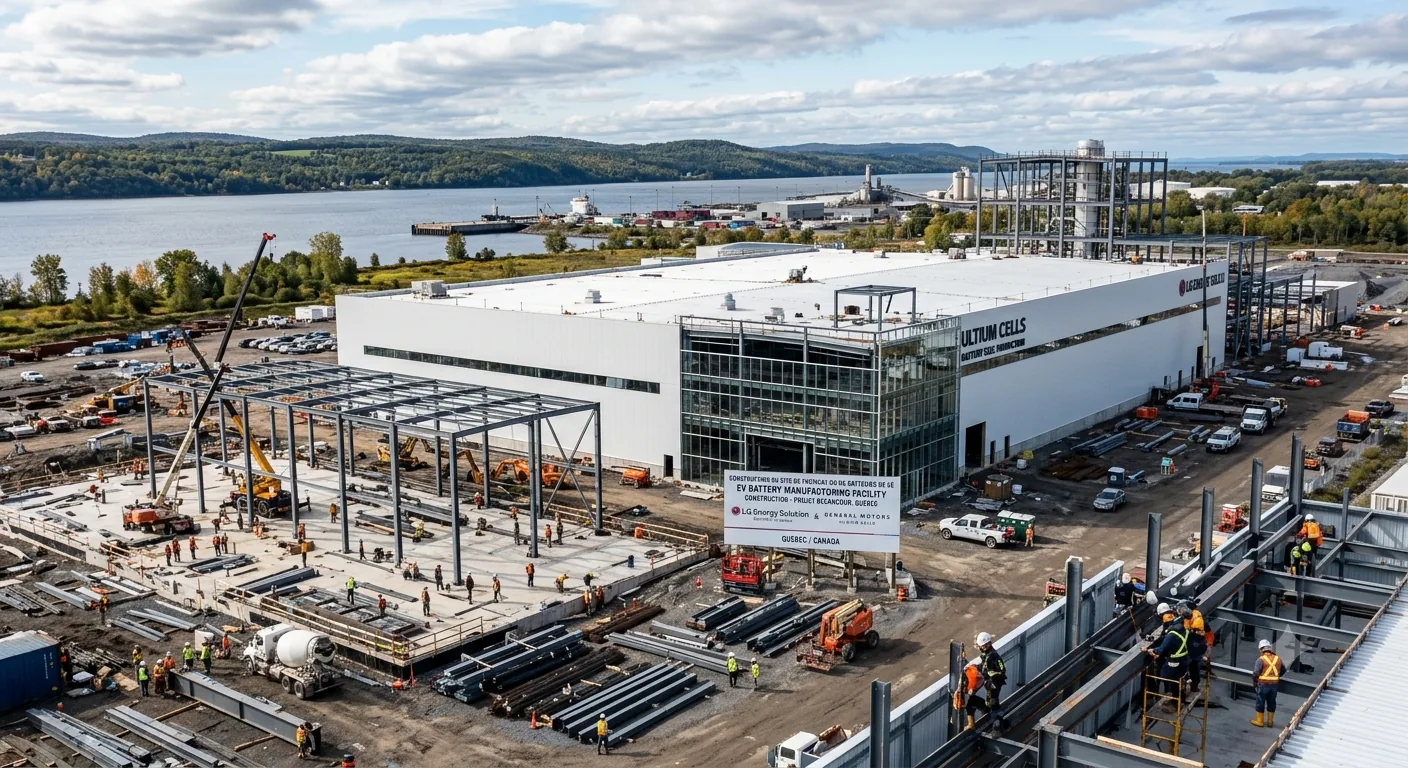
Two Korean battery companies, POSCO Future M and EcoPro, chose Bécancour, a small industrial town on the St. Lawrence River in Quebec, Canada, for their North American cathode factories. As of September 2026, neither is producing yet. POSCO Future M’s joint venture with General Motors is scheduled to start its first phase in late October 2026, while EcoPro’s plant has sat idle since its third construction halt in June 2025. So the “battery cluster” that most North American coverage, fixed on Georgia and Michigan, still overlooks is one plant nearing its start date and one paused construction site.
Quick answers
- POSCO Future M and EcoPro are the two Korean battery companies with cathode factories in Bécancour, Quebec: Ultium CAM (85 percent POSCO Future M, 15 percent GM) is due to start phase 1 in late October 2026, and EcoPro CAM Canada has been on hold since June 2025.
- They make cathode active material, the energy-hungry middle of the battery chain, not finished cells, which Korean firms still assemble in Georgia and other US states.
- Quebec’s offer was clean power and public money (Ottawa and Quebec each put up C$322 million for EcoPro’s C$1.2 billion project), while the US EV tax credit often given as the reason treated Korea as a free-trade partner too and ended for vehicles acquired after Sept. 30, 2025.
Which Korean Battery Companies Have Factories in Quebec, Canada?
POSCO Future M and EcoPro are the two, and both sit in the same industrial park in Bécancour, between Montreal and Quebec City. Their situations could hardly be further apart:
| Ultium CAM | EcoPro CAM Canada | |
|---|---|---|
| Korean owner | POSCO Future M, 85% | EcoPro BM |
| Partners | General Motors, 15% | SK On and Ford at launch; Ford left in 2024 |
| Annual capacity | 30,000 tonnes of cathode material | 45,000 tonnes (planned) |
| Project size | More than C$600 million | C$1.2 billion |
| Status in September 2026 | Phase 1 due late October 2026; phase 2 paused | Construction suspended since June 2025 |
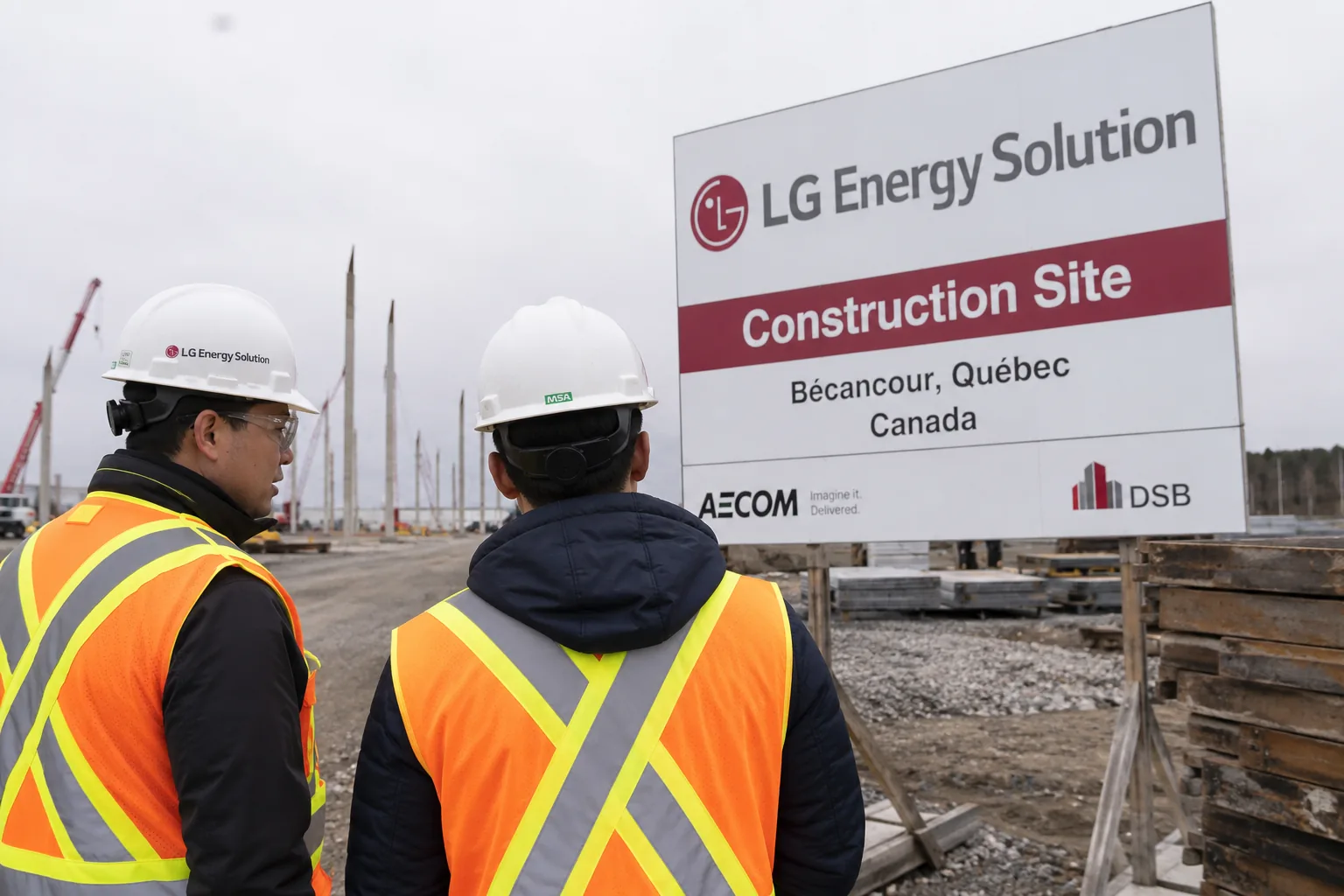
Ultium CAM is the one about to run. POSCO Future M owns 85 percent and GM 15 percent, and the schedule the company fixed in October 2025 puts the start of phase 1 in late October 2026 (Korea Herald, 20 Oct 2025). POSCO describes it as a 30,000-ton cathode plant supplying Ultium Cells, GM’s battery joint venture with LG Energy Solution (POSCO Newsroom). That is later than promised: when Ottawa backed the more-than-C$600 million project in May 2023, production was due to begin in 2025 (Government of Canada). A second phase that would have added more cathode and precursor capacity was paused in October 2025, and Brazil’s Vale cancelled the nickel sulphate plant meant to feed it (Daily Commercial News).
EcoPro’s plant is the stalled one. EcoPro BM, SK On and Ford announced it in August 2023 as a C$1.2 billion project for 45,000 tonnes of cathode active material a year, with production planned for the first half of 2026 (Government of Canada). Work stopped in April 2024 and again from August 2024 (Businesskorea, 19 Aug 2024), and Ford withdrew from the project later that year. In early June 2025 EcoPro halted construction a third time, citing US tariffs and uncertainty in the EV market. Read the statement closely and you’ll notice the careful wording: the halt was called temporary, yet it was “premature to predict the duration of the suspension” (Automotive News via Yahoo Finance). A year later the site had not restarted, and EcoPro BM’s mid-2026 share-offering filing still described construction as suspended, said completion kept slipping and warned that an impairment could not be ruled out (NewsTop). The 2027 production date found in older coverage was set after the 2024 delays, before the third halt.
Set against Korea’s chip industry, the timing looks worse. Korean memory makers are setting export records on AI demand, while these cathode plants were sized for an EV market that has grown more slowly than their 2022 and 2023 plans assumed. That split also shows up in the trade data, where semiconductors now make up close to half of Korea’s exports.
Why Did Korean Battery Companies Choose Quebec?
Clean electricity and public money, and both can be counted. Making cathode active material is power-hungry work, and hydropower supplied 94 percent of Quebec’s electricity in 2021, giving the grid an emissions intensity of about 1.2 grams of CO2e per kilowatt-hour in 2022, according to the Canada Energy Regulator. For a material sold to automakers that track the carbon footprint of their batteries, that number stops being a slogan and becomes a line item. Governments supplied the second half of the pitch. For EcoPro’s plant, Ottawa committed C$322 million through its Strategic Innovation Fund and Quebec a partly forgivable loan of the same size, and the two governments put about C$300 million into Ultium CAM’s first phase, including a C$152 million partly forgivable Quebec loan (Daily Commercial News). The August 2023 announcement summed up Quebec’s case in one line: “with its natural resources and clean energy, Quebec is one of the world’s most attractive places for global leaders in this industry.”
Why Build in Canada Instead of Shipping From Korea?
Because the customers were building in North America and wanted the material made nearby, not because a US tax rule punished Korean material. Both plants were tied to automakers from the start. Ultium CAM’s cathode is meant for GM’s Ultium Cells, and EcoPro’s plant was designed to supply batteries for Ford’s future EVs, with the partners saying a Quebec site gave them “a stable supply of battery raw materials in North America” (Government of Canada).
The tax-credit explanation is the part that does not survive a reading of the rules. The US clean-vehicle credit required a rising share of a battery’s critical minerals to be extracted or processed in the US or in a country with a US free trade agreement, and the Treasury Department’s list of those countries included Korea as well as Canada (US Treasury, March 2023). Treasury’s guidance also classed cathode active material as a “constituent material” made by processing minerals, not a battery component that had to be made in North America (Treasury white paper). So on that test, cathode material made in Korea stood on the same footing as material made in Bécancour. Ultium CAM’s joint venture was also set up in mid-2022, before the Inflation Reduction Act was signed that August. Today the question is closed: the IRS says the new clean vehicle credit is not available for vehicles acquired after Sept. 30, 2025 (IRS).
How Close Are These Quebec Plants to US Automakers?
Close enough to truck material across in a day. Bécancour sits within a day’s drive of the auto and battery plants of Ontario, Michigan and Ohio, and a short cross-border haul cuts both freight cost and the inventory an automaker has to carry. The border is also the weak point. When EcoPro halted construction in June 2025, US tariffs were one of the two reasons it gave, alongside uncertainty in the EV market. None of this moved final assembly out of the US: the Korean firms put only the mid-chain cathode step in Quebec, where the power is clean and governments paid part of the bill, while the cells are still made south of the border.
Frequently Asked Questions
Q: What does POSCO Future M’s Ultium CAM plant in Quebec make?
High-nickel cathode active material, the powder that becomes the positive electrode inside a battery cell. The plant is built for 30,000 tonnes a year for Ultium Cells, GM’s joint venture with LG Energy Solution (POSCO Newsroom), and its first phase is scheduled for late October 2026.
Q: Did the end of the US EV tax credit stop the Quebec battery plants?
Not on its own. The credit stopped applying to vehicles acquired after Sept. 30, 2025, but the reasons the companies gave for their setbacks were the EV market and, in EcoPro’s case, US tariffs. GM paused Ultium CAM’s second phase in October 2025 while the first phase went ahead, and EcoPro’s construction has been suspended since June 2025.
Q: Are Korean firms the only battery companies in Bécancour?
No. GM co-owns Ultium CAM, Ford was a partner in EcoPro’s plant until it withdrew in 2024, and Brazil’s Vale planned a nickel sulphate plant in Bécancour before cancelling it in October 2025.
Q: Do the Quebec plants replace Korean battery factories in Georgia or Michigan?
No. The Quebec sites handle one mid-chain step, turning precursor and lithium into cathode material, while the larger Korean battery plants in Georgia and other US states assemble finished cells.
Q: Where is Bécancour, and why does the battery industry care about it?
Bécancour is a small town on the south shore of the St. Lawrence River, between Montreal and Quebec City. Its industrial park has its own port, the provincial grid behind it is almost entirely hydroelectric, and federal and provincial money has backed battery projects there since 2023.
For now, Korea’s battery presence in Quebec comes down to one plant counting down to October and one construction site waiting for a restart date.
Part of Batteries & Green Energy