Seoul Hiking Gear Rental for Foreigners: The 2026 Guide
On this page
- Seoul Hiking Gear Rental for Foreigners: What’s Actually on Offer
- Step 1: Pick the Branch That Matches Your Mountain
- Step 2: Book on Klook, or Take Your Chances
- Step 3: Bring the Right ID and Get Changed On Site
- Step 4: Hike, or Let Someone Else Lead
- Step 5: Return the Kit the Same Day
- Common Mistakes Foreign Hikers Make
- Frequently Asked Questions
Show up at Bukhansan Ui Station in jeans and sneakers, and a couple of hours later you can be standing on a granite ridge in borrowed boots, a borrowed shell and borrowed poles. That is the actual promise of Seoul hiking gear rental for foreigners, run out of the city’s three Hiking Tourism Centers, and it holds up. What nobody spells out is everything around the gear: which branch to walk into, how booking works now, what ID to hand over, and a same-day return deadline that catches people out.
Quick answers
- It isn’t free: when the Bugaksan branch opened in 2024, the city quoted ₩2,000 to ₩5,000 per item, and the live price now shows on the Klook booking page each center links to.
- Bring your passport or alien registration card. The service covers foreign visitors plus any Korean friends hiking alongside them, and staff work in Korean, English, Chinese and Japanese.
- All three centers open 09:00 to 18:00 but close on different weekdays (Bukhansan on Mondays, Bugaksan on Tuesdays, Gwanaksan on Wednesdays), and the gear goes back the same afternoon by 16:30.
Seoul Hiking Gear Rental for Foreigners: What’s Actually on Offer
A full outfit, not just shoes. The Seoul Hiking Tourism Centers hand over hiking boots, jackets, tops, trousers, gloves, trekking poles, crampons and daypacks, with the exact catalogue varying by branch. In the city’s 2024 count, Bugaksan offered 17 items, Bukhansan 12 and Gwanaksan a tighter core kit of 8, and the extras across the network run to raincoats, sun sleeves and even camping chairs. Everything else in the building is genuinely free: the lounge, the changing rooms, the lockers, and the showers you’ll be very grateful for on the way back down.
Here is where the internet has been lying to you, and it is worth being blunt about it. Search this service and you’ll hit a wall of headlines announcing “free hiking gear rental in Seoul.” Those trace back to the October 2022 launch, when Seoul’s news site said the rental was free for now and that laundry fees would follow. They did, and the price has moved twice since: the same outlet quoted ₩1,100 to ₩2,200 per item in 2023, then ₩2,000 to ₩5,000 per item when the Bugaksan branch opened in 2024. The operator, the Seoul Tourism Organization, now describes the gear in its own press material as rented for a small fee. Nominal is still the honest word next to the cost of buying boots, but check the live price before you go, because a tariff that has changed twice can change again.
Step 1: Pick the Branch That Matches Your Mountain
Choose by trailhead, not by convenience to your hotel. Walking out of a center in full kit and then riding an hour across the city is the classic rookie move.
| Branch | Where it is | Closed | Character |
|---|---|---|---|
| Bukhansan (Ui) | Five minutes from Exit 2, Bukhansan Ui Station (Ui–Sinseol line) | Mondays | The original, open since September 2022; 60 percent of its 2025 visitors were foreign, the highest share of the three |
| Bugaksan | 88 Samcheong-ro, on Samcheong-dong’s cultural street in the old city core | Tuesdays | Opened April 2024; widest gear catalogue; pairs a hike with Bukchon and the palaces |
| Gwanaksan | Inside Gwanaksan Station on the Sillim Line, by Exit 1 | Wednesdays | Trial-opened November 2024; the busiest of the three in 2025, with plenty of Seoul locals |
All three run 09:00 to 18:00, weekends included, and the operator’s site lists three holiday closures for 2026: 1 January, 17 February (Seollal) and 25 September (Chuseok). Put the weekly closures together and one branch is always dark from Monday to Wednesday, while all three are open from Thursday to Sunday. If you’re pairing Bugaksan with a palace morning, the integrated palace ticket is worth a look before you go. The 18:00 shutter is the real planning constraint on a Seoul hike, and the return cutoff comes earlier still.
Step 2: Book on Klook, or Take Your Chances
Reserve through the Klook pages linked from the centers’ website, one per branch; older guides that send you to a VisitSeoul form describe a system that has since moved. Booking is the only way to lock in a boot size, because boots and clothing are held in limited numbers per size. Walk-ins are accepted when stock allows, and on a quiet weekday morning you’ll usually be fine.
Weekends in autumn are a different animal. Gear rentals across the three centers climbed to 1,648 in the first half of 2025 from 906 in the same period a year earlier, the operator reported, and the crowd keeps growing. If your trip hinges on hiking a specific Saturday in October, check when the leaves peak around Seoul and treat the booking as non-optional.
Step 3: Bring the Right ID and Get Changed On Site
Hand over a passport or an alien registration card at pickup. No ID, no gear, and a photo on your phone is not the same thing. The service is built for foreign visitors, and Koreans hiking with them can rent too, which quietly solves the awkward case of a mixed group where one person owns boots and nobody else does. The rule cuts the other way as well: the city’s guide says a Korean who turns up at the counter without a foreign companion will be turned away.
Change at the center rather than at your accommodation. There are fitting and changing rooms next to the rental floor, lockers for the clothes and bags you’re leaving behind, and a lounge to sort your layers and water before you start walking. Staff will also talk you through trail options in Korean, English, Chinese or Japanese, which is a better use of five minutes than any trail app.
Step 4: Hike, or Let Someone Else Lead
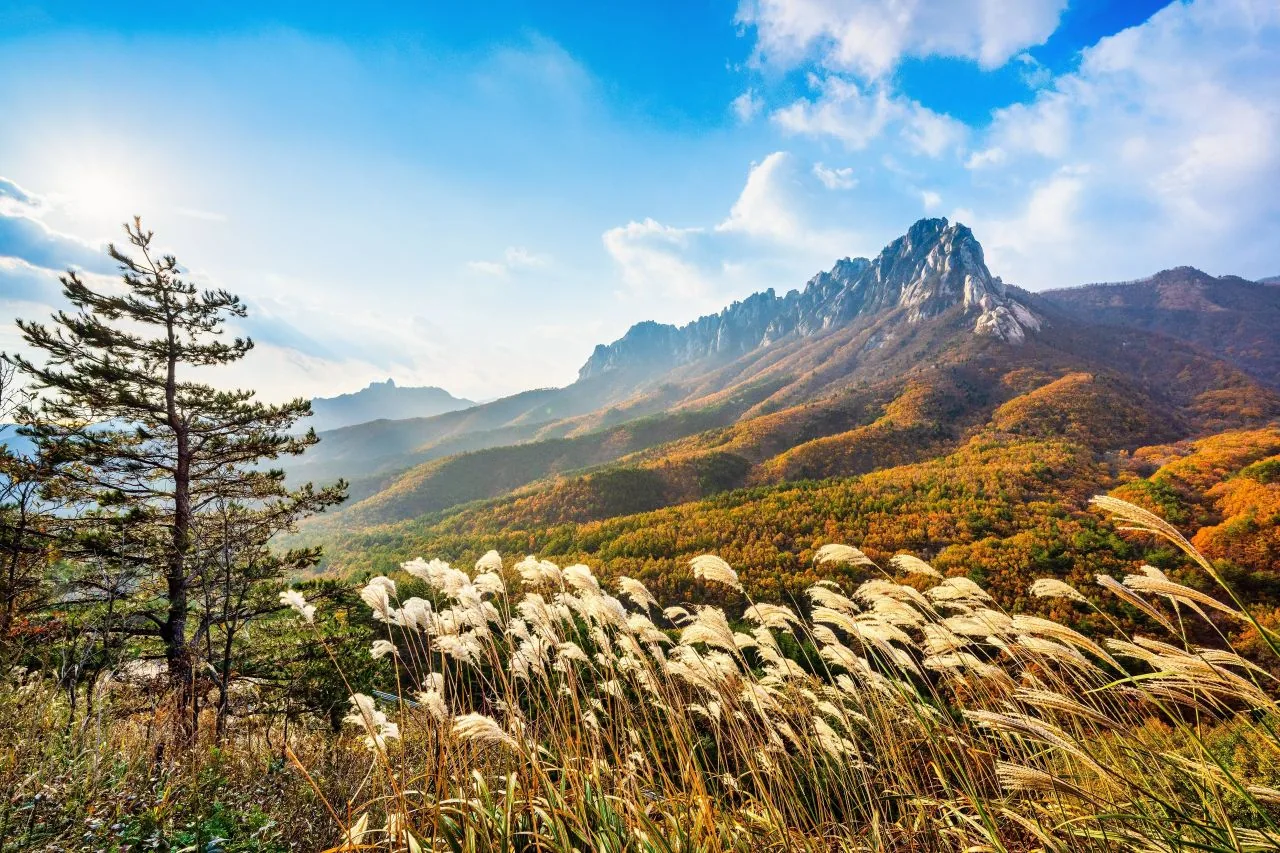
Bukhansan is the default for a reason. It is Seoul’s only national park, and it drew 7.53 million visitors in 2025, 17.4 percent of the 43.31 million national park visits nationwide, according to the Korea National Park Service’s annual count. The Bukhansan center’s own brochure maps three routes from its door, one way: the beginner Sogwicheon trail (3.5 km, about 100 minutes), the intermediate climb to Yeongbong Peak (4.3 km, about 110 minutes), and the rope-assisted Baegundae route to Seoul’s highest summit (4.1 km, about 130 minutes). Regulars will tell you the Sogwicheon valley is the friendliest introduction, with a gentle grade and enough traffic that you’re never truly alone on the mountain.
If a solo hike feels like a lot, the guided programs are the underrated half of this service. The centers run themed hikes, night walks and cultural pairings (archery and then Namsan, a temple stay and then Dobongsan) for individuals and groups. Seoul Hiking Week now runs twice a year: the spring edition moved between hubs over three weeks from 23 March 2026, with a fall edition planned for later in the year. The city also ran a Seoul Top 10 Mountains Challenge from July to November 2024, in which hikers picked any ten of Seoul’s 23 mountains and submitted a summit photo holding a message towel for a commemorative gift; ask at the counter whether a new round is open. Serious hikers heading further afield often pair all this with a Seoraksan day trip later in the same week.
Step 5: Return the Kit the Same Day
These are day rentals, not overnight ones. The center’s brochure lays the day out in order (hike, shower, return the gear, then head off sightseeing), and Time Out’s April 2026 visit lists returns by 16:30 at all three branches, with a phone number to call or text if you need more time. Confirm the time on your own booking, though, because that afternoon cutoff is earlier than the 18:00 closing time and it is exactly the detail people assume. Return everything in the condition you took it: the city’s guide warns that lost or damaged items can be billed for replacement or repair, and the rentals carry no insurance.
Common Mistakes Foreign Hikers Make
The mistakes here are logistical, not athletic. Turning up on the wrong weekday tops the list, and it’s easy to do because older listings, including the city’s own 2024 notice, still show Gwanaksan closing on Mondays. It now closes on Wednesdays.
Three more worth naming. Renting crampons in July, because someone’s blog post from January said to: they’re a winter item, and Seoul summers are humid enough without extra hardware. Assuming your hotel neighbourhood has a center, when there are only three and they’re tied to specific mountains. And trusting a “free rental” headline from 2022, then getting surprised at the counter. The crowd is also growing: 44,387 people passed through the three branches between January and June 2025, 7,343 of them foreign visitors, or 16.5 percent of the total, and cumulative visits crossed 100,000 in 2025, so the quiet-weekday advantage is shrinking.
Frequently Asked Questions
Q: How much does it cost to rent a full hiking outfit in Seoul?
The city’s 2024 quote, published for the Bugaksan opening, was ₩2,000 to ₩5,000 per item. A Time Out writer who rented a full kit at Bukhansan in April 2026 paid under S$12 for the day, and Klook shows your exact total before you pay.
Q: Is Seoul hiking gear rental open on Chuseok?
No. All three centers close on Chuseok day, which falls on 25 September in 2026, and on Seollal and New Year’s Day. The operator lists only the holiday itself, so the days either side (24 and 26 September) follow the normal weekly schedule.
Q: Can Koreans rent hiking gear in Seoul without a foreign friend?
No. Koreans are eligible only when they accompany a foreign visitor, and the city’s guide says staff will refuse a Korean renter who arrives alone. Hiking together is the whole point of the exception.
Q: Do I need to reserve, or can I just walk in?
Walk-ins are accepted when stock allows, but boots and clothing are held in limited numbers per size, so a Klook booking is the only way to guarantee yours. On autumn weekends, book.
Q: What if I can’t get the gear back by 16:30?
Call or text the center before the cutoff; Time Out’s writer was given a number for exactly that. Don’t simply keep the kit overnight, because lost or damaged items can be billed at replacement or repair cost and nothing is insured.
Q: Which Seoul Hiking Tourism Center should a first-timer use?
The Bukhansan branch by Bukhansan Ui Station, unless it’s a Monday. It’s the original, 60 percent of its 2025 visitors were foreign, and its brochure routes start from the door on Korea’s most-visited national park.
Borrow the boots, take the early slot, and hand everything back by mid-afternoon. That’s the whole system, and it works better than its own publicity suggests.
Part of Nature & Hiking