How to Get from Seoul to Seoraksan (2026 Day Trip Guide)
On this page
- Is a Seoraksan Day Trip from Seoul Actually Realistic?
- How to Get to Seoraksan National Park from Seoul
- What You Can Actually See in One Day at Seoraksan
- What a Seoraksan Day Trip Actually Costs
- Should You Try Ulsanbawi or Daecheongbong Anyway?
- When You Should Stay Overnight in Sokcho Instead
- Frequently Asked Questions
Getting from Seoul to Seoraksan means one thing above all: a bus. You’ll ride an express coach roughly 2 to 2.5 hours to Sokcho, then transfer 20–30 minutes to the park entrance, about a four-hour round trip on wheels. That travel time, not your fitness, is what decides whether a Seoraksan day trip from Seoul actually works. Leave on an early departure and it does; sleep in, and you’ll spend more of the day on the highway than on the mountain.
Quick answers
- Yes, a Seoraksan day trip from Seoul is realistic if you catch a bus departing by 7:00 AM and stick to the cable car and Sinheungsa Temple area rather than attempting a summit hike.
- The bus ride each way runs roughly 2 to 2.5 hours, from Seoul’s Dong-Seoul or Express Bus Terminal to Sokcho, plus another 20–30 minutes by local bus or taxi to the park entrance.
- Budget ₩16,000 for the cable car round trip, the one ticket most day-trippers actually buy. Entry to the park and to Sinheungsa Temple is ₩0.
Is a Seoraksan Day Trip from Seoul Actually Realistic?
It is, but only with a narrow version of “seeing Seoraksan.” Between the bus there, the bus back, and the local transfer at each end, you’re looking at roughly 5 to 5.5 hours of travel out of your day. That leaves a workable window of 5 to 6 hours inside the park itself if you leave Seoul on one of the first departures. What it doesn’t leave room for is a leisurely lunch in Sokcho, a nap on the bus, or a change of plans once you arrive. You’re committing to a schedule, not a wander. If you’d rather not haul boots and a shell jacket onto the coach, Seoul’s hiking gear rental shops for foreigners can kit you out the evening before.
How to Get to Seoraksan National Park from Seoul
Express buses to Sokcho run from Dong-Seoul Bus Terminal and Seoul Express Bus Terminal starting around 6:00 AM on the 2026 timetable, with departures roughly every 30–40 minutes during peak season. The ride itself takes about 2 hours on a good traffic day, closer to 2.5 on a summer weekend. From Sokcho Intercity Bus Terminal, local bus 7 or 7-1 reaches Seoraksan Sogongwon, the main park entrance, in about 25 minutes; a taxi cuts that to roughly 15 but costs several times the fare. The same T-money card you tap in Seoul works on the Sokcho buses, and if Seoraksan is your last stop before flying out, here is how to refund the leftover balance at the airport. One habit worth keeping: buy your return ticket the moment you arrive in Sokcho. Last-bus seats sell out on autumn weekends, and missing it means an unplanned night in a motel you didn’t book.
What You Can Actually See in One Day at Seoraksan
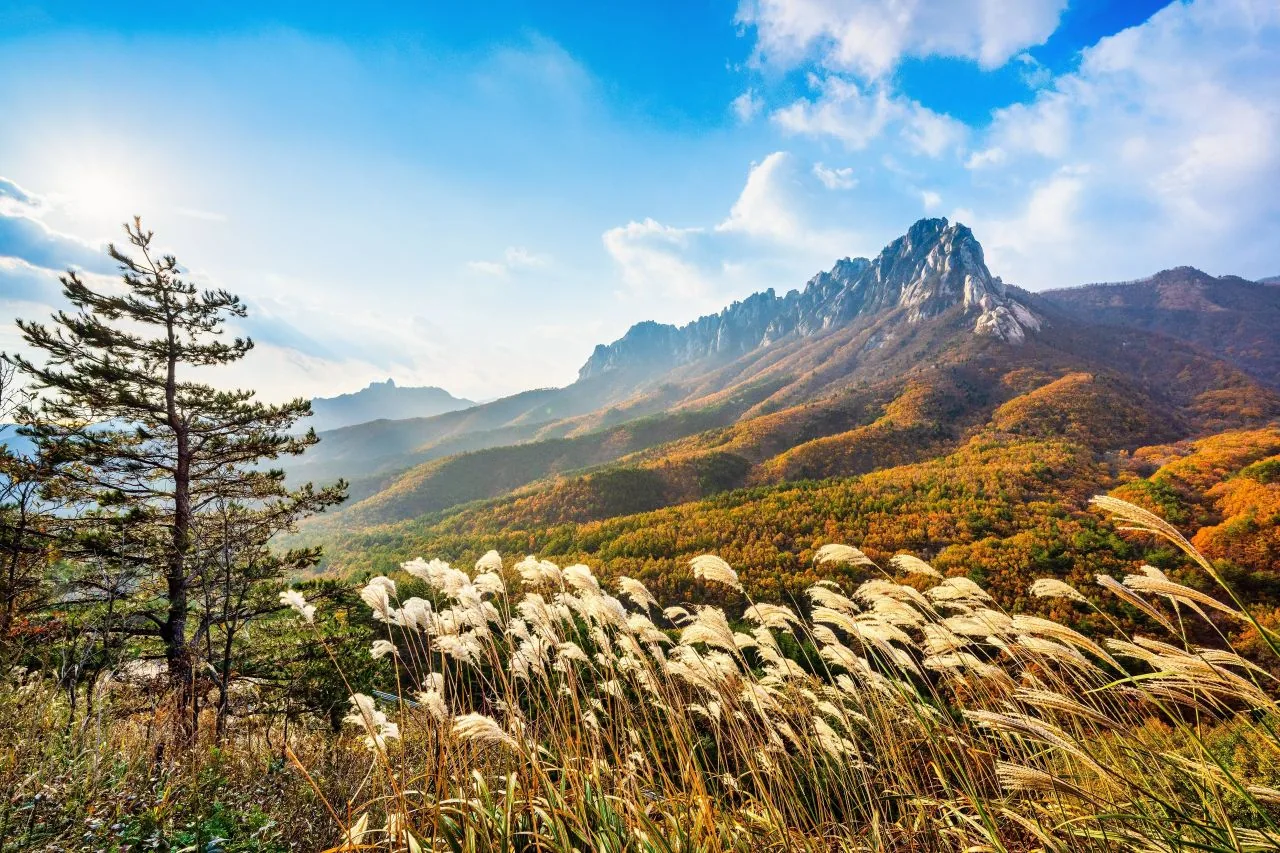
Inside the park entrance, the cable car up to the Gwongeumseong fortress site is the single best use of limited hours. The operator puts the ride at about five minutes each way and charges ₩16,000 for an adult round trip and ₩12,000 for a child, which buys you a ridgetop view that would otherwise cost a multi-hour climb. The panorama over the Seorak valley from the top platform is the postcard shot everyone is after. Pair it with Sinheungsa Temple, a five-minute walk from the entrance and home to a giant seated bronze Buddha, and Biryong Falls, a flatter 40-minute round-trip trail. The Korea National Park Service maps fourteen marked courses in the park, and those three fit inside four hours at a normal pace, which still leaves time for a bowl of dongchimi guksu near the terminal before the bus back.
What a Seoraksan Day Trip Actually Costs
Less than most visitors budget for, because two of the fees still quoted online no longer exist. Korea abolished national park entrance fees in 2007, and the separate cultural-heritage ticket that Sinheungsa collected at the same gate ended on 4 May 2023, when the heritage authority made admission free at 65 Jogye Order temples and took over the cost itself. Guidebooks and blog posts written before that change still print a temple admission price, so treat any Seoraksan entry fee you read as stale. It is ₩0 at the gate. What you will genuinely pay is the round-trip coach to Sokcho, the local bus or taxi at the Sokcho end, and the cable car if you ride it.
Should You Try Ulsanbawi or Daecheongbong Anyway?
Ulsanbawi Rock is the trail day-trippers keep underestimating: roughly 3.5 hours round trip from the entrance, most of it stairs, and it alone consumes your entire travel-adjusted window. Daecheongbong, the park’s highest peak, realistically needs 9 to 10 hours round trip and isn’t a day-trip option from Seoul at all, full stop. If either summit is the actual goal, book a Sokcho guesthouse the night before instead of racing the clock.
When You Should Stay Overnight in Sokcho Instead
Stay overnight if you want Ulsanbawi, Daecheongbong, or the Osaek hot springs on the same visit — trying to cram any of those into a same-day round trip from Seoul turns a hike into a sprint. An overnight also buys you first light at the cable car queue, which is far shorter before 9:00 AM than it is by noon once the leaves turn. Seorak colours peak earlier than most of the country, so check when foliage actually arrives region by region before locking in a weekend.
Frequently Asked Questions
Q: How much does the Seoraksan cable car cost?
A round trip to Gwongeumseong is ₩16,000 for anyone middle-school age and up, and ₩12,000 for children from 37 months through elementary school, per the operator’s published fares. Under 37 months rides free, and the car runs about five minutes each way.
Q: Is one day enough to see Seoraksan from Seoul?
One day is enough for the cable car, Sinheungsa Temple, and Biryong Falls, but not for a summit hike like Ulsanbawi or Daecheongbong given the roughly 4–5 hours of bus travel involved.
Q: How early do I need to leave Seoul for a Seoraksan day trip?
Catch a bus departing by 7:00 AM to arrive at the park entrance by mid-morning and leave yourself a realistic window before the last bus back to Seoul, which typically departs Sokcho in the early evening. Confirm the final departure at the terminal counter rather than trusting a schedule you screenshotted at home.
Q: Do I have to pay to enter Seoraksan National Park or Sinheungsa Temple?
No. Park entrance fees ended nationwide in 2007, and Sinheungsa stopped charging its cultural-heritage admission on 4 May 2023 along with 64 other Jogye Order temples. Any source still quoting a gate fee is out of date.
Q: Is it better to take a bus or join a day-tour package to Seoraksan?
A direct express bus is cheaper and more flexible if you’re comfortable navigating the local bus at the Sokcho end; a day-tour package costs more but bundles transport, a guide, and sometimes lunch, which can be worth it if you’d rather not manage bus tickets solo.
A Seoraksan day trip from Seoul rewards planning around the clock, not the trail. Get the early bus, keep your park-side ambitions to the cable car and temple loop, and save Ulsanbawi for a trip where Sokcho gets to keep you overnight.
 Photo © Korea Tourism Organization
Part of Nature & Hiking