Inside Korea's Temple Dating Retreat: How Naneun Jeolo Works
On this page
- What Is the Korea Temple Dating Retreat Called Naneun Jeolo?
- Who Organizes This Buddhist Matchmaking Program?
- How Competitive Is It to Apply for Naneun Jeolo?
- What Does the Retreat Cost, and What Do You Pay For Yourself?
- What Actually Happens During the One-Night Retreat?
- Why Is a Temple Running a Dating Program in the First Place?
- Frequently Asked Questions
The Korea temple dating retreat is Naneun Jeolo (나는 절로), a one-night, two-day matchmaking retreat run not by a dating company but by the social welfare foundation of Korea’s Jogye Order of Buddhism. Single adults apply for about twenty spots, sleep in shared temple-stay quarters, and get to know each other through walking meditation, tea, and temple chores instead of the interview-style small talk of a Korean blind date. That a major Buddhist institution runs matchmaking at all makes it one of the more surprising corners of Korea travel, and as of 2026 one of the most competitive: the round held at Naksansa in July drew a record 4,225 applications, and the people who got in paid ₩0 to attend.
Quick answers
- Naneun Jeolo is a one-night, two-day matchmaking retreat organized by the Jogye Order’s social welfare foundation, pairing single participants through shared temple-stay activities instead of a conventional blind date.
- It is genuinely competitive: the 11–12 July 2026 round at Naksansa in Yangyang drew 4,225 applications (1,655 from men, 2,570 from women) for 20 places, and five couples formed by the end of the stay.
- That round cost participants ₩0, with lodging and temple meals included, but selected applicants pay their own way there. An ordinary weekend temple stay booked through the official site runs roughly ₩90,000 to ₩130,000.
- You do not need to be Buddhist. Age brackets, region rules, and deadlines are set separately for every round and published on the organizers’ notice boards, so read the current notice before assuming you qualify.
What Is the Korea Temple Dating Retreat Called Naneun Jeolo?
Naneun Jeolo is a temple stay built specifically for single adults, designed to let people get to know each other through shared, low-pressure activities rather than the interview-style small talk of a typical Korean blind date. The name is a pun: “절로” means “naturally, on its own,” but it also echoes “절” (temple), so the title reads as something like “I go, naturally” or “it happens naturally at the temple.” Participants sleep in shared temple-stay quarters, eat the same simple vegetarian meals monks eat, and spend the retreat doing things together, whether that is walking meditation, a tea ceremony, or temple chores, instead of sitting across a table being evaluated.
Who Organizes This Buddhist Matchmaking Program?
Naneun Jeolo belongs to the Jogye Order Social Welfare Foundation (조계종사회복지재단), the welfare arm of Korea’s largest Buddhist order, rather than to the Templestay booking office that handles ordinary temple stays. It runs as part of the Ministry of Health and Welfare’s public-awareness work on Korea’s low birth rate, and individual rounds are co-hosted with regional partners. The Naksansa round was organized with the Gangwon Tourism Organization, which published the official recruitment notice for 「나는 절로, 낙산사」 setting the dates, the age bracket, and the eligibility rules.
That structure explains how the retreat feels. There are no per-introduction fees and no commercial marketing, and because each round is negotiated with a different temple and a different regional partner, the host site, the dates, the age bracket, and the residency rules all change from one round to the next. The September 2026 round moved to the Korean Culture Training Center in Gongju and took applications from single people in their 20s and 30s living in or connected to the Seoul metropolitan area.
How Competitive Is It to Apply for Naneun Jeolo?
Extremely. The Naksansa round in Yangyang took applications from 8 to 22 June 2026 and received 4,225 of them, 1,655 from men and 2,570 from women, for ten male and ten female places. That works out to roughly 166 applicants per spot for men and 257 per spot for women, and it beat the 2,620 applications reported for the Sinheungsa round in September 2025. Selection is not first-come: the organizers screen a written application form and a short self-introduction video, then balance the two genders before announcing results.
What Does the Retreat Cost, and What Do You Pay For Yourself?
For the people who get in, this is close to the cheapest overnight in Korean travel. The Gangwon Tourism Organization notice for the Naksansa round lists the participation fee as free, meaning ₩0 for the program itself with lodging and temple meals included. What the fee does not cover is getting there: the same notice states that selected participants arrange and pay for their own transport to the temple.
The contrast with an ordinary temple stay is the whole point. Booked through the Jogye Order’s official Templestay site, the regular weekend program at Bongeunsa in central Seoul costs ₩120,000 per person for one night, and the Tripitaka Koreana pilgrimage at Haeinsa runs ₩90,000 to ₩130,000 depending on the room you pick. Naneun Jeolo is funded as public-awareness work rather than sold as a product, which is also why the places are rationed by screening instead of by price.
What Actually Happens During the One-Night Retreat?
Participants arrive at the host temple for a structured one-night, two-day stay that mixes traditional temple-stay elements with light group activities meant to spark conversation without forcing it. Expect a welcome orientation, a communal vegetarian meal (called balwoo gongyang or a simpler shared version, depending on the temple), a group walk on the temple grounds, and an evening session where participants rotate and talk in small groups rather than being paired off immediately.
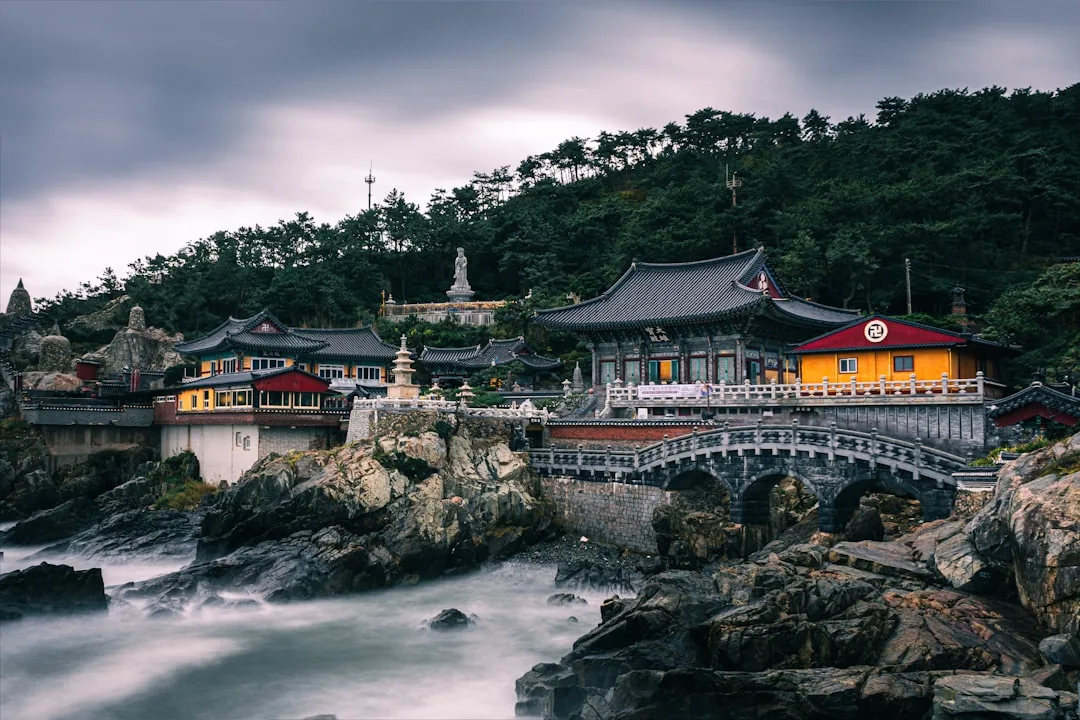
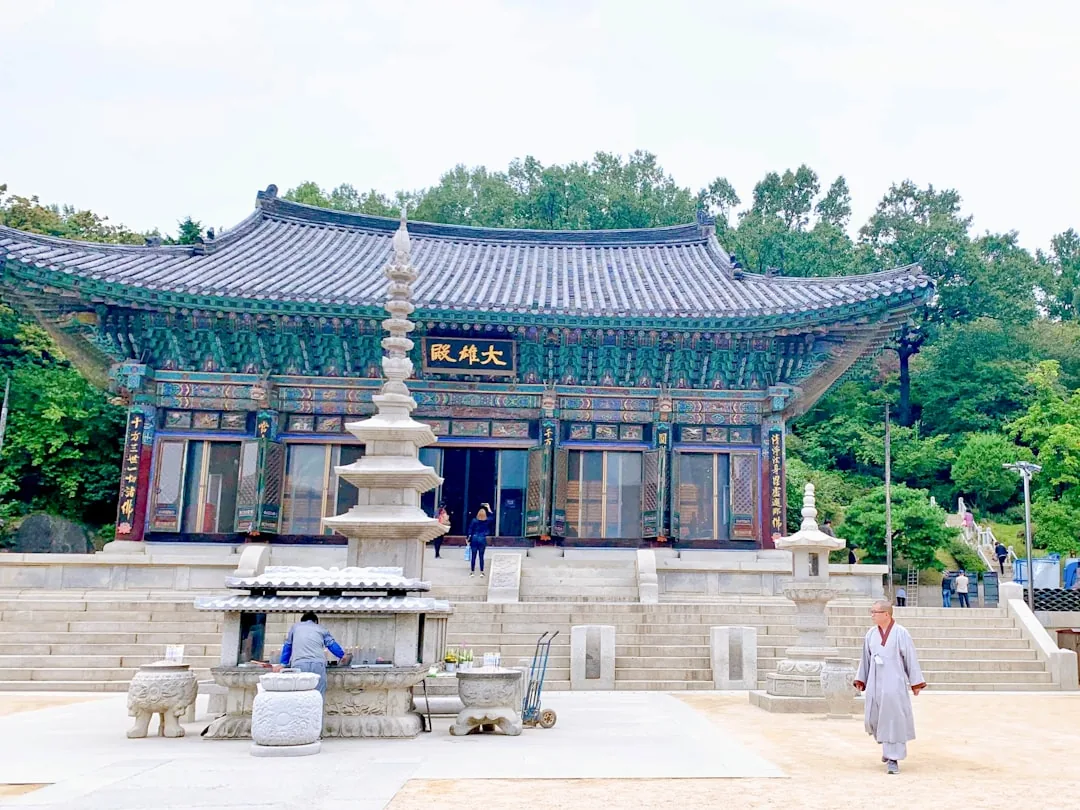
The specific activities are built around the host site. At Naksansa, which sits on the East Sea coast, the schedule reported by Korean media included one-on-one tea conversations rotating around the temple grounds, paired yoga and meditation on the beach, a coastal clean-up walk, and a blindfolded walk toward the seaside Haesu Gwaneum statue with a partner guiding the way. The framing throughout is that connection should happen “naturally” over the shared experience, not through direct matchmaking by staff. Naksansa is on the Yangyang coast just south of the Seoraksan corridor, so if you are heading that way independently, our Seoul to Seoraksan day trip guide covers the same route.
Why Is a Temple Running a Dating Program in the First Place?
Naneun Jeolo exists inside a much bigger conversation in Korea about marriage and one of the world’s lowest birth rates, and it runs under the Ministry of Health and Welfare’s low-birth-rate awareness work rather than as a standalone temple initiative. The program launched after a long slide in the number of weddings, and that slide has since reversed: Korea recorded about 240,000 marriages in 2025, up 8.1 percent on the year before, with a crude marriage rate of 4.7 per 1,000 people, according to the government’s national marriage indicator. Average age at first marriage was 33.9 for men and 31.6 for women.
The foundation also points to concrete results. In August 2026 it reported that five couples who met through the program had married, seven more were preparing to, and one baby had been born. Framing the event as a temple stay rather than a dating event also lowers the social stakes: participants can tell friends and family they went on a temple stay, which carries none of the awkwardness some single Koreans associate with organized blind-date services. Because rounds move between temples and seasons, the scenery changes too, and anyone timing a temple visit around autumn colour can check our Korea fall foliage peak dates by region.
Frequently Asked Questions
Q: Do I have to be Buddhist to apply for Naneun Jeolo?
No. The recruitment notice for the Naksansa round states explicitly that religion is not a condition, and participation in temple rituals during the stay is about the shared experience, not a requirement of faith.
Q: How do you actually submit an application?
Each round is announced on the Jogye Order Social Welfare Foundation’s notice board, usually alongside the regional co-host’s site, with a Google Form link inside the announcement. For the Naksansa round the form was open from 10am on 8 June to 10am on 22 June 2026, and applicants also had to submit a short self-introduction video before the two selection announcements.
Q: Can foreign residents of Korea apply for Naneun Jeolo?
The notices set conditions on age, marital status, and residency or ties to the host region rather than on nationality, but the whole process runs in Korean, from the application form and the video to the retreat itself, and the format assumes cultural context around blind dates and marriage pressure. Check the eligibility notice for each round rather than assume.
Q: What age range is eligible for Naneun Jeolo?
Age brackets are set per round rather than fixed year-round. Both 2026 rounds covered here, Naksansa in July and Gongju in September, were open to single people in their 20s and 30s, while an earlier round was aimed at applicants in their 40s. The current bracket is always listed on the official application notice, so treat any age range you see elsewhere as a starting point, not a guarantee.
Whether or not it leads to an actual match, Naneun Jeolo is a rare window into how Korea is trying to solve a very modern problem with one of its oldest institutions.