Faker T1 Fandom Explained: Why It Keeps Growing in 2026
On this page
The Faker and T1 fandom is the largest and most durable following in League of Legends esports, and in 2026 it is still growing. Here’s the short version: one player, Lee “Faker” Sang-hyeok, has anchored the same team since 2013, won six World Championships, and crossed over into mainstream Korean culture the way a k-pop idol or k-drama lead does. The scale is hard to overstate. Through the 2026 LCK playoffs, T1 was on one side of all five of the season’s most-watched matches. Below is what the fandom actually is, and why it keeps pulling in new fans.
Quick answers
- The Faker and T1 fandom spans hardcore League of Legends viewers and general K-culture fans who follow Faker the way they’d follow a k-pop idol.
- All five of the most-watched matches of the LCK 2026 season so far featured T1, led by a 1,556,031-viewer peak for T1 vs Hanwha Life Esports in the playoffs, according to Esports Charts.
- Faker has won six World Championships (2013, 2015, 2016, 2023, 2024 and 2025) and has played for only one organization, T1 (formerly SK Telecom T1), since his 2013 debut.
What Is the Faker and T1 Fandom?
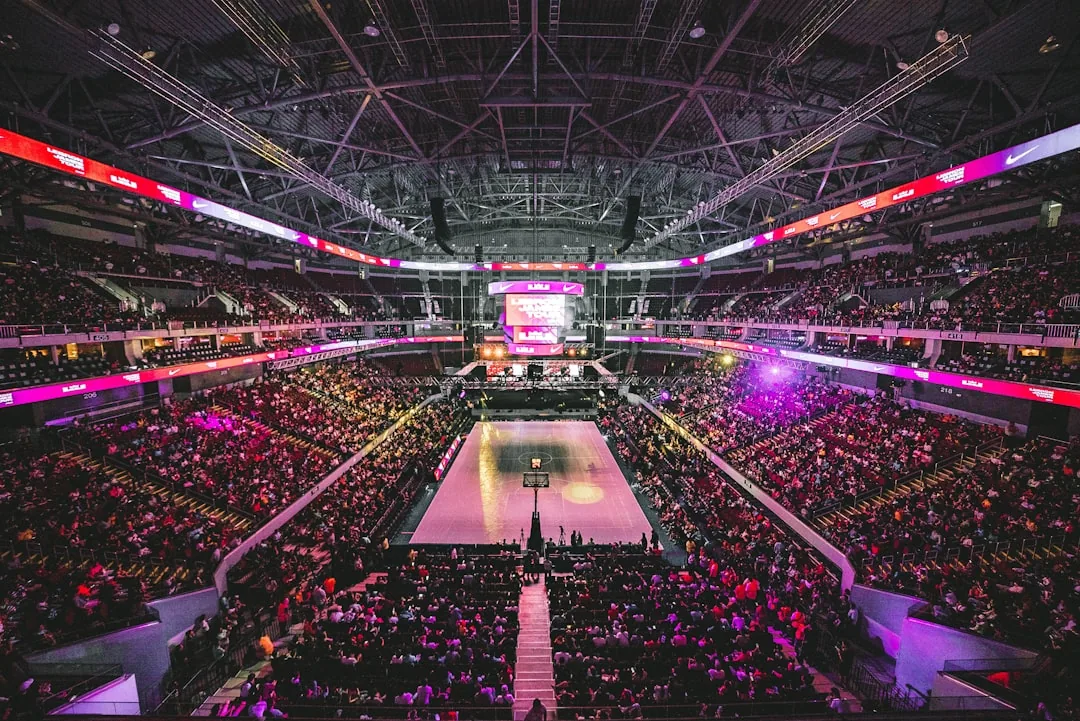
The Faker and T1 fandom is the global fanbase built around Lee “Faker” Sang-hyeok and his team, T1, and it now reaches far beyond people who actually play League of Legends. Picture two overlapping circles: the competitive LoL audience that watches for the plays, and a much broader wave of K-culture fans who found Faker the same way they found their favorite idol group. The glue between them is longevity. Because Faker has stayed put for over a decade, the T1 fandom and the wider Faker fandom now share an audience with k-pop comebacks, idols’ solo releases and k-drama premieres. Many newcomers arrive with k-pop habits already formed, from tracking schedules to buying concert tickets in Korea as a foreigner, and they run the same playbook for T1. You’ll notice it in the crowd shots: LCK arenas fill with people waving T1 signage who couldn’t name a single item build.
Faker T1 Fandom Explained: Why It Grew Into a Global Following
Explained simply, the Faker and T1 fandom comes down to longevity plus stakes. Faker has been the constant across four separate League of Legends eras, and every new generation of viewers meets the sport through whichever T1 roster he is anchoring at the time. He won his first World Championship in 2013 at age 17, added two more in 2015 and 2016, then went nearly seven title-less years before winning a fourth in 2023. He did not stop there. T1 lifted the trophy again in 2024 and in 2025, becoming the first team to take three straight Worlds titles, a run that drew a formal congratulatory statement from South Korea’s president. That slump-then-dynasty arc is what turned casual viewers into lifelong fans, and it does not need translation. You don’t have to know what a “gank” is to understand a champion returning from a long slump.
Why Is Faker So Popular Outside League of Legends?
Faker is popular outside League of Legends because he never left, and because his story lands with people who have never watched a match. Most star players jump organizations, chase bigger contracts, or retire once their reflexes slip. Faker has done none of that since signing with SK Telecom T1 in 2013, and in July 2025 he extended his contract with T1 through 2029. That loyalty reads as unusually sincere in a sport built on free agency. It also opened the door to the mainstream: he won gold with South Korea’s team at the 2022 Asian Games in Hangzhou (held in 2023), has sat down with host Yoo Jae-suk on tvN’s talk show You Quiz on the Block (first in 2020, again in 2023), has fronted brand campaigns unrelated to gaming, and gets covered in Korean news the way a top athlete or idol would. That crossover is why esports fandom now sits alongside music and drama as a recognizable piece of hallyu, rather than a niche running parallel to it.
Why Do T1’s Matches Draw the Biggest LCK Crowds?
T1’s 2026 matches drew bigger audiences than any other LCK team’s. The Esports Charts tracker for the LCK 2026 Season lists T1 in all five of the season’s highest-peak matches through the playoffs, topped by T1 vs Hanwha Life Esports at 1,556,031 peak viewers and T1 vs Dplus KIA at 1,514,374. The separate Road to MSI qualifier in June went higher still, with T1 vs Gen.G peaking above 2 million viewers. Part of that is pure competitive stakes (T1 entered 2026 as the only team ever to win three straight World Championships), but part of it is that international fans tune in specifically for Faker, regardless of the opponent or the standings. Regulars in match-day threads will tell you the same thing: plenty of casual fans skip whole weeks of the LCK and tune back in for T1 games.
Frequently Asked Questions
Q: What is the Faker fandom, and how big is it?
It is the global following around Lee “Faker” Sang-hyeok and his team T1, and it now stretches well past League of Legends players into general K-culture fans. A useful marker of its size: T1 played in all five of the most-watched matches of the LCK 2026 season, and every one of them peaked above 1.2 million viewers.
Q: Do I need to play League of Legends to become a T1 fan?
No. Plenty of T1 fans follow the rivalries, the storylines and the players rather than the mechanics, much like k-pop fans follow members without studying music theory. A best-of-five playoff series is the easiest place to start, because the stakes are obvious even when the item builds are not.
Q: Has Faker ever played for a team other than T1?
Not at club level. He debuted with SK Telecom T1 in 2013 and has stayed with the organization (rebranded T1 in 2019) through every roster change since, with a contract that now runs through 2029. The exception is international duty: he played for South Korea’s national team at the 2022 Asian Games, which won gold.
Q: How many World Championships has Faker won?
Six, more than any other player: 2013, 2015, 2016, 2023, 2024 and 2025. The last three came back to back, making T1 the first team to win three straight Worlds titles.
Q: Is esports fandom part of the Korean Wave (hallyu)?
Increasingly, yes. T1 and Faker’s mainstream media crossover in Korea places competitive gaming alongside k-pop and k-drama as a recognizable piece of Korea’s cultural export, and the 2025 three-peat drew a formal statement of congratulations from the president.
Whether or not you have ever queued into a game of League of Legends, the Faker and T1 story is one of the clearer examples of how a Korean cultural export can outgrow its original niche. Watch one match with the sound on, and it is obvious the fandom was never really about the game alone.
Part of Esports & Gaming Culture