Korean Singers Outside K-Pop: 7 Household Names to Know

On this page
- Idol or Gasu? What Makes Korean Singers Outside K-Pop Different
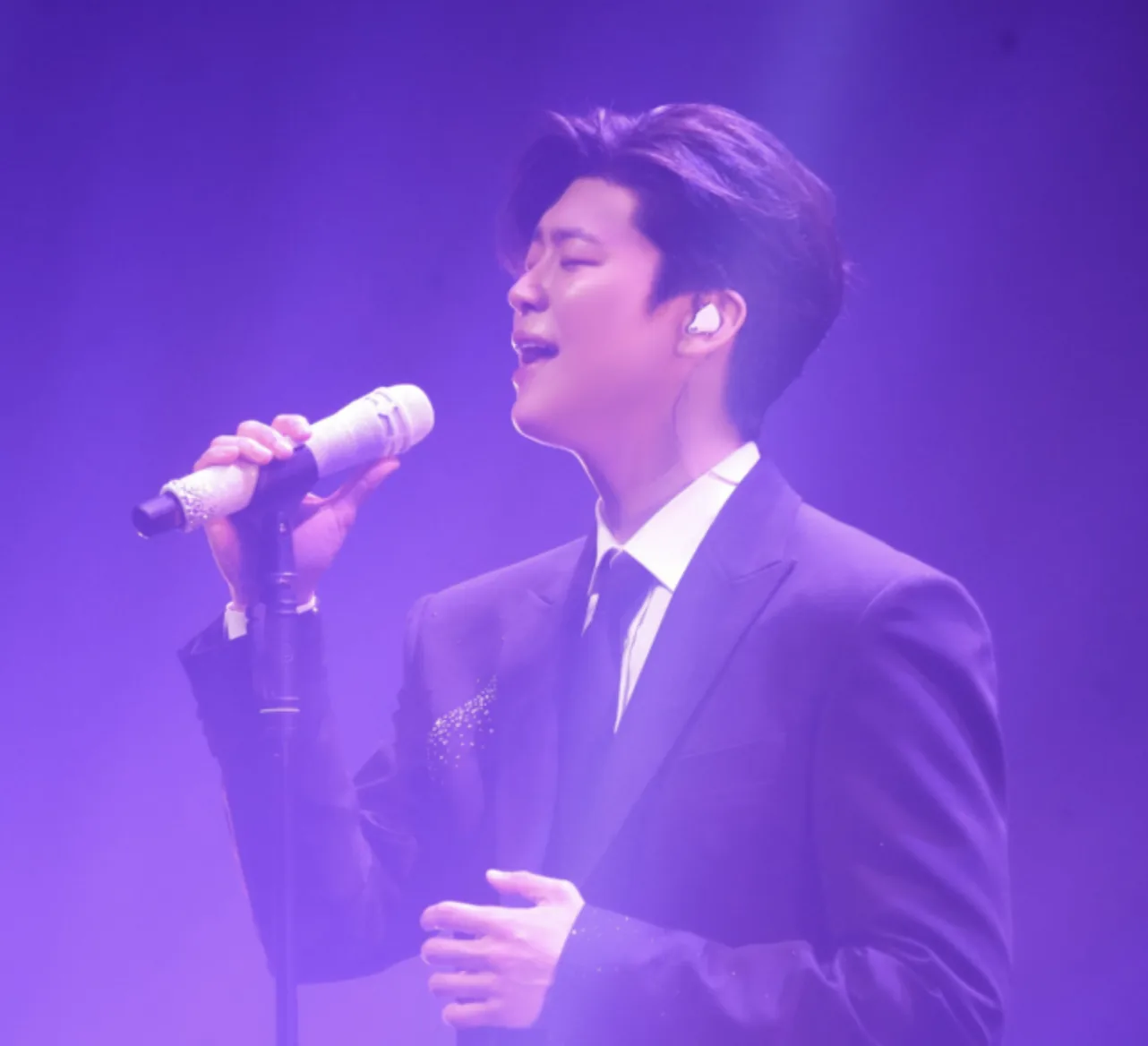
- 1. Lim Young-woong (Trot): The Audition Winner Who Fills Stadiums
- 2. Song Ga-in (Trot): The Pansori Voice Behind the Trot Boom
- 3. Cho Yong-pil (Rock and Pop): Korea’s “Gawang,” the King of Singers
- 4. Sung Si-kyung (Ballad): The Voice in My Love from the Star
- 5. Park Hyo-shin (Ballad): The Big Voice Behind “Snow Flower”
- 6. Busker Busker (Band): The Song That Comes Back Every Spring
- 7. Hyukoh (Band): The Indie Band That Crossed Borders
- Frequently Asked Questions
Korean singers outside K-pop are not a niche, and one streaming record makes the point. On February 24, 2025, Lim Young-woong’s “Trust in Me” (이제 나만 믿어요) passed one billion streams on the Korean service Melon, only the second single song to get there after BTS’s “Spring Day” reached the mark in August 2024. Lim has never been in an idol group. He is a trot singer who won a TV audition show. The seven picks below are singers Korea treats as household names by its own yardsticks (an audition-show crown, a chart sweep, a stadium-size crowd), grouped by lane, and each one comes with the song to start with.
Quick answers
- Trot singer Lim Young-woong is the stadium-scale name: his two May 2024 shows at Seoul World Cup Stadium drew some 100,000 people.
- The lanes to know are trot (Lim Young-woong, Song Ga-in), ballads (Sung Si-kyung, Park Hyo-shin) and bands (Busker Busker, Hyukoh), with rock-pop veteran Cho Yong-pil, performing since 1968, standing apart from all three.
- Start with one song per singer, beginning with “Trust in Me,” the 2020 trot hit that passed one billion Melon streams in February 2025.
Idol or Gasu? What Makes Korean Singers Outside K-Pop Different
In Korean, the difference is built into the words: an idol (아이돌) is a performer an entertainment agency recruits, trains and launches, usually as part of a group, while gasu (가수) simply means singer. Every name on this list built a career under their own name, through TV audition shows, drama soundtracks, club stages or decades of touring, rather than through a trainee system. The line isn’t a wall. Idols release solo records too, often to stay visible during a group hiatus, but that is a side project inside an idol career, not a different kind of career.
Three lanes are worth knowing. Trot (트로트) has the deepest roots: popular song that formed under the influence of Japanese enka and settled in the mid-1930s, mostly in a two-beat rhythm with its own vocal ornaments, according to the Encyclopedia of Korean Culture. Ballads are slow, big-voiced love songs and a staple of K-drama soundtracks. The band lane runs from small indie clubs to festival stages, and it is where you’ll find the guitars.
1. Lim Young-woong (Trot): The Audition Winner Who Fills Stadiums
Lim Young-woong is the first name to learn, because his crowds are stadium-sized. He debuted in 2016 with the single “Mi-woyo” (미워요), and his break came four years later on TV Chosun’s audition show Mr. Trot. A live results special on March 14, 2020 named him the winner, or jin (眞), ahead of Youngtak and Lee Chan-won. His prize song, “Trust in Me,” with music by composer Cho Young-soo and lyrics by Kim Eana, came out on April 3, 2020 and had 1,000,016,113 Melon streams by February 24, 2025.
The live numbers keep pace with the streams. Some 100,000 people saw his two Seoul World Cup Stadium concerts in May 2024. For his tenth-anniversary show, “IM HERO - THE STADIUM 2,” about 95,000 fans came to the main stadium of Goyang Sports Complex over three days, September 4 to 6, 2026.
Start here: “Trust in Me” (이제 나만 믿어요), the tender, slow song that made him.
2. Song Ga-in (Trot): The Pansori Voice Behind the Trot Boom
Song Ga-in won the first season of Miss Trot, TV Chosun’s audition for women trot singers, in a final that aired on May 2, 2019, and Korean press still credits that win with opening the current trot boom. She first met traditional singing at school in Jindo, an island county off the southwest coast, where, as she tells it, heritage-art teachers came into the classrooms, and she went on to major in pansori, Korea’s tradition of sung storytelling. Fame did not come fast. In an MBC program aired in August 2026 she recalled eight years as an unknown singer, with a stage or two a month. That pansori training is what you’ll hear in the way she shakes and bends her notes.
Start here: “Ga-in-i-eora” (가인이어라), from her first full-length album, Ga-in (佳人), released on November 4, 2019. In October 2025 the song went into Parkyoungsa’s middle-school “Music 2” textbook, which reports described as the first time trot appeared as a genre in a Korean music textbook. The exercise asks students to mark the trembling and bent notes on the score and then sing it with trot’s ornamentation.
3. Cho Yong-pil (Rock and Pop): Korea’s “Gawang,” the King of Singers
Cho Yong-pil is the singer Korean headlines simply call gawang (가왕), the “king of singers,” and he has been performing since 1968, when he debuted with the rock group Atkins. His breakthrough took a detour. “Come Back to Busan Port” (돌아와요 부산항에) was first recorded in 1971 but shelved because the record came out defective and couldn’t be played on air; the 1976 re-recording caught on in Busan first and made him a star, as the magazine Sunday Seoul told it in 1977.
Decades later he could still take a chart. In April 2013, at 63, his single “Bounce” went to No. 1 on eight online charts within a day of release, ahead of Psy’s “Gentleman.” His 20th studio album, “20,” followed on October 22, 2024, eleven years after the previous one. On September 6, 2025, KBS staged a free solo concert for him at Gocheok Sky Dome to mark the 80th anniversary of Liberation, his first KBS solo show in 28 years, since the 1997 “Big Show.”
He is still on stage. Concerts with his band, Widaehan Tansaeng (위대한탄생), are set for KSPO Dome in Seoul on November 27 to 29, 2026, with tickets sold through YES24, one of the four main Korean ticketing platforms.
Start here: “Bounce” (2013), a bright pop-rock single that sounds nothing like a veteran’s victory lap.
4. Sung Si-kyung (Ballad): The Voice in My Love from the Star
Sung Si-kyung is the ballad singer to try if K-dramas are your way in. He debuted in 2000 with “The Road to Me” (내게 오는 길), but the song that reached drama fans came in 2014. “Every Moment of You” (너의 모든 순간) played under a kiss scene in episode 15 of SBS’s My Love from the Star on February 6 of that year, and six days later, at noon on February 12, it was released as Part 7 of the soundtrack.
A quarter-century into his career, he still fills rooms. Every show of his 2025 year-end concert run sold out, and SBS turned the concert into a Lunar New Year special that aired on February 14, 2026.
Start here: “Every Moment of You,” a soft, restrained ballad that suits the drama’s star-crossed romance.
5. Park Hyo-shin (Ballad): The Big Voice Behind “Snow Flower”
Park Hyo-shin is the power voice of the ballad lane, and his best-known song has a Japanese twin. “Snow Flower” (눈의 꽃) is the Korean remake of Mika Nakashima’s “Yuki no Hana,” which came out in Japan in October 2003, and his version became a hit on the soundtrack of the 2004 drama I’m Sorry, I Love You.
His own peak came a decade later. “Wild Flower” (야생화), his first new song in four years after the 2010 album Gift Part 2, went straight to No. 1 on nine major real-time charts, Melon and Bugs among them, when it was released at noon on March 28, 2014. On the morning of March 31 it was still on top of all nine.
Start here: “Wild Flower,” a slow build that ends in the high notes his reputation rests on.
6. Busker Busker (Band): The Song That Comes Back Every Spring
Busker Busker owns one season of the Korean calendar. The band, fronted by singer-songwriter Jang Beom-june with Kim Hyung-tae and Brad, was runner-up on Mnet’s audition show Superstar K3 in 2011 and released its first album on March 29, 2012. The title track, “Cherry Blossom Ending” (벚꽃엔딩), written by Jang, climbs back up the charts every spring when the cherry trees bloom, which is why Koreans call it the “cherry blossom pension” (벚꽃연금). In April 2024, twelve years after release, it was still high on Melon’s Top 100.
Start here: “Cherry Blossom Ending,” best played in cherry blossom season, when it is back on the Korean charts too.
7. Hyukoh (Band): The Indie Band That Crossed Borders
Hyukoh is the pick if you like guitar bands with a loose, lo-fi edge. Fronted by singer Oh Hyuk, the band debuted in September 2014 with the mini album 20, and mainstream fame arrived by way of TV. After MBC’s Infinite Challenge music festival aired on July 4, 2015, their song “Comes and Goes” (와리가리) hit No. 1 on five real-time charts the next morning and topped Melon’s weekly chart for July 13 to 19, 2015, with “Wi Ing Wi Ing” at No. 4.
Their recent work looks outward. AAA, a joint album with the Taipei band Sunset Rollercoaster (落日飛車), came out on July 10, 2024, and at Taiwan’s 36th Golden Melody Awards on June 28, 2025 it won three awards, including Best Vocal Recording Album.
Start here: “Wi Ing Wi Ing” (위잉위잉), the title track of that 2014 debut.
Frequently Asked Questions
Q: Who won Mr. Trot 2 after Lim Young-woong’s season?
Ahn Sung-hoon won the second season’s final, which TV Chosun aired on March 16, 2023, with Jin Hae-seong in third. The runner-up, Park Jihyun, is the singer Korean headlines now call the “Trot Prince”.
Q: Is trot just Korean enka?
No, though the two are related. The Encyclopedia of Korean Culture describes trot as Korean popular song that took shape under enka’s influence during the colonial period, and it also records the old, slightly disparaging nickname ppongjjak (뽕짝). Today’s trot singers bring their own backgrounds to the style; in Song Ga-in’s case, that background is pansori.
Q: Is Na Hoon-a still performing?
No. Na Hoon-a, the trot star who dates his own debut to 1967, closed a farewell tour with his final concerts at KSPO Dome in Seoul’s Olympic Park on January 10 to 12, 2025, ending a 58-year career.
Q: What does “OST” mean next to a Korean song title?
It stands for original soundtrack. Korean drama songs often come out in numbered parts while the show is still airing, which is why Sung Si-kyung’s “Every Moment of You” is labeled My Love from the Star OST Part 7.
Queue up “Trust in Me” first, then let the lane that hooks you choose the next name: Song Ga-in if the trot bends land, Sung Si-kyung or Park Hyo-shin if the ballad does, and Busker Busker or Hyukoh if you would rather have guitars.
Part of Korean Music Beyond K-Pop