Why Are Korean Apartments So Small? Pyeong and 84 m²
On this page
- Why Are Korean Apartments So Small? The Honest Answer
- What Is a Pyeong in Korea, and Why Is It Technically Illegal?
- Exclusive Area vs Supply Area: What the Listing Number Hides
- Korean Apartment Size in Square Feet: The Conversion Table
- Does Balcony Expansion Actually Add Floor Space?
- Frequently Asked Questions
The listing says 84 m². An agent on the phone calls the same place 34 pyeong. Its owner shrugs, says “thirty-something,” and puts the kettle on. Three numbers, one apartment, and not one of them is what a tape measure would give you. That gap is where most of the “Korean apartments are tiny” impression gets manufactured. The part that isn’t manufactured (and there is a real part) has causes worth naming.
Quick answers
- The figure in a Korean listing is 전용면적 (exclusive area): the private floor inside your own front door, so a unit advertised at 84 m² gives you more usable room than the number suggests.
- One pyeong (평) is 3.3058 m², about 35.6 sq ft, and although it lost its legal standing decades ago, agents, owners and neighbours all still speak in it.
- The real causes are land scarcity in a capital region that held 50.8% of the population in 2024, a developer default of 85 m² or less, and an average household of just 2.19 people in the same census.
Why Are Korean Apartments So Small? The Honest Answer
Roughly half the answer is a measurement illusion (the advertised 84 m² counts only the private floor inside your door), and the other half is geography, law and demography stacked on top of each other.
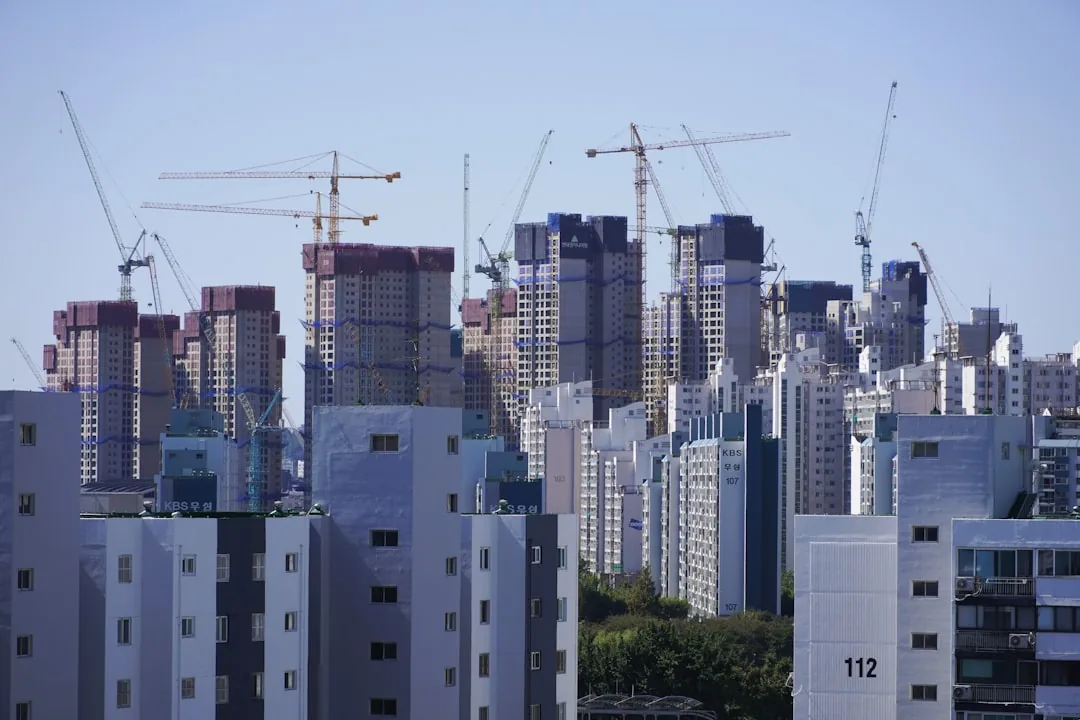
Start with geography. The Seoul Capital Area held 50.8% of the country’s population, 26.31 million people, in the 2024 population and housing census, and Seoul alone packs 15,432 residents into every square kilometre on the national density indicator in 2025. Half a nation living on a patch you can drive across before lunch does not produce sprawling floor plans. It produces towers, and towers produce standard units: apartments made up 65.3% of the entire housing stock in 2024.
Then comes the law. Article 2 of the Housing Act defines 국민주택규모 (gungmin jutaek gyumo, “national housing scale”) as a home with no more than 85 m² of exclusive area (100 m² in rural towns outside the capital region), and that single threshold gates tax treatment, public financing and subscription rules. Developers build right up against it and stop. So 84 m² isn’t a coincidence you keep noticing on listing sites. It is the largest unit that still clears the national-scale bar, and an entire construction industry has optimised for that ceiling.
Demography closes the argument. The same census counted an average household of 2.19 people in 2024, and 8.04 million households, 36.1% of the total, were one person living alone. Building 140 m² family units for a country where more than a third of homes hold a single occupant would be a strange bet. Even the ritual economy points the same way: the cash envelopes handed over at a Korean wedding often go straight into the deposit on exactly this kind of unit. This compression is the housing chapter of the same story told in how South Korea got rich so fast: a country that urbanised in one generation needed somewhere to put everyone, fast, and vertical was the only honest answer.
What Is a Pyeong in Korea, and Why Is It Technically Illegal?
A pyeong (평) is a traditional unit of area equal to 3.3058 m², about 35.6 sq ft, and it has not been a legal measurement unit in Korea for a very long time. That has changed absolutely nothing about how people talk.
Korea adopted international units as its legal measurement standard back in 1964, and the measurement law (계량에 관한 법률) flatly prohibits using non-legal units either in measurement or in advertising. Enforcement arrived in slow waves: the push to move area (m²) and weight (g) into everyday commerce began in 2007, fines first landed on pyeong figures in daily-newspaper property ads, and in 2013 inspectors extended the net to websites, real-estate offices, street banners and model-house showrooms. As of 2026 the penalty schedule in the enforcement decree (Annex 28, revised July 2024) runs 600,000 won for a first offence, 1,200,000 won for a second and 2,000,000 won from the third onward.
And still, walk into any 부동산 (budongsan, real-estate office) in Mapo or Suji and the whiteboard in the window will be scribbled in pyeong. Contracts say square metres because they legally must. Conversation says pyeong because that is the size people can feel.
Exclusive Area vs Supply Area: What the Listing Number Hides
전용면적 (jeonyong myeonjeok, exclusive area) is the floor inside your front door; 공급면적 (gonggeup myeonjeok, supply area) adds your share of the corridor, stairwell and lift lobby. Article 21 of Korea’s Rules on Housing Supply requires any per-unit size in a sales announcement to be stated as exclusive area, with common areas allowed only as separate line items, never rolled into one flattering total.
| Korean term | What it covers | Whose floor is it |
|---|---|---|
| 전용면적 exclusive area | Everything inside your front door, measured from the inner face of the exterior wall | Yours alone |
| 주거공용면적 residential common area | Corridor, stairwell and lift lobby on your floor | Shared with your floor |
| 공급면적 supply area | 전용면적 plus 주거공용면적 | The number behind the “pyeong” figure |
| 계약면적 contract area | 공급면적 plus parking, management office, gym | Everything your maintenance fee touches |
Korean listing portals lead with the exclusive-area figure, because that is the legally meaningful one. That means the apartment you are picturing from an “84 m²” line is already the strict, private-floor-only version. The pyeong number your agent says out loud is the generous one. What surprises most first-timers is that the two habits coexist without anyone finding it confusing: the paperwork stays honest, the conversation stays aspirational, and everybody knows which is which.
Korean Apartment Size in Square Feet: The Conversion Table
Exclusive area of 84 m² comes to about 904 sq ft, and the 59 m² unit that dominates newer developments works out to roughly 635 sq ft.
| Exclusive area (전용면적) | Square feet | Commonly called | Usual fit |
|---|---|---|---|
| 39 m² | ~420 sq ft | 16 pyeong | one person, generous studio |
| 49 m² | ~527 sq ft | 20 pyeong | couple, one bedroom |
| 59 m² | ~635 sq ft | 24 pyeong | couple or small family, three rooms |
| 74 m² | ~797 sq ft | 30 pyeong | family of three |
| 84 m² | ~904 sq ft | 34 pyeong | the default family unit |
| 114 m² | ~1,227 sq ft | 45 pyeong | large, premium tier |
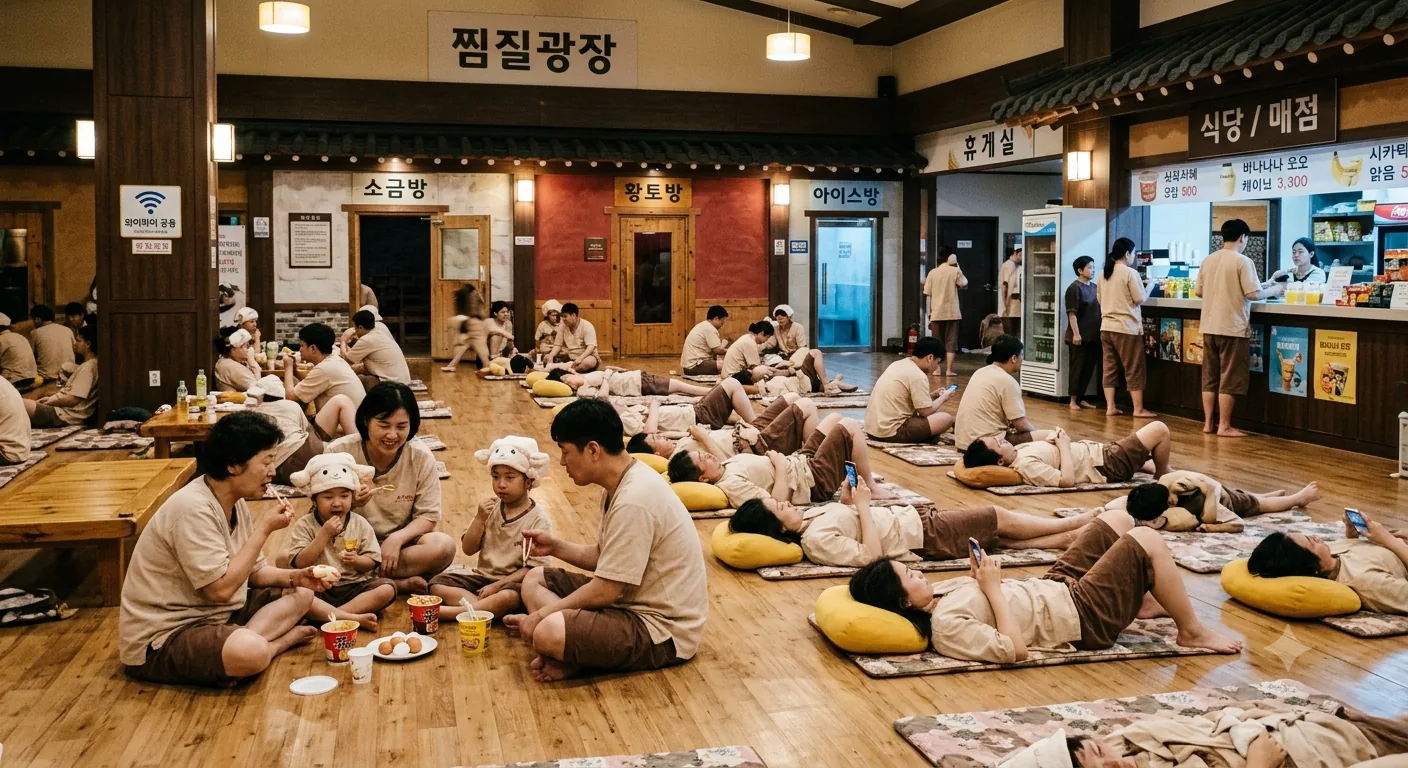
The pyeong labels in that third column are converted from supply area, not from the exclusive area sitting beside them, which is exactly why the two columns refuse to line up arithmetically. For a sense of the floor, compare these against the legal minimum: Korea’s minimum housing standard, untouched since its 2011 revision, still sets 14 m² (about 151 sq ft) as the smallest acceptable home for a one-person household as of 2026, so even the tightest unit here is nearly triple that. And if raw numbers still feel abstract, the daily texture of these buildings is easier to grasp through how Koreans actually live in them, where the neighbourhood bathhouse quietly replaces the bathtub you don’t have.
Does Balcony Expansion Actually Add Floor Space?
Yes, and it is the single biggest reason a Korean listing understates the apartment behind it. An amendment to the Enforcement Decree of the Building Act, in force since 2 December 2005, made it legal to finish a balcony and use it as a living room, bedroom or storage, in older blocks as well as new ones, provided the conversion meets the ministry’s balcony standards. Apartments permitted before that date must also keep an evacuation space or a dividing wall.
Balcony area is 서비스 면적 (seobiseu myeonjeok, service area), and it sits outside the exclusive-area calculation entirely. Expand it legally and you gain real, heated, furnished floor that never once appears in the advertised figure. That is how two apartments both listed at 84 m² can feel a full room apart.
Most new builds since the mid-2000s are drawn with expansion assumed, and the model unit you walk through at a sales gallery is almost always the expanded version. Ask whether the specific unit is 확장형 (hwakjanghyeong, expanded) or 비확장형 (bihwakjanghyeong, unexpanded) before you compare prices. Regulars will tell you that answer moves an apartment more than any renovation you could do afterwards.
Frequently Asked Questions
Q: How many square feet is an 84 m² Korean apartment?
About 904 sq ft of exclusive area, meaning the private floor inside your front door. Legally expanded balcony space sits on top of that and never appears in the advertised number, so the lived-in area is usually larger.
Q: What does 34 pyeong mean in square meters?
Roughly 112 m², because a pyeong figure is normally calculated from supply area rather than exclusive area. The same apartment will show up on a listing portal as 84 m².
Q: Why do Koreans still use pyeong if it isn’t a legal unit?
Habit, and the fact that pyeong maps neatly onto how a room feels. Square metres have been the legal standard since 1964 and advertising in pyeong is fineable, but two generations learned to picture homes in pyeong and never switched. Contracts use m²; conversations use pyeong.
Q: Is 59 m² big enough for a couple in Seoul?
Yes. It’s one of the most common family layouts in the city, typically fitting three rooms and a bathroom into about 635 sq ft, plus expanded balcony space that isn’t counted. Tight by American suburban standards, entirely ordinary by Seoul ones.
Q: Does the balcony count toward a Korean apartment’s advertised size?
No. Balcony area is service area and falls outside 전용면적, which is precisely why a legally expanded balcony adds usable living space without changing the figure on the listing.
Q: Why do so many Korean apartments have the same floor plan?
Because developers design to the same legal line. The 85 m² national-housing-scale ceiling rewards building right up to it, so 59 m² and 84 m² layouts repeat from one complex to the next. Multiply that by scale (apartments were 65.3% of the entire housing stock in 2024) and a handful of floor plans becomes the national default.
Once you know which of the three numbers you’re being handed (exclusive, supply, or quietly expanded), Korean apartments stop reading as small and start reading as engineered.
Part of Modern Lifestyle & Daily Life