Korean Art Museums in Seoul: Where to See Minhwa in 2026
On this page
- 1. National Museum of Korea: the painting rooms upstairs
- 2. Leeum Museum of Art: free Korean antiques, booked in advance
- 3. Amorepacific Museum of Art: watch it for minhwa exhibitions
- 4. National Palace Museum of Korea: the court painting minhwa talked back to
- 5. National Folk Museum of Korea: the homes those paintings hung in
- Planning a Day of Korean Art Museums in Seoul
- Frequently Asked Questions
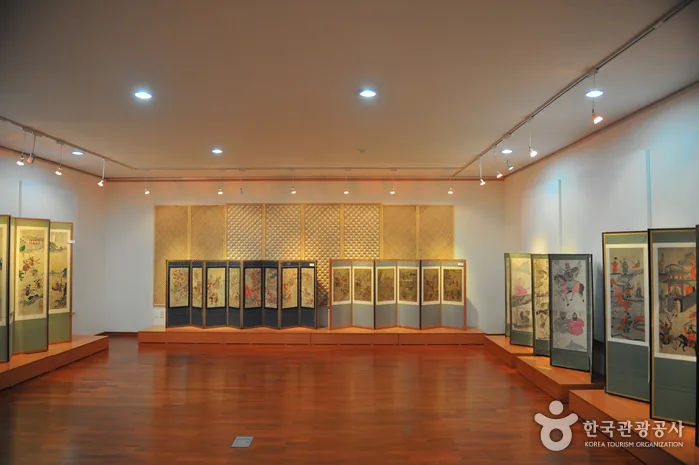
A tiger with bulging eyes and a lolling tongue glares up at a magpie that plainly isn’t scared of it. That joke, painted by anonymous artists in late Joseon Korea, is the best reason to visit Korean art museums in Seoul. This list is ordered by one test: where can you actually see Korean painting, folk painting (minhwa) included, and which rooms deserve your limited hours? Four of the five picks are free or have a free permanent collection; the fifth, the Amorepacific Museum of Art, charges by exhibition. Each entry says what is on the wall now versus what already closed.
Quick answers
- The National Museum of Korea’s permanent galleries are free, and on Wednesdays and Saturdays they stay open until 9:00 pm.
- Leeum’s Museum 1 collection of traditional Korean art is free, and booking is recommended rather than required: reservations open 14 days ahead for up to four people, and walk-ups get whatever capacity is left.
- The famous Leeum “Tigers and Magpies” show closed on March 29, 2026, so check current schedules before you plan a trip around a single painting.
1. National Museum of Korea: the painting rooms upstairs
The National Museum of Korea in Yongsan is the first stop because its permanent galleries cost nothing and its Calligraphy and Painting Gallery on the second floor is given over to Korean painting and calligraphy. The museum’s own directions are simple: take Line 4 or the Gyeongui-Jungang Line to Ichon Station, leave by Exit 2, and walk 150 meters toward Yongsan Family Park. An underground walkway links the station to the museum if it’s raining.
The painting gallery reopened on February 26, 2026 with a new layout, and the rotation rule matters more than the floor plan. Paintings come down after about three months and then rest in storage for six months to a year for conservation. So the screen you saw on someone’s feed may simply not be there. The opening rotation (February 26 to April 26) centered on Jeong Seon and Jo Yeong-seok, and the current theme show, on Kim Jeong-hee and his companions, runs from August 11 to November 22, 2026. Two of the gallery’s rooms, 202-3 and 202-4, are closed from August 10, 2026 to January 28, 2027 while the museum reorganizes its Buddhist painting and sculpture galleries, so only part of the painting floor is open until then.
Timing is the easy part. In 2026 the museum opens at 9:30 am and closes at 5:30 pm on Mondays, Tuesdays, Thursdays, Fridays and Sundays, and stays open to 9:00 pm on Wednesdays and Saturdays. It shuts on January 1, Seollal and Chuseok, and the permanent galleries close on the first Monday of March, June, September and December.
2. Leeum Museum of Art: free Korean antiques, booked in advance
Leeum, Samsung’s museum in Hannam-dong, is where Korean art looks its most polished, and its Museum 1 building of traditional Korean art is free. Seoul’s official tourism site lists it as “Always Free: M1,” while the contemporary shows in Museum 2 are ticketed. You’ll find it about 400 meters from Exit 1 of Hangangjin Station on Line 6. It opens Tuesday to Sunday, 10:00 am to 6:00 pm, and closes on Mondays.
Booking isn’t required, but it’s the safer plan. Reservations open 14 days before your visit and cover a maximum of four people, and visitors without one can buy tickets on site for whatever capacity is left. On a weekend, don’t count on the leftovers.
Leeum also explains why this list separates permanent galleries from exhibitions. From September 2, 2025 to March 29, 2026, it showed “Tigers and Magpies,” seven works including a 1592 painting that the museum presented as the oldest surviving Korean example of the tiger-and-magpie theme (hojakdo). That show is over. The painting belongs to Leeum’s collection, but nothing says it’s on view today, so check the museum’s exhibition page before you go looking for it.
3. Amorepacific Museum of Art: watch it for minhwa exhibitions
The Amorepacific Museum of Art sits inside the company’s David Chipperfield-designed headquarters at 100 Hangang-daero, reached from Sinyongsan Station on Line 4, the same line as the National Museum’s Ichon Station. It belongs on a minhwa list because of what it has staged, not because of a permanent folk-painting room. From March 27 to June 29, 2025 its “Beyond Joseon Minhwa” exhibition gathered over 100 works from about 20 institutions and private collections, the National Museum of Korea among the lenders. Pieces included “Tiger and Magpies,” “Dragon in Clouds” and a bookshelf painting by Yi Taek-gyun.
That exhibition has also closed. Treat this museum as one to check whenever you plan a Seoul trip: its 2025 minhwa show was a temporary exhibition that combined loans from other institutions and private collectors with pieces from its own collection, such as the Yi Taek-gyun bookshelf painting. Admission is charged by exhibition rather than a flat fee. It opens 10:00 am to 6:00 pm and closes on Mondays.
4. National Palace Museum of Korea: the court painting minhwa talked back to
The National Palace Museum of Korea, beside Gyeongbokgung, shows the formal royal art that folk painters worked alongside, and admission is free. Its FAQ is blunt about it: “The museum is free to all visitors.” Head down to the basement floor, where the gallery called Paintings and Calligraphy of Joseon Royal Court sits.
This is where the contrast helps. Court screens such as the sun, moon and five peaks design (Irworobongdo), the kind that stood behind the king’s throne, are symmetrical and serious. Minhwa painted many of the same mountains, pines and auspicious animals, but more loosely and with humor, to decorate ordinary homes. Seeing the court version first makes the folk version read as a reply.
In 2026 it opens 9:30 am to 5:30 pm most days, stays open to 9:00 pm on Saturdays and on the last Wednesday of each month (Culture Day), and closes on the last Monday of every month. If you’re also touring the palace itself, the math on the Seoul palace integrated ticket is worth a look first.
5. National Folk Museum of Korea: the homes those paintings hung in
The National Folk Museum of Korea, also on the Gyeongbokgung grounds at 37 Samcheong-ro, is free and fills in what the art museums leave out: the households, rituals and life stages that folk painting was made for. It is not a minhwa gallery. Go for context. Its three permanent halls are titled The Beginning of K-Culture, A Year in Korea, and Korean Life Passages.
One date matters this autumn. The museum has announced that Permanent Exhibition Hall 1 will be closed from September 30 to December 21, 2026. From March to October it runs 9:00 am to 6:00 pm, and until 8:00 pm on Wednesdays; from November to February it closes at 5:00 pm.
Planning a Day of Korean Art Museums in Seoul
Korean art museums in Seoul cluster into two neighborhoods, and splitting your visit by district saves more time than any ranking. Yongsan holds the National Museum of Korea, Leeum and the Amorepacific Museum of Art. Gyeongbokgung holds the National Palace Museum and the National Folk Museum, both on the Gyeongbokgung grounds. If you’re choosing which palace to pair with the Gyeongbokgung museums, Gyeongbokgung vs Changdeokgung covers that decision.
When you’re standing in front of a folk painting and can’t read the Korean labels, look for three things. A tiger with a comic face beside a magpie is hojakdo; one reading, reported around the Leeum show, casts the magpie as ordinary people and the bumbling tiger as the aristocrats they laughed at. A tiger covered in leopard spots on its face and chest but stripes on its body likely reflects an old belief that the two were the same animal. And a painted bookshelf stacked with books, vases and fruit is chaekgeori, a nod to learning, with the fruit standing in for long life and many children.
A last practical note: the correct exit saves a surprising amount of walking at every stop on this list, and Seoul subway exit numbers explains how to pick one.
Frequently Asked Questions
Q: Will the National Museum of Korea start charging admission?
Its permanent galleries are free today. Korean newspapers reported in September 2026 that the Korea Heritage Service is reviewing higher palace fees for early 2027 and that the National Museum of Korea’s director wants the museum to start charging admission, but nothing had been decided for the museum when this was written, so check the museum’s site before a 2027 trip.
Q: Can I see minhwa at Leeum without a reservation?
Yes, you can buy a ticket on site, though walk-ups only get the capacity left over after online bookings. Whether any folk painting is on display depends on the current rotation, so check the exhibition page first.
Q: Which day of the week are most Seoul art museums closed?
Monday is the usual closing day for Leeum and the Amorepacific Museum of Art. The national museums follow their own rules instead: the National Museum of Korea closes its permanent galleries on four specific Mondays a year, and the National Palace Museum closes on the last Monday of each month.
Q: Is there a museum in Seoul dedicated only to minhwa?
Yes. The Gahoe Museum at 52 Bukchon-ro in Bukchon, founded by collector Yoon Yeol-su, specializes in minhwa and folk amulets. The major public museums on this list have no minhwa-only gallery, so for them the reliable approach is to check the National Museum of Korea’s rotation and the current shows at Leeum and Amorepacific.
Start with the first entry: take Line 4 to Ichon, leave by Exit 2, and see which Joseon paintings are hanging this month.
Part of Traditional Arts & Crafts