Korea's Used-Car Exports to Central Asia: Kyrgyzstan Leads
On this page
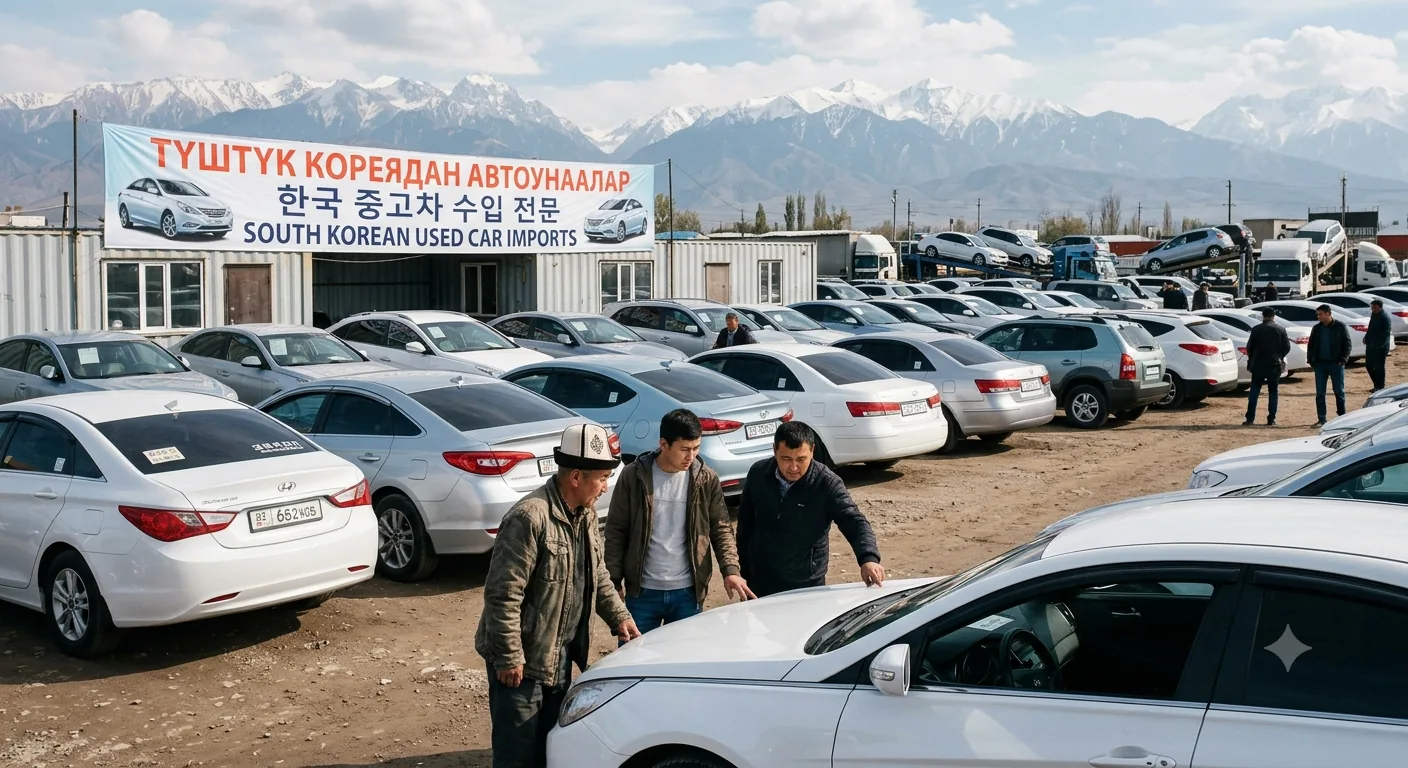
Korea’s used-car exports to Central Asia run overwhelmingly through one small, landlocked country: Kyrgyzstan. In 2025 it was the largest destination for Korean used cars by value, taking about $2.62 billion worth in January through October alone, well ahead of Russia and Kazakhstan, according to Korea International Trade Association figures drawn from trade ministry and KATECH data. That was also the year Korea’s total used-car exports set a record of $8.9 billion, up 75.1 percent. Three forces explain the Kyrgyz share: a road-traffic law that keeps right-hand-drive cars out, a customs union that opens the road to Kazakhstan and Russia, and Russian demand that sanctions have pushed onto indirect routes.
Quick answers
- Kyrgyzstan was the biggest buyer of Korean used cars by value in 2025, with about $2.62 billion shipped from January to October, while Libya still led on car count (119,519 against 104,738).
- Kyrgyz law bans importing right-hand-drive cars for registration, which shuts out Japan’s domestic used stock and leaves left-hand-drive Hyundai and Kia models as the natural supply.
- Since February 24, 2024, Korea has required a government license to export any petrol or diesel car over 2,000cc, and every hybrid or EV, to Russia, even when it travels through a third country.
Why Kyrgyzstan Buys Korean Used Cars
Kyrgyzstan buys Korean used cars because its own law keeps right-hand-drive vehicles off the register, and Korea has deep stocks of affordable left-hand-drive ones. Korea drives on the right, so its domestic fleet is left-hand drive, the same layout used in Kyrgyzstan, Kazakhstan and Russia. Japan drives on the left. Kyrgyzstan’s Law on Road Traffic prohibits importing right-hand-drive vehicles for registration and road use, and in February 2025 the state vehicle-registration agency warned that right-hand-drive cars brought in after December 31, 2024 would not be legalized, as 24.kg reported. That rule takes Japan’s right-hand-drive used cars out of the Kyrgyz market by statute rather than by taste.
The steering rule is specific to Kyrgyzstan, though. In Russia, Japanese cars made up about 50 percent of used-car imports in the first half of 2025 against Korea’s 22 percent, according to KOTRA’s Novosibirsk office. Steering explains why Korean stock wins in Bishkek. It does not explain the whole route.
How Many Used Korean Cars Does Kyrgyzstan Import Each Year?
About 130,000 in 2025. Korea’s vehicle exports to Kyrgyzstan reached roughly $3.2 billion that year, up 105.4 percent, and used cars made up 99 percent of those shipments, with only about 200 new vehicles going the same way, according to KITA figures reported by Korea JoongAng Daily. The climb was steep. KITA counted 377 Korean used cars sent to Kyrgyzstan in June 2021 and 5,970 in June 2024, a 16-fold jump, KED Global reported.
Kyrgyzstan also buys at the expensive end. From January to October 2025 it ranked first by value but second by units behind Libya, which works out to roughly $25,000 per car. Kazakhstan was the other big Central Asian buyer, third by value at about $665 million over the same ten months, and Tajikistan took 1,455 Korean used cars in June 2024 alone, double its level three years earlier. It’s a smaller, scrappier cousin of the story behind how Korea’s semiconductor exports are riding the AI boom: a Korean industry finding outsized demand in a market most outsiders wouldn’t guess.
Why Did Korea’s Used-Car Exports to Central Asia Suddenly Accelerate?
They took off after 2022, when sanctions over Russia’s invasion of Ukraine turned Kyrgyzstan and Kazakhstan into indirect supply lines for the Russian car market. KED Global, citing KITA data, described Korean used cars clearing customs in Bishkek and Almaty before moving on to Moscow and Saint Petersburg. The Kyrgyz surge started before Korea tightened its own rules: shipments averaged 1,939 cars a month in 2022 and 4,251 a month in 2023.
Direct trade never stopped, a point the transit story tends to skip. Russia was still Korea’s second-largest used-car market by value from January to October 2025, at about $910 million. What changed was the paperwork. Korea put cars priced above $50,000 on its Russia licensing list in April 2023, then from February 24, 2024 switched the test to engine size under its 33rd strategic-goods notice, which widened the Russia and Belarus list to 1,159 items. Any petrol or diesel car over 2,000cc, and every hybrid or electric car regardless of engine, now needs a license, and the license applies even to a shipment bound for a third country when Russia is the final destination, as the Korea Customs and Trade Development Institute explains.
Kyrgyzstan’s place in all this rests on membership. It joined the Eurasian Economic Union when its accession treaty entered into force on August 12, 2015, alongside Armenia, Belarus, Kazakhstan and Russia.
Where Do These Cars Actually Come From in Korea?
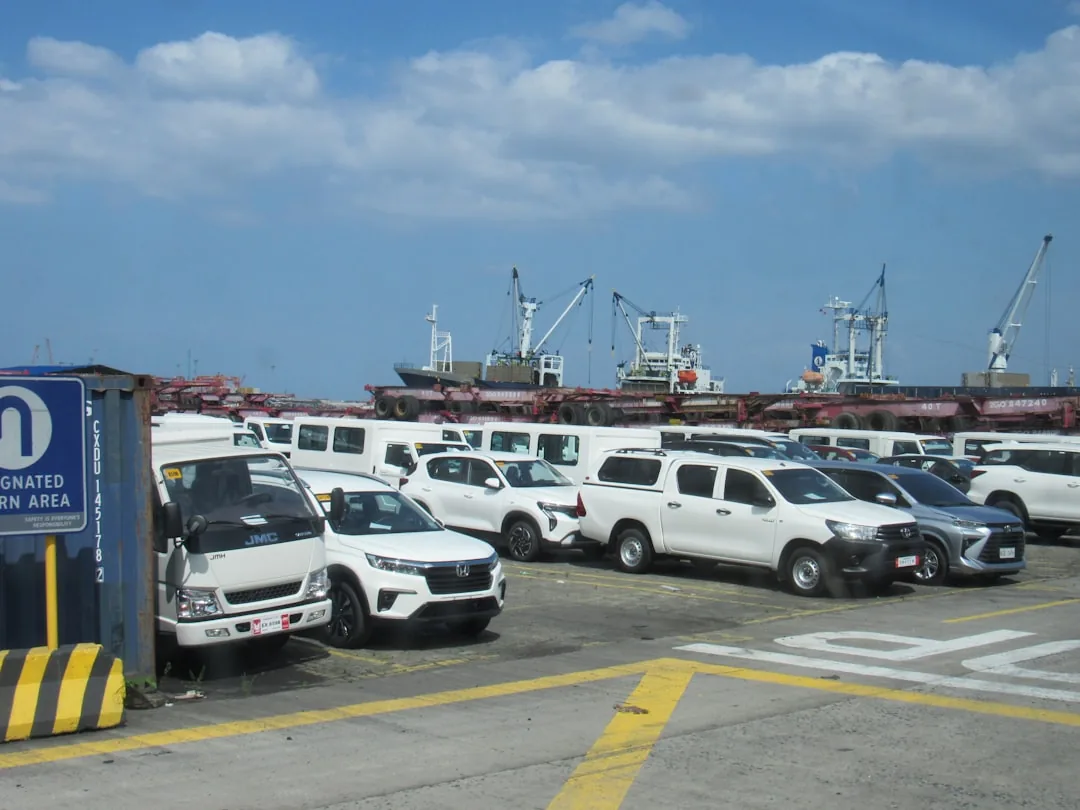
Most leave from export yards around Incheon, the port that handles the bulk of Korea’s used-car shipments, close to the roll-on/roll-off terminals that load them. Export brokers source Hyundai and Kia models through domestic auctions and dealer channels, then clear them for overseas sale rather than the local secondhand market. The Kyrgyz average of roughly $25,000 per car points to newer, higher-trim vehicles rather than tired old sedans.
What Happens to the Cars After They Land in Kyrgyzstan?
Some stay and are sold locally in Bishkek; others clear customs there and continue by road to Kazakhstan or Russia, where EAEU membership spares them a second full customs check. That onward leg is what Korean enforcement now targets. On March 12, 2026, the Korea Customs Service said it would step up investigations into illegal car exports to Russia, after finding about ₩179.6 billion in violations over three years. According to the institute’s summary of the crackdown, detected amounts rose 465 percent in 2025, the typical scheme falsely declared Kazakhstan or Kyrgyzstan as the final destination, and an unlicensed export can bring up to seven years in prison or a fine of up to five times the goods’ value under the Foreign Trade Act.
The boom has also cooled. The trade ministry said Korea’s first-half 2026 auto export value slipped 1.1 percent to $35.95 billion, partly because of lower used-car exports.
Frequently Asked Questions
Q: Is it legal to re-export Korean used cars from Kyrgyzstan to Russia?
For the Korean exporter, not without a license when Russia is the known final destination and the car is a petrol or diesel model over 2,000cc, or any hybrid or EV. Smaller conventional cars sit outside that license list since the February 2024 change. Onward trade between Kyrgyzstan and Russia inside the EAEU is governed by those countries’ own rules, which is why Korean enforcement focuses on the false destination declared at home.
Q: Are Korean used cars well suited to Central Asian roads and climate?
Generally, yes. Mainstream Hyundai and Kia sedans and compact SUVs are built for Korea’s own cold winters and hot summers, a reasonable match for Kyrgyzstan’s continental climate. What decides the paperwork is not climate but engine size and powertrain, the two specs Korea’s Russia license rule is built on.
Q: Why not buy Japanese used cars instead?
In Kyrgyzstan the barrier is legal rather than practical: the Law on Road Traffic bans importing right-hand-drive cars for registration, and Japan’s domestic fleet is right-hand drive. Russia is different, with Japanese cars supplying about half of its used imports in the first half of 2025, so the Japanese option stays open in the Russian market itself.
A used-car market this size rarely stays invisible for long. Kyrgyzstan’s role, part genuine demand and part regional transit hub, has become a small but telling case of how sanctions reroute trade rather than stop it, and of how quickly the rerouting draws enforcement. Next to chips, the whole flow is still a footnote in what Korea’s export numbers actually show.
Part of Automotive & Mobility