Korea's Semiconductor Exports and the AI Boom, Explained
On this page
Korea’s semiconductor exports are surging because of the AI boom, and the mechanism is narrower than most headlines suggest: nearly every AI accelerator on the market depends on a memory chip that Samsung and SK Hynix dominate, so as the world races to build AI data centers, the orders land in Korea. In May 2026, Korea’s chip exports jumped roughly 170 percent year-over-year — driven almost entirely by AI-related memory demand, not phones or laptops. The factories behind that number cluster in an industrial belt south of Seoul, anchored by SK Hynix’s memory campus in Icheon. When a data center in Virginia or Singapore needs more memory to train its next model, the order chain traces back here.
Quick answers
- Korea’s semiconductor exports rose roughly 170 percent year-over-year in May 2026, driven overwhelmingly by AI-related memory chip orders.
- The link is HBM (High Bandwidth Memory) — a chip type Korea’s SK Hynix and Samsung dominate, and one every AI GPU needs to function.
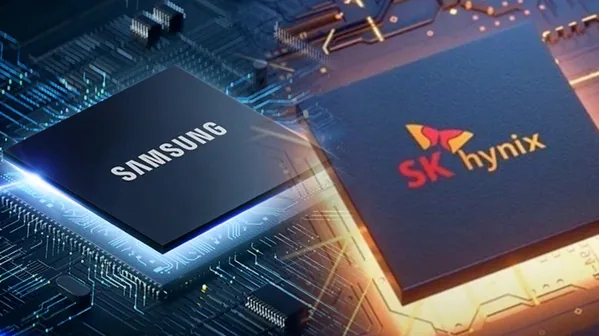
- Samsung and SK Hynix together account for the large majority of global HBM supply as of 2026, giving Korea outsized leverage over how fast AI hardware can scale worldwide.
Korea Semiconductor Exports AI Boom Explained
The short version: Korea makes the memory chips that AI accelerators can’t run without, and 2026’s AI infrastructure buildout has sent orders for that memory into overdrive. Semiconductors are Korea’s single largest export category, and within that category, the products tied to AI servers — not smartphones, not laptops — are what’s actually growing. Every new AI data center announced by a hyperscaler in the US, Middle East, or Southeast Asia adds another line item to a Korean factory’s order book.
How Much Have Korea’s Semiconductor Exports Actually Grown?
Korea’s chip exports jumped about 170 percent year-over-year in May 2026, according to trade data cited by CNBC and Korea Herald. That’s not a typo, and it’s not a one-month blip — memory chip export values have been climbing steadily since AI infrastructure spending accelerated in 2024 and 2025. The shift shows up in delivery times as much as in the export figures: as of 2026, memory suppliers and their equipment vendors have moved from quoting HBM deliveries in weeks to quoting them in quarters, a backlog that shows how far demand has outrun capacity.
What Is HBM and Why Does It Matter for AI Chips?
HBM, or High Bandwidth Memory, stacks memory chips vertically and wires them directly next to a processor, letting data move far faster than conventional memory allows — which is exactly what an AI GPU needs to avoid sitting idle waiting for data. Nvidia’s most advanced AI accelerators are essentially built around whichever company can supply the most HBM, and as of 2026 that means Samsung and SK Hynix, who together hold the dominant share of global HBM production. When AI chip shortages make headlines, the bottleneck is usually memory — specifically HBM supply — rather than the processor itself.
Why Should the World Care About Korea’s Chip Factories?
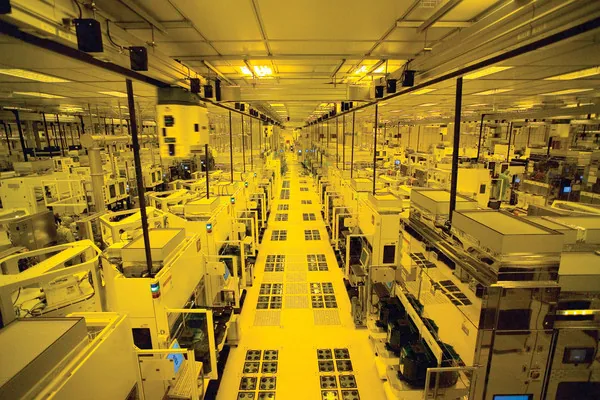
Because the pace of the global AI boom is, in practical terms, capped by how much HBM a handful of Korean factories can physically produce. Samsung’s planned mega chip cluster in Yongin and SK Hynix’s expanding Icheon and Cheongju lines aren’t just domestic infrastructure projects — they’re capacity that determines how many AI data centers can actually get built on schedule elsewhere in the world. Visiting the industrial belt south of Seoul, you’ll notice the scale isn’t abstract: cleanroom construction cranes have become a fixture of the Gyeonggi-do skyline the same way apartment towers used to be.
Frequently Asked Questions
Q: Why did Korea’s semiconductor exports surge in 2026?
Demand for AI infrastructure — specifically the HBM memory chips that power AI accelerators — pushed Korean chip exports up roughly 170 percent year-over-year in May 2026.
Q: What role do Samsung and SK Hynix play in the AI boom?
They’re the two dominant producers of HBM as of 2026, meaning most AI GPUs shipped worldwide depend on memory chips manufactured in Korea.
Q: Is the semiconductor export boom just about smartphones?
No — consumer electronics chips are a much smaller factor. The 2026 surge is concentrated in AI-server-grade memory, not phone or laptop components.
Q: Could Korea’s chip export boom slow down?
It could, if AI infrastructure spending cools or if Chinese and American memory producers close the technology gap, but as of 2026 Korea still holds a substantial lead in HBM manufacturing.
Korea’s economy has weathered chip cycles before, but this one feels different — the country isn’t just supplying a product category anymore, it’s supplying a chokepoint the entire AI industry runs through. Keep an eye on Icheon and Pyeongtaek; what happens on those factory floors is arguably a better AI-industry indicator than anything coming out of Silicon Valley.